Project pathway
The quickest route to the right decision.

 Monday, 12 January 2026 by Oliver Fontana - Managing Director
Initial situation: Historical explosive ordnance contamination and today's construction projects
Unexploded aerial bombs and other remaining ammunition can still pose risks to people, infrastructure and construction projects. However, historical totals or current find statistics do not directly establish the ordnance situation on an individual property.
Project preparation therefore considers historical records, former uses, existing investigations and the planned ground intervention together. This establishes which further exploration or survey should be assessed professionally.
A published annual report can clearly describe the work of the clearance service concerned. It does not automatically record explosive ordnance that has yet to be discovered. Neither a high nor a low number of reported finds is enough on its own to establish the contamination of a particular plot.
In their paper of 1 July 2022, the German Bundestag's Research Services described substantial limits to reliable figures on remaining explosive ordnance contamination. That assessment concerned land areas. It is not a current, complete count and must not be mixed with figures for munitions in the North Sea and Baltic Sea.
A city's history may be a reason to examine existing documents more closely. A construction decision, however, needs information related to the actual area affected. A known air raid, former military use or documented find must not be applied to every plot in the same municipality without that connection.
A historical aerial photograph assessment for the construction area therefore serves a different purpose from annual statistics. Identify the site plan and planned ground disturbance in your enquiry. Include any information and reports already available. Whether further investigation is required follows from the technical assessment; a particular number of finds at state level does not determine it.
An estimate relies on assumptions and a particular evidence base. Its geographical scope, age and uncertainties form part of the figure. It is not the same as objects already located or counted.
Republishing an older estimate does not give it a new evidence base. Check whether the article repeats an assumption made at the time or presents newly collected information. This difference should remain clear in a project discussion, even in a shortened summary.
Figures in tonnes describe the mass of the explosive ordnance recorded. They are not a count of heavy aerial bombs. Different types and sizes of munition may be combined in one total mass.
Before making a comparison, also establish whether the figure is gross mass or explosive content mass. This distinction must not disappear when a figure is reused. Neither mass figure can be converted into a supposed number of plots at risk.
A bomb count is meaningful only with its definition. Statistics may include smaller incendiary, smoke or fragmentation bombs; another figure may explicitly concern only certain bomb types or weight classes.
Always read a subset alongside the overall figure. Adding the two when the smaller group is already included in the larger one counts objects twice. The category therefore determines which objects a reported find figure actually covers.
A deployment, an ordnance find report or involvement in a construction project is not an individual explosive ordnance item. Several objects may belong to one case. Such process counts must not be reported as bomb counts.
A complete sentence is often enough to make a figure clear: who is reporting which cases for what period? The figure remains verifiable even if it is later used in a presentation or meeting note. One case can involve several technical steps; their number does not measure how dangerous a location is.
All figures refer to the reporting year 2024. Any comparison must take account of the different recording categories.
The Ministry of the Interior's annual statistics for 2024 report 1,606 bombs discovered and rendered safe. These include 182 bombs with a gross mass of 50 kilograms or more. The total also includes smoke, incendiary, fragmentation and smaller high-explosive bombs. Describing them as 1,606 heavy aerial bombs would therefore be incorrect. Original statistics, dated 18 March 2025.
The 182 bombs are included in the total of 1,606. They are not counted in addition to it. The expressly stated weight class defines this subset. It must not be added again when considering all the bombs recorded.
For 2024, the Bavarian Ministry of the Interior reports around 87 tonnes of bombs, shells and ammunition disposed of, as well as 53 unexploded Allied high-explosive and fragmentation bombs rendered safe. Mass and bomb count are two figures in the same annual report, not interchangeable units. Original announcement of the 2024 results.
A comparison with North Rhine-Westphalia would first need to establish which objects each category covers. A greater mass and a smaller count can both be correct. Without further information, they establish neither a contradiction nor a ranking of states by the risk to individual building plots.
For 2025, the Rhineland-Palatinate Supervisory and Service Directorate reports around 67.1 tonnes of recovered ammunition and ammunition parts. This category therefore includes ammunition parts; it is not a count of heavy aerial bombs. The figure also belongs to a different reporting year from the North Rhine-Westphalian and Bavarian reports. A combined ranking would conceal these differences. Official figures from the Rhineland-Palatinate explosive ordnance clearance service.
On the same page, the ADD distinguishes between addressing specific dangers and precautionary assessment of plots before construction. Immediate official assistance in response to a specific danger is a different task from historical research for a planned project. A project enquiry therefore depends on the existing suspicion and the scope of services needed, not the statewide mass of finds.
Note the publisher, reporting year, publication date and precise definition of the figure. Check the original to see whether it refers to all bombs, a particular weight class, ammunition in tonnes or deployments. A shortened heading may omit important limitations.
Use a figure only for the conclusion its source supports. A statewide figure does not describe a city, a find in a city is not an assessment of a plot, and a historical period does not provide a current stock figure. If the definition or geographical scope is missing, the figure is not sufficiently explained for that comparison.
For a construction project, a site plan, planned earthworks and existing information or investigation reports provide a more useful basis for discussion. Any further evidence needed is assessed case by case. The guidance for project owners and designers helps assemble the information.
A percentage describes a share of a defined total. Before passing it on, you should therefore know the numerator and denominator. The share of a bomb type among all recorded bombs answers a different question, for example, from the share of cases involving a find. Neither figure automatically provides the probability of a find on a construction area that has not yet been investigated.
An average also distributes observed results only mathematically. Dividing a state's find count by its area does not show that the objects were evenly distributed. Converting that result to the size of your plot would assume a distribution that the figures do not establish. When comparing figures, therefore, record which conclusion actually follows from them and which further assumption would be needed for the conclusion sought.
For North Rhine-Westphalia's 2024 figures, the share of bombs with a gross mass of 50 kilograms or more among all recorded bombs can be calculated: 182 out of 1,606 is around 11.3 per cent. The denominator here is the number of bombs in that annual report. The result describes neither the share of contaminated plots nor the share of all explosive ordnance still in the ground. It shows why a percentage, even when calculated correctly, answers only the question explicitly defined.
An annual report published the following year may describe the preceding calendar year. The reporting year is therefore the relevant year when reusing its figures. The publication date helps identify the version used. If a table is later corrected, you should be able to trace the change rather than simply copying the new figure into your records without its source.
When using figures from several years, also check whether the category has stayed the same. A group with a different definition cannot simply be appended to an older series because it has the same heading. Keep the explanations from each publication. An openly stated difference is more useful for a sound comparison than a curve that only appears continuous.
A historical assessment may indicate possible contamination. A technical investigation may identify anomalous signals. An identified explosive ordnance item is a different finding again. When these details are brought together in a project overview, each should retain its own description. The number of anomalous signals does not automatically equal the number of explosive ordnance items. Rising find counts first indicate a higher recorded total in the period considered. A conclusion about the unknown remaining stock or contamination of a particular area needs a different evidence base.
Surveying is an investigation step; clearance and recovery describe other stages of work. UXO means unexploded explosive ordnance, while EOD stands for Explosive Ordnance Disposal. Such abbreviations do not replace a description of the service. Clearance is also ambiguous without the associated report and its spatial scope. The glossary of explosive ordnance and investigation methods explains the terms in context.
The choice of method depends, among other things, on the area to be investigated, the objects sought and site conditions. Existing utilities, foundations, ground structure and other interfering objects can affect measurability. Statistics do not contain this information about your construction area. They therefore cannot specify an achievable investigation depth or detection reliability for the project.
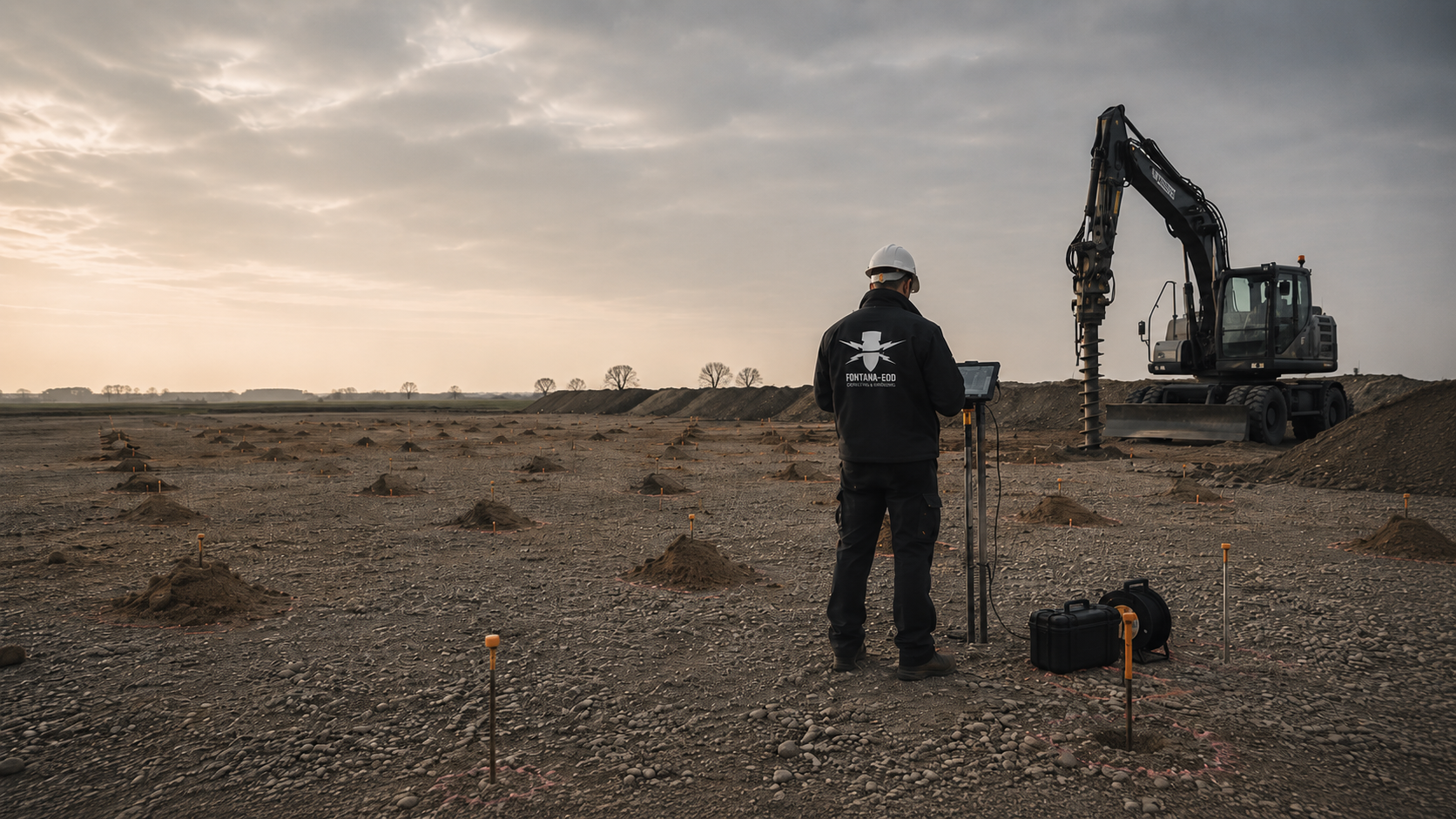
For technical coordination, describe the intended areas and depths, as well as known obstacles. An Explosive ordnance survey is planned as a specific task on that basis. When checking drilling start points, consider the documented relationship to the particular point and ground disturbance; it does not provide a general conclusion about the entire surrounding area. For deeper areas, the method's suitability and limitations must be established separately.
If areas cannot be fully investigated before excavation, a technical decision on the next steps is required. A person merely standing beside an excavator does not replace explosive ordnance surveying during construction. The DGUV expressly draws this distinction. Calling the subsequent activity monitoring does not remove an unresolved measurement limitation.
For ordnance surveying during construction, the investigation objective and workflow are agreed, provided the method is suitable for the ground disturbance. The starting points are the existing results and remaining questions. A report of particularly many or few explosive ordnance finds in the state answers neither whether the method is suitable nor which areas have already been investigated.
Bundestag Research Services: overview of 1 July 2022 · North Rhine-Westphalia Ministry of the Interior: annual statistics 2024 · Bavarian Ministry of the Interior: annual report 2024 · BFR KMR 5.1: principles of assessment · Saxony-Anhalt Police: what to do if you find ammunition
BFR KMR A-3.1: geophysical methods · BFR KMR 6.2: planning contents · BFR KMR 8: documentation · DGUV: questions about explosive ordnance clearance
Explosive ordnance disposal services and local public safety authorities have duties under the applicable state procedures. Private specialist contractors carry out commissioned services. The project should therefore establish which authority must be involved and who is responsible for each task. Publishing statewide statistics does not, in itself, fully describe the local application or commissioning process.
The relevant authorisations must be observed for work involving explosive substances. § 7 of the German Explosives Act governs the permit specified there, while § 20 governs the certificate of competence for responsible persons. When commissioning work, these records must be matched to the specific activity. A company name in a find report or a count of cases handled does not replace that check.
Under Section 5 of the Occupational Safety and Health Act, the employer assesses work-related hazards and identifies the necessary measures. The actual activities planned and their conditions are decisive. The DGUV Information 201-027 addresses risk assessment and protective measures in explosive ordnance clearance. A general annual report does not replace this work-specific assessment.
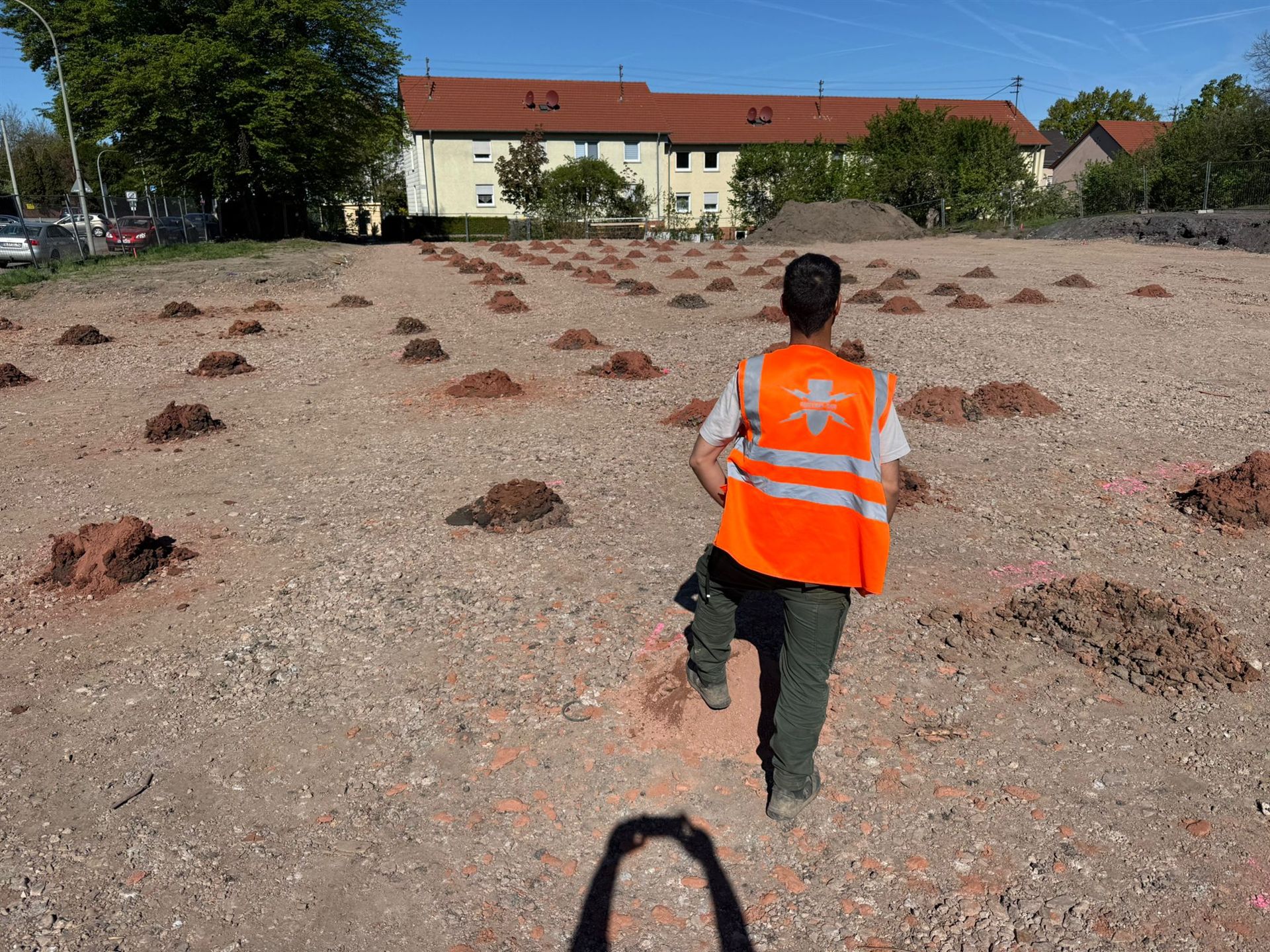
Project preparation also includes earlier work steps if they disturb the ground. A ground investigation borehole or sampling may precede construction itself. The investigation needed is established for their position and depth. Documents should therefore show which work comes first and which later ground disturbances are still only planned.
If you suspect an explosive ordnance find, stop work in the affected area, do not touch or move the object, leave the area, keep your distance and keep others away without putting yourself at risk. Immediately call the police on 110. Online statistics, photographic comparisons or an assumption that such events are rare provide no basis for attempting your own investigation or recovery.
The emergency guidance explains the basic safe response. Use the business contact form for project planning and technical queries, not to report an immediate ordnance find.
A higher number of reported finds does not, on its own, show whether the unknown remaining stock has increased. The figure first describes what was recorded in the stated period. Assessing a trend requires, among other things, comparable counting methods, search and clearance activity, and geographical scope.
Equally, a low statewide figure does not show that an individual construction area is safe. The relevant historical evidence, previous investigations and planned ground disturbance matter in each case. A statewide annual report cannot establish that site-specific relationship.
A list of known explosions likewise does not provide a reliable annual probability for a particular plot. Without an appropriate reference population, complete event records and comparable conditions, such a calculation would give false precision. A specific danger is not ruled out because an event appears statistically rare.
Ask which conclusion about the specific plot the figure is intended to support. A statewide annual report can provide general context, but cannot replace an existing investigation of that plot. For technical clarification, information that can be assigned to the site, investigation reports and plans are much more informative than a supposedly low statewide find count.
If a report is available, all its appendices should also be available. Check which area it covers and whether the planned project falls within the investigation scope at that time. A missing report is, first of all, missing information. It does not automatically confirm suspected explosive ordnance any more than low statistics provide a reliable all-clear.
Comparable quotations need a comparable description of the task. State the planned ground disturbance, associated areas and depths, and existing evidence. Explain which decision the result should support. A general phrase such as checking because of high find counts explains neither the measurement conditions nor the evidence needed.
If quotations differ, first ask about the assumptions behind each one. Different area boundaries, access arrangements or included work steps can produce different scopes. Statewide statistics cannot provide reliable costs per square metre for your project. Guidance on useful information is available under documents for a project-specific quotation request.
Compare the current plan with the documented investigation scope. New adjoining areas, relocated borehole positions or greater ground disturbance depths may raise different questions. An earlier report remains useful insofar as its evidenced scope actually covers the work now planned. This cannot be decided from the date on the cover alone.
Mark the changes for the technical enquiry. This allows a focused check of which findings remain useful and whether anything needs to be added. A blanket repeat investigation is not justified solely because a new annual statistical report has appeared. Conversely, earlier results do not cover changed ground disturbance simply because the statewide statistics are unchanged.
For a project decision, the report, site plan and result should be available together. The area covered and documented limitations must be identifiable. If finds or further work are described, the associated evidence should also be assignable. A concluding statement without appendices explains the scope only incompletely.
The BFR KMR address clear documentation of investigations and clearance work. It is therefore advisable to keep the drawing versions used together with the results in your project file. A statement described as clearance is read in the context of those documents; it is not an unlimited promise for every depth, area or later construction activity. The overview processes and evidence explains how the documents fit together.
The German Bundestag Research Services' 2022 paper describes substantial uncertainty about remaining contamination. An annual report on disposed ordnance does not answer that inventory question. Historical estimates must not be presented as a currently counted remaining quantity.
No. The original statistics include 182 bombs weighing 50 kilograms or more, while the total also counts smoke, incendiary, fragmentation and smaller high-explosive bombs. These categories must be retained when the figure is reused.
Only if the recording period, items covered and counting methods are genuinely comparable. The number of bombs disposed of, a total mass and the number of deployments are different metrics. They do not produce a simple ranking of risk to plots.
Stop work in the affected area. Do not touch, move or uncover anything further, and keep your distance. Warn others without putting yourself at risk and, in Germany, immediately call the police on 110. Describe the find's already known location from a safe distance and follow the competent authorities' instructions. A project enquiry is for subsequent technical preparation and does not replace reporting a find.
No. A construction decision depends on the specific area, historical evidence, available investigations and planned ground disturbance. Any assessment needed must be established on that basis. The appropriate method depends on the investigation objective, ground, depth, access and interference. Measurement limitations are documented in the result. The specialist contractor carries out the agreed commission; official requirements and decisions are clarified with the authorities responsible for the project location.
Allow time for technical clarification early enough for its result to be considered before the affected ground disturbance. Include preparatory drilling or sampling. Publication of new find counts is not a useful trigger for this process; your project and its existing evidence are what matter. Document review and any required historical research are followed by method selection, investigation or appropriate supervision, and assessment. The report and results plan bring scope, findings and limitations together. Before the next groundworks, these results are compared with the planned ground disturbance.
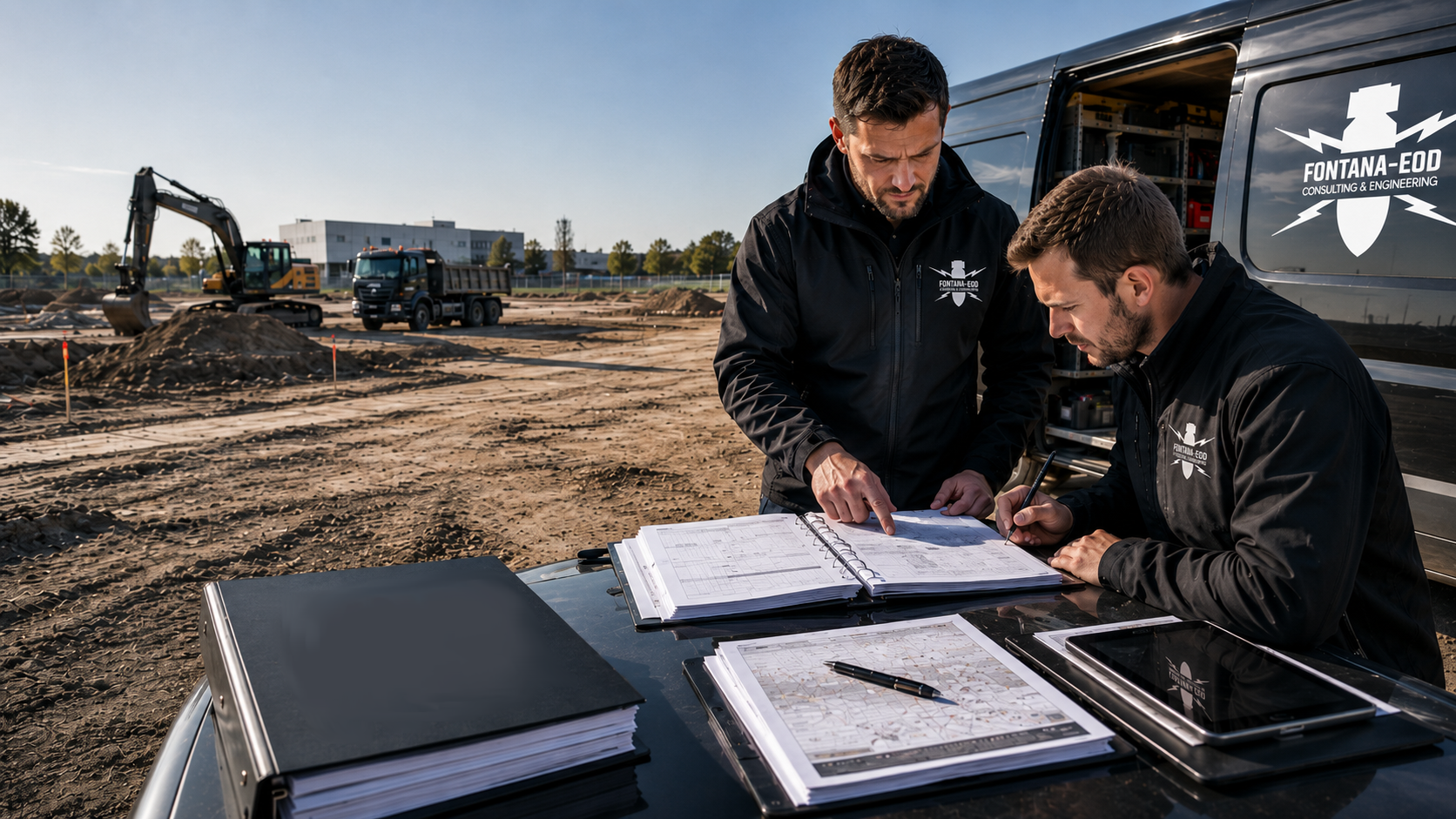
A current site plan, planned ground disturbance with depths, and existing information or investigation reports including their appendices. Mark revised plans, uninvestigated areas and details that remain unknown. Also state the decision for which you need a technical assessment.
No. They lack the conditions of the individual project. The work involved depends, among other things, on the areas to be covered, investigation objective, access and possible interference. A useful basis for a quotation describes these points; average find counts do not replace them.
Describe the project location, planned ground disturbance and evidence already available. We will assess with you whether the documents cover the planned ground disturbance and what still needs clarification.
FONTANA-EOD: +49 6843 9994997 · info@fontana-eod.de
Ask a project-specific question
Competent authorities and specialist contractors
Also state when ground disturbance is intended to start and any known requirements. If only a general notice or shortened summary is available so far, say so clearly. For an initial technical query, a clear description of the missing information is more useful than an assumption about the plot derived from general figures.
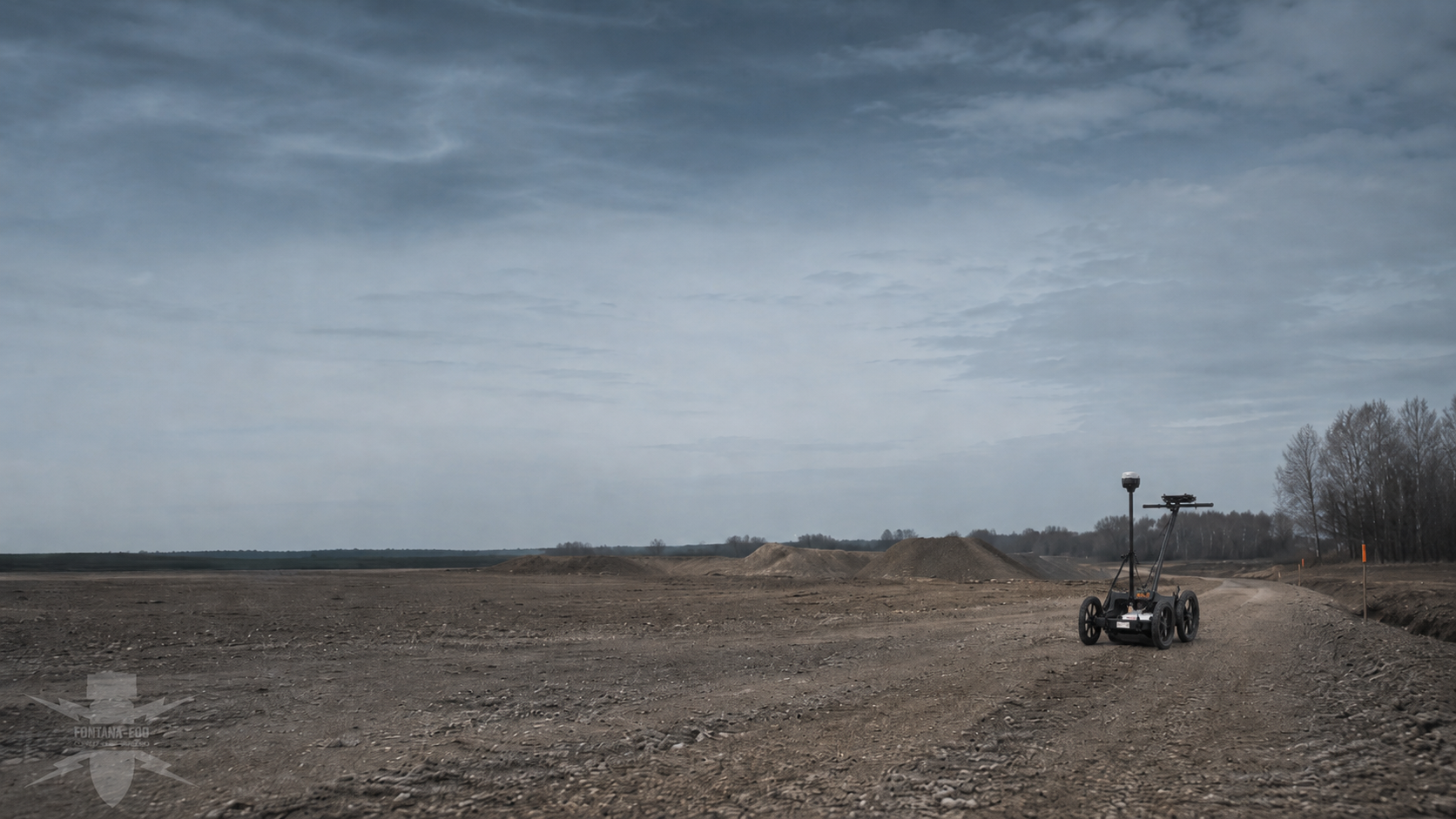
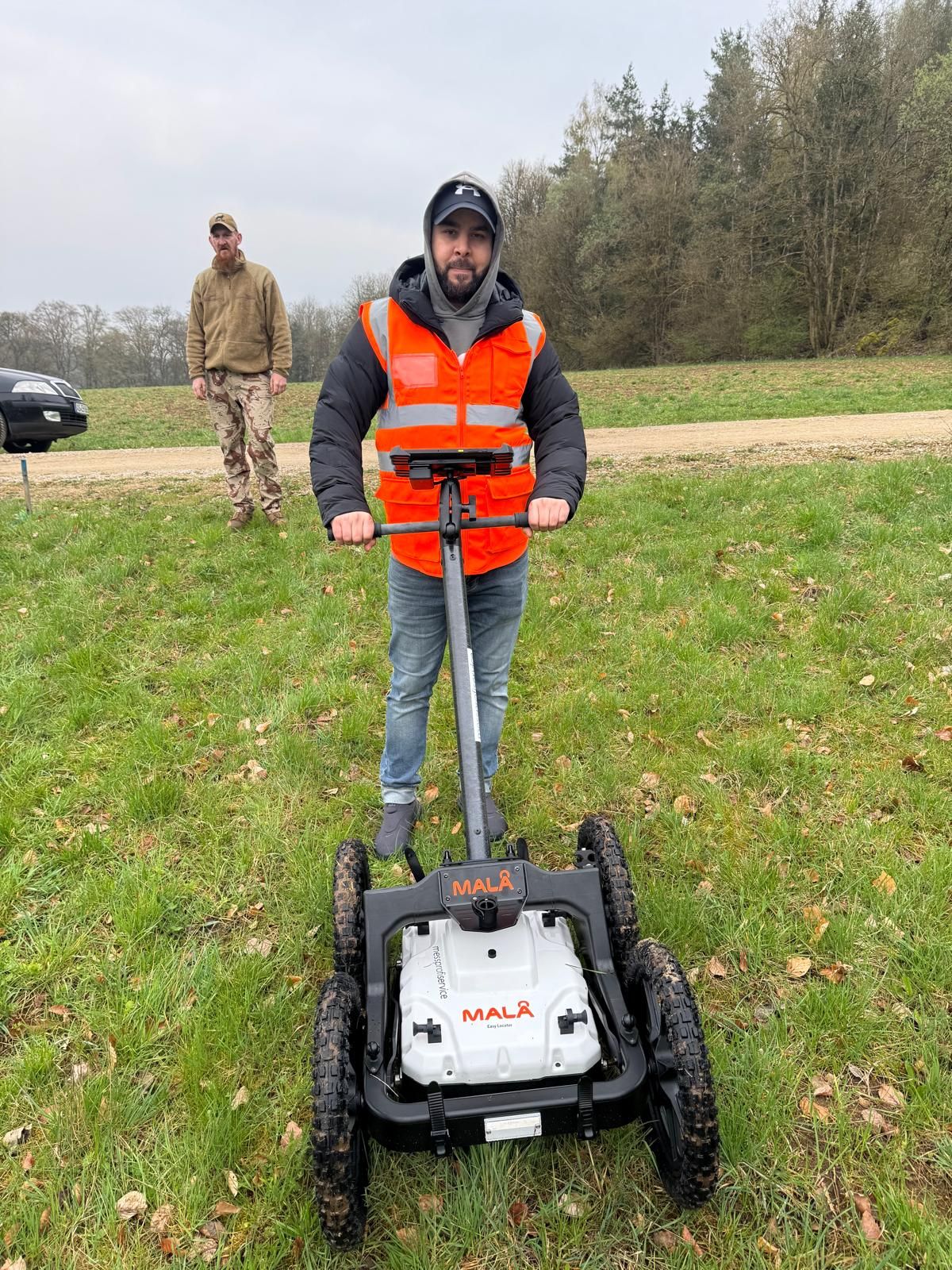
Whether historical aerial photograph analysis, explosive ordnance surveying, surface surveying using GPR, magnetometry or TDEM, deep-ground surveys, downhole surveys, excavation supervision, area clearance or ordnance recovery is needed depends on the location, ground disturbance, depth, ground and existing documents. An early ordnance assessment provides clarity for tendering, programming, occupational safety and construction.
FONTANA-EOD combines its Section 7 SprengG licence, specialists holding Section 20 SprengG certificates of competence, suitable survey and clearance methods, and traceable documentation. Send the site plan, depth of ground disturbance, construction phase and existing documents for an initial technical assessment.