Project pathway
The quickest route to the right decision.
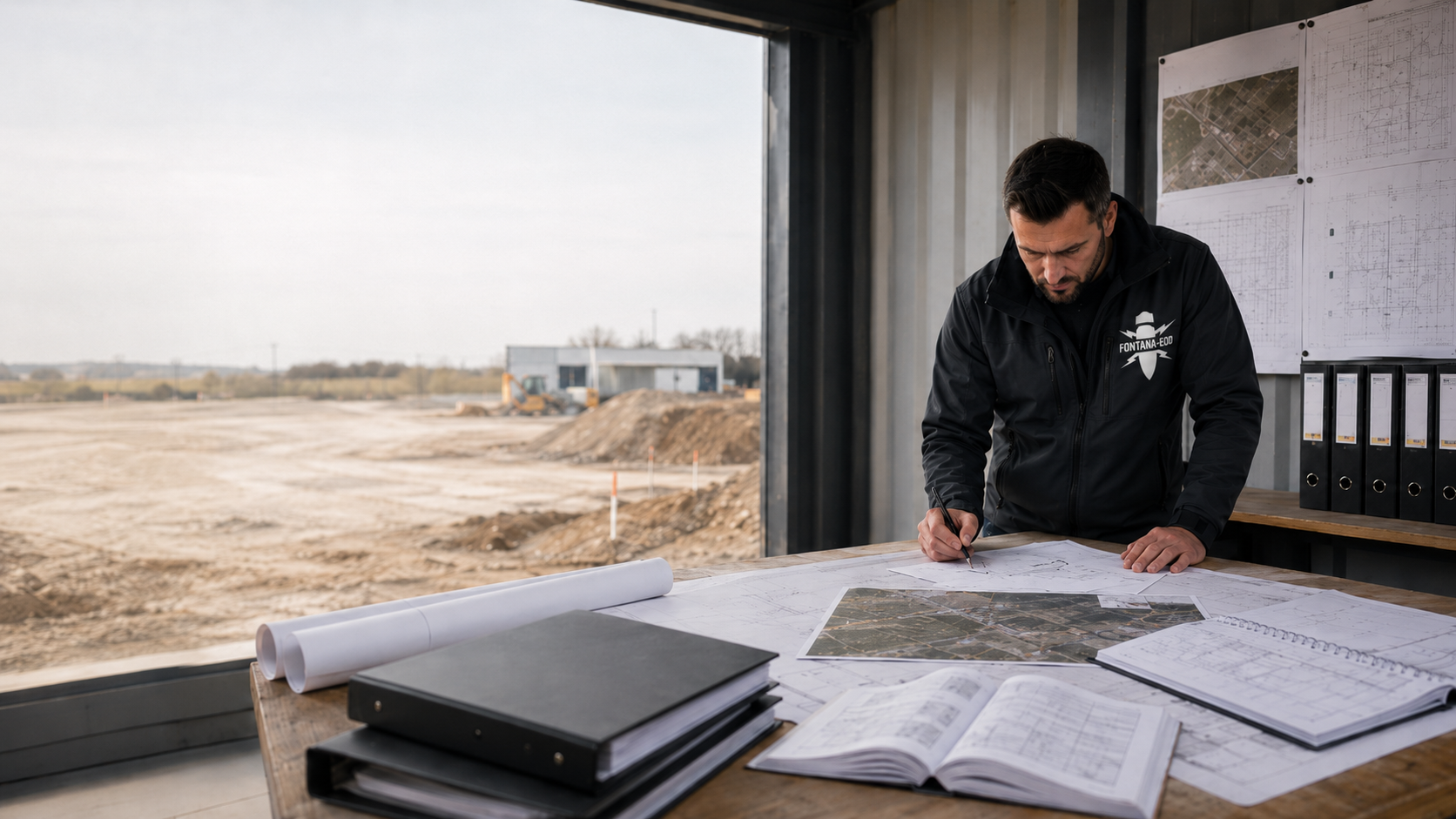
Before planned ground interventions, project owners, employers and site management must coordinate the explosive ordnance task, responsibilities and occupational safety measures. For projects in Germany, statutory duties, specialist records and official procedures are assigned separately for this purpose. FONTANA-EOD discusses specialist investigation needs and the project documents required with you.
Distinguish employer and client.
Consider activities and interfaces.
Relate records to the commission.
In Germany, each employer organises occupational safety for its employees. Coordination under the Construction Sites Ordinance connects activities involved and their interfaces. The client or third party commissioned under Section 4 retains responsibility even when a coordinator is appointed. Before work begins, the specialist commission, individual protective measures and necessary coordination are therefore defined with their respective responsible parties.
For sound coordination, each term is connected with its function: a suspected area describes the starting situation, surveying the commissioned investigation and a report the documented stage reached. The commission defines which specialist service is required and what result is needed. Responsibilities and authorisations are determined for the activity actually proposed. Parties can thus assign a specialist assessment to the correct decision.
In Germany, the official authorities to involve additionally depend on the federal state and specific case. Private specialist companies document the agreed investigation within their authorisations; responsible authorities make their respective decisions. Existing correspondence is connected with the current construction task and outstanding coordination.
Suspected explosive ordnance is an initial situation requiring assessment. The suspected area describes its spatial reference. For project organisation, this information is connected with the proposed working volume. A property boundary or general project name is insufficient if individual interventions lie outside the area described.
Assess suspicion in relation to the projectSurveying is technical investigation with a defined objective and limited assessment scope. Commissioning describes volume, depth, conditions and the record needed. Responsible persons must be able to understand which question the investigation answers and which further decisions remain outstanding despite an existing measurement report.
Distinguish survey tasksClearance includes the commissioned search for and treatment of explosive ordnance contamination in the defined area. Area clearance is described by task, method and intended result. Recovery means proper retrieval of identified ordnance by authorised and qualified persons. Scope and authorisations are clarified before commissioning. Site management coordinates its agreed tasks; technical find handling is undertaken by the respective responsible specialists.
Distinguish clearance and recovery technicallyA clearance statement is read within its described technical and spatial scope. Documentation connects task, result and limitations. Contractual acceptance, an operational permit to work and an official find decision may concern different processes. For the next construction section, it is therefore identified which assessment is actually needed and who makes it. The specialist report describes the investigation performed. The employer considers this evidence when assessing its working conditions; necessary operational or official decisions are assigned separately.
Read evidence and its limitsEOD stands for Explosive Ordnance Disposal. UXO means Unexploded Ordnance and describes ordnance that has not functioned. In international service requirements, the terms are translated into a specific task description. Local responsibilities and qualifications needed are considered separately.
Translate EOD requirements into specialist tasksKBD, KMBD or KRD are used regionally for responsible explosive ordnance authorities. The authority actually responsible at the project location and specific case are decisive. A private specialist company performs its commission within its authorisations and documents the service. Responsible authorities make official decisions. Planning records existing correspondence, contacts and outstanding coordination. For a current find, the police are notified first; planned project coordination follows safe handling of the find situation.
Assign authority and private tasksBFR KMR means Baufachliche Richtlinien Kampfmittelräumung. DGUV stands for Deutsche Gesetzliche Unfallversicherung, the German Social Accident Insurance. The terms designate different technical guidance and regulatory contexts. Application checks document type, scope and task relationship. A reference in a report alone does not explain which individual requirement applies to the project.
Distinguish the status of technical guidanceA specialist service during construction must be technically suitable and organised with qualified personnel. Observing excavation alone does not replace necessary investigation. Coordination identifies working volume, method, responsible persons and investigation objective. A general service term thus becomes a traceable task.
Describe the service during constructionIn Germany, state laws and ordinances interact with statutory accident insurance regulations and rules. Practical application depends on each scope, persons concerned and activity performed. Technical guidelines additionally structure planning and work. Before commissioning, it is recorded which requirements are relevant to the measure and which additional provisions expressly form part of the contract.
Different provisions interact in explosive ordnance matters in Germany. Occupational safety law particularly governs duties towards employees; responsibilities and disposal procedures are additionally clarified by federal state. The specific enquiry distinguishes historical official information, coordination of a planned measure and handling of a current find situation, for example. Existing official correspondence is assigned to each case. For projects outside Germany, applicable provisions and responsible authorities are determined separately.
Accident prevention regulations bind the members and insured persons of the accident insurance institution issuing them. DGUV rules and information support implementation of relevant duties. Regulation 1 concerns prevention organisation; for ordnance clearance work, DGUV Information 201-027 provides subject-specific guidance. The DGUV regulations and rules expressly distinguish these document types. Work preparation selects protective measures appropriate to the activity and incorporates them into organisation of the specific work. References to supplementary or updated provisions are assigned using the publisher's information.
BFR KMR apply to the tasks specified there on federal properties. Their technical structure is also generally suitable beyond this scope. For other projects, their use and additional contractual requirements are assigned to the specific commission. A tender should identify service components, documentation requirements and technical provisions agreed. A quotation can then relate to the work actually required. State duties, local requirements and contractually agreed specialist services remain traceable with their respective reference.
The starting point is the activity actually proposed and its working conditions. Existing explosive ordnance documents provide important evidence about investigation status. Each employer includes this information with methods, equipment and local conditions in its assessment. A construction sequence change is considered according to its effects on the next work.
Under Section 5 ArbSchG, employers in Germany assess work-related hazards to identify necessary protective measures. Work involving explosive ordnance considers existing evidence and the specific construction activity. This includes the investigation volume actually accessible and limits of an older report, for example. Known gaps are clarified by specialists before the work affected. Assessment connects ground information with hazards arising from the proposed work method.
Section 3 ArbSchG requires necessary measures, suitable organisation and resources and an effectiveness check in Germany. If conditions change, measures are adjusted where necessary. The project defines who receives new evidence and clarifies its consequences for upcoming work. This includes changed access, additional work by other companies or an unexpected obstacle. The responsible persons decide which adjustment is needed for further activity and pass relevant information to the parties.
Instruction under Section 12 ArbSchG must fit the workplace and tasks in Germany. For a find, understandable reporting routes and the prohibition on unauthorised handling are essential. Where tasks or hazards change, instruction is adapted and repeated if necessary. Before deployment, employees must know which areas are intended for their work, to whom they report unexpected findings and how to respond to a suspicious object. Information is related to the specific activity and persons concerned.
Where employees of several employers work on a construction site in Germany, Section 3 BaustellV requires one or more suitable coordinators. A safety and health plan is required under Section 2 paragraph 3 BaustellV where employees of several employers work and, additionally, either prior notification is required or particularly hazardous work under Annex II is performed. Coordinator appointment and the plan requirement thus have different prerequisites. Even for a site with only one employer, Section 2 paragraph 4 contains a duty to provide information on relevant site circumstances under the conditions specified there. Preparation therefore establishes the employer arrangements, type of work and further prerequisites separately.
Where employees of several employers work at one workplace, employers in Germany must, under Section 8 ArbSchG, cooperate, exchange necessary hazard information and coordinate measures. On a construction site, coordinator guidance and the safety and health plan must be considered. In practice, this concerns overlaps between investigation, earthworks and other activities, for example. Anyone commissioning site management records its specific tasks and decision routes. For a newly joining company, information needed is assigned before it starts work; changes to working areas or construction phases are included in further coordination.
Risk assessment under Section 3 BetrSichV also considers equipment, working environment and work objects before use in Germany. It should begin before equipment selection and procurement. Even for CE-marked equipment, intended use is assessed under actual conditions. For an excavator or drilling rig, methods, available working volumes and ground evidence must therefore be considered together. Protective measures and organisational prerequisites needed are defined for this deployment.
Where hazardous substances are also involved, identification and assessment under Section 6 GefStoffV are considered in Germany. This may be relevant where corresponding evidence exists for contaminated soils. Chemical contamination and suspected explosive ordnance remain different specialist questions. A ground report is therefore read according to its actual investigation commission. Information about possible pollutants is assigned to the relevant specialist tasks; explosive ordnance work describes its own evidence and investigation scope. Necessary information is brought together before the activities affected.
Section 7 SprengG concerns the permit in Germany for handling or trading explosive substances as governed there. This must be distinguished from the personal certificate of competency under Section 20 SprengG for the responsible persons designated there. Section 19 SprengG identifies specialist supervisory personnel in ordnance disposal, among others. Commissioning therefore considers the proposed activity together with relevant company and personal prerequisites. The respective scope of authorisation must fit the task actually to be performed.
To define the commission, the proposed activity, permit or competency needed and its specific scope are checked together. Requirements for responsible persons are assigned to their role. Qualifications and tasks of other employees are determined for their respective deployment. General site personnel leave a suspicious object untouched, stop work at the find location and arrange safe notification. Identification, recovery and further technical find handling are undertaken by the responsible authorised specialists.
Section 6 ArbSchG requires the necessary documents in Germany on the risk assessment result, measures defined and their review. Project handover additionally records affected areas, unresolved issues and agreed responsibilities traceably. A specialist survey report and employer risk assessment serve different tasks. New evidence from investigation is passed to those needing it for their own assessment. Report, plan version and associated appendices remain connected when passed on.
For a potentially dangerous find: stop work at the find location, do not touch or move anything, keep your distance, warn others without putting yourself at risk and notify the police: 110 in Germany, 113 in Luxembourg. Do not return to the object for photographs or measurements. Internal notifications to site management are additional and made without putting yourself at risk. A safe response to a find takes priority; official coordination of further measures follows the locally responsible authorities.
Procurement, execution and reuse of a result each need a specific task description. Investigation volume, technical conditions and assessment needed are assigned to the next work step. Parties can thus identify which specialist clarification is needed before the decision concerned.
Before award, investigation volume, intervention depth and assessment needed are defined specifically. The specialist task connects the desired result with a suitable service. Scope, quality requirements and documentation are described. A tender's information also includes accessible areas, known interference and existing investigations. Unresolved areas remain identifiable. Quotations can then relate to the same scope; additional investigations or those possible only at a later construction stage can be agreed separately.
Before execution, activities, time overlaps and contacts are brought together. Parties clarify necessary coordination and their own tasks. Project documents show which information is needed before the next work section and how changes are passed on. If the investigation team and civil engineering contractor work successively in the same area, handover of the specialist work status is defined. For parallel activities, mutual effects and necessary protective measures are considered in each organisation.
Before use for a new intervention, measurement limits, interfering objects, utilities and ground conditions are compared with construction planning. Unresolved zones remain identifiable on the results plan. Further investigation or coordination needs are described and assigned to the relevant area. Site management needs to know whether an additional investigation is possible before work begins or only after a particular construction stage is reached. The decision on the next intervention is prepared with the specialist information needed.
For practical cooperation, understandable task descriptions are more helpful than a collection of role names. They connect the specialist service with construction organisation.
Describe the next decision and information missing for it. Planning alternatives needs different information from handover of an investigated construction section. Also identify who will use the result. The report can then be prepared for its actual purpose.
A relocated borehole point or deeper excavation changes the question asked of an existing record. Record the plan version affected and changed geometry. Specialist comparison shows which part of the previous assessment still fits and where additional work is required.
Survey report, risk assessment, official correspondence and operational permit to work serve different purposes. They may be needed together but cannot be interchanged arbitrarily. Assign each document to its purpose and stage of work. This keeps traceable which question each document answers.
The specialist service needed follows from the unresolved project question. A historical evidence gap, deep foundation point and ground volume accessible only during construction each need different information. Commissioning describes investigation objective, suitable work timing and record needed together.

Historical work identifies existing documents and the volume considered. Its result should explain which evidence can be used for planning and where gaps remain. Aerial photograph assessment provides different information from a technical field investigation or employer risk assessment.
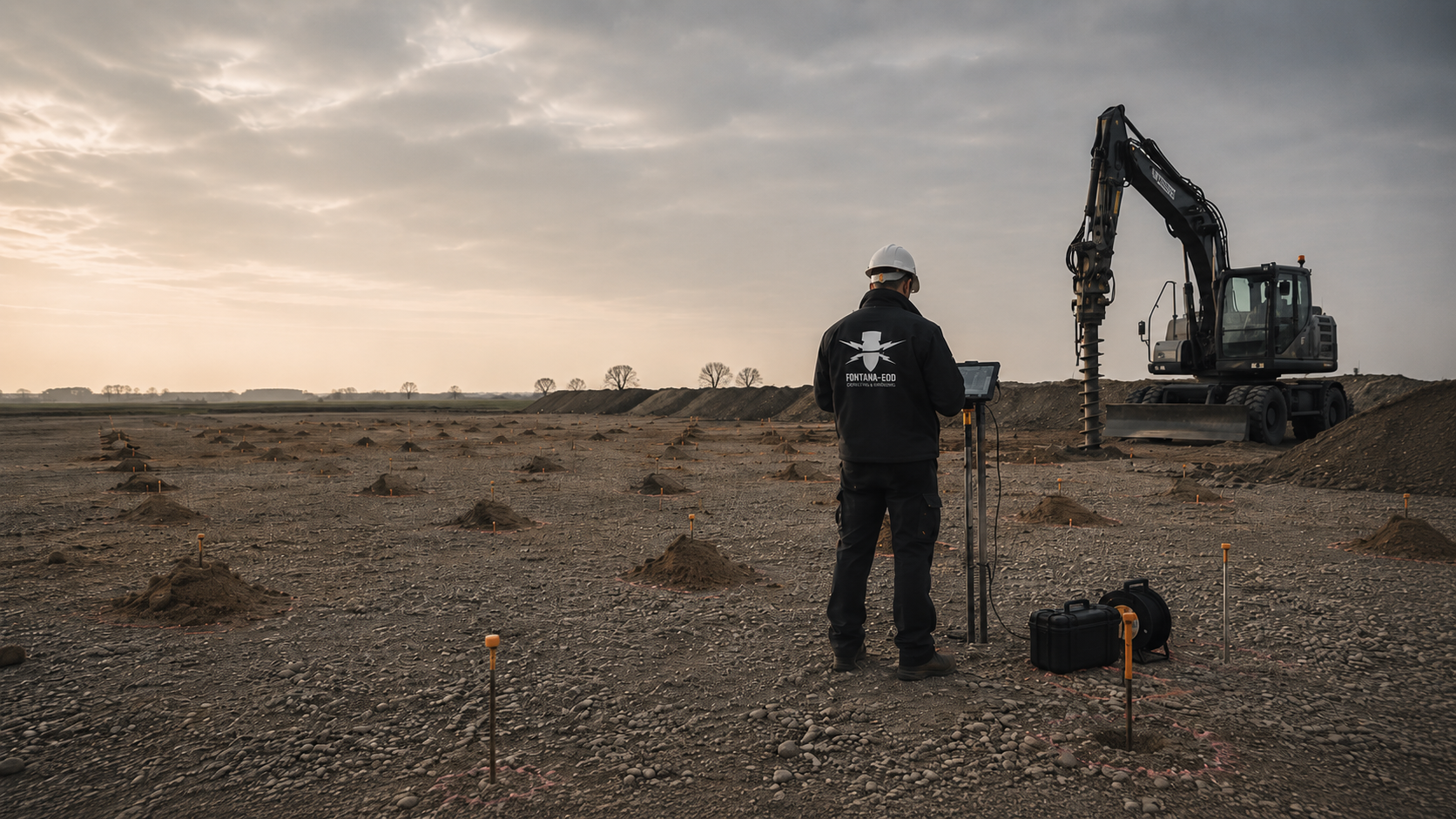
For deep drilling or foundation points, location, depth, construction method, elevation references and intervention dimensions belong in commission clarification. Deep-ground surveying or a point-specific borehole clearance statement, qualifications, responsibilities and documentation are aligned with this. Existing reports are compared with this investigation volume; relocated points or greater depths must be compared again before execution.
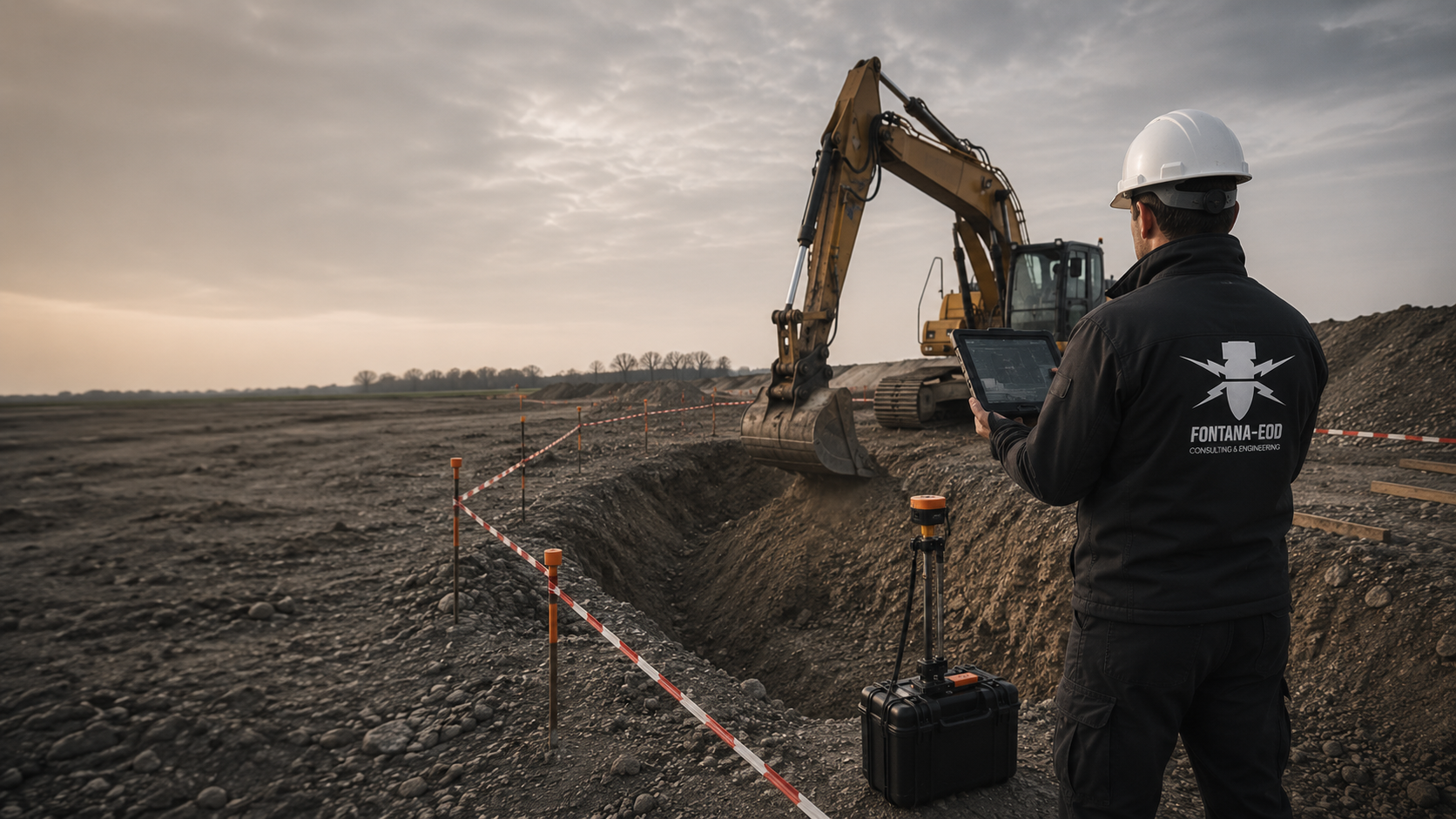
A service during construction is planned with the actual construction stage and suitable equipment. Describe which areas can be investigated only during demolition or after new access is created. The task and its interfaces are agreed unambiguously before the next intervention.
Specialist investigation needs are connected with project conditions. A sector name alone does not replace this description.

Access, working volumes and operational activities may affect one another. Describe areas remaining in use and when investigation is possible. Existing operator requirements are communicated. The specialist task relates to the actual construction stage.
Assign operating conditions and investigation taskEach section must show which information exists and the stage reached. Handovers between companies need an understandable spatial reference. State which works follow one another and where investigation should fit into the schedule.
Prepare construction sections and handoversExisting utilities, structures and later access may limit investigation. Identify these conditions early. Planning distinguishes which evidence may be available before demolition and which task can be addressed only at another working stage.
Describe existing conditions for specialist planningThe process connects the evidence base, suitable investigation and use of results. Authorities and parties involved retain their respective tasks.
Initial contact describes project location, proposed intervention and result needed. This helps define which specialist support is required and which information is still missing.
Site plans, reports, official correspondence and known authority conditions are connected with the current plan version. Document review clearly records unresolved spatial references and missing appendices.
If historical questions remain, suitable research or aerial photograph assessment is agreed according to the assessment objective needed. Its results provide a basis for further decisions.
Investigation follows area, depth and local conditions. Access, work sequence and contacts are agreed. The specialist commission and occupational safety organisation remain connected.
The specialist company performs the commissioned survey or suitable investigation during construction within the defined volume. Measurement data, findings and limitations are recorded with location, depth and plan references. Deviations from agreed conditions remain identifiable. Effects on further construction and necessary additions are agreed with the designated responsible persons.
Interpretation connects measurement data and findings with the investigation task and actual working conditions. It explains which conclusion is possible for the area treated. Zones still technically unresolved remain identifiable on the results plan. Necessary additions are identified with their reason so that client and site management can coordinate the next step.
The report, results plan and clearance record where applicable connect the scope performed with specialist assessment. Documents show limitations and unresolved areas. References between text and appendices remain traceable. Complete handover also records the plan version to which the work relates and further measures needing clarification before the activities affected.
Project parties compare results handed over with the next construction section. Location, depth and affected ground volume must fit the documented scope. For a design change, it is clarified whether existing evidence is sufficient or additional investigations are required. Decisions, responsibilities and outstanding tasks are recorded for further execution.
Choose the starting point according to the task actually needing clarification. Existing documents are provided with their full context.
Identify the affected ground volume, intervention and record needed. The appropriate service is determined from this task rather than simply adopting a general result term in the bill of quantities.
Determine the service scope for the interventionCompile the report with appendices and the current construction plan. Describe which assessment is to be reused and whether the intervention differs from the original commission.
Understand existing assessment limitsState the project location and authorities already involved. Existing correspondence remains part of coordination with dates, case and appendices. Regional assignment does not replace the specific specialist question.
Understand the project location and existing coordinationSubmit the existing status and outstanding decision. FONTANA-EOD can agree the specialist service needed and suitable documents for this enquiry with you.
Submit the specialist project question with documentsThe project file connects the starting point, completed work and subsequent use. Each document remains identifiable with its purpose and responsible author: specialist report, employer risk assessment, operational decision or official correspondence. Associated appendices are provided together for transfer of the respective case.
Historical documents, existing official information and site plans are assigned to the plot, construction site, route section or individual point. The task description identifies the proposed intervention. Missing information remains documented as an unresolved question.
Measurement data, survey results and assessment of findings are connected with the area treated. The report shows how technical conditions and measurement limits affect the assessment. Unresolved areas or depth intervals are identified explicitly. If additional work is performed, it is clearly documented which previously unresolved question it addresses. For later construction phases, earlier results and the supplemented status remain assigned traceably.
The report, results plan and clearance record where applicable record the task actually performed. Unresolved areas and further measures remain identifiable for site management. The conclusion relates to the documented volume and agreed investigation commission. For a changed construction design, this scope is compared again with location, depth and method. The next commission can thus build on evidence already obtained. Even where result documents exist, new suspicious finds are handled through safe reporting routes.
Do you want to use a report for a proposed intervention or understand its limitations? Compare the existing records with the current construction design. Specify area, depth and the outstanding decision. Further specialist work can then be coordinated precisely.
Discuss records and the proposed interventionExisting documents are connected with the commission, organisation and actual working conditions. Technical application of a rule follows its scope and the activity performed. Additional contractual requirements are recorded with their specific service reference.
In Germany, the Explosives Act distinguishes permits, responsible persons and personal competency. The First Ordinance on the Explosives Act (1. SprengV) includes provisions on specialist knowledge and state-recognised courses. Commissioning considers activity, person and specific authorisation scope together. The quotation describes the service to be performed; relevant prerequisites are assigned to this task.
DGUV Information 201-027 supports risk assessment and definition of protective measures during explosive ordnance clearance. DGUV Rule 113-003 concerns dismantling or destroying explosives or corresponding objects, including disposal of found ordnance. Its application follows this activity scope. Work preparation considers the technical specialist task and necessary protective measures together. The proposed construction sequence must allow for technically necessary investigations and coordination before the next intervention.
BFR KMR structure tasks within their scope on federal properties. Contractual requirements and existing authority conditions are assigned for the specific project. Official find and hazard response procedures and interfaces with public disposal services follow project location and case. Each employer fulfils its own occupational safety tasks; the specialist company documents the commissioned investigation. Contacts and reporting routes are defined so that new evidence reaches the parties responsible for the next decision.
Information must remain understandable to those later working with the result.
The specialist task and result needed are described specifically.
Documents and assessments identify the same ground volume.
Contacts and decision routes are assigned to each task.
Limitations remain traceable in report and plan.
Changes are compared with the previous investigation scope.
The handover shows which next decision it supports technically.
Organisational assessment needs the specific location and existing documents. General responsibility terms are insufficient.
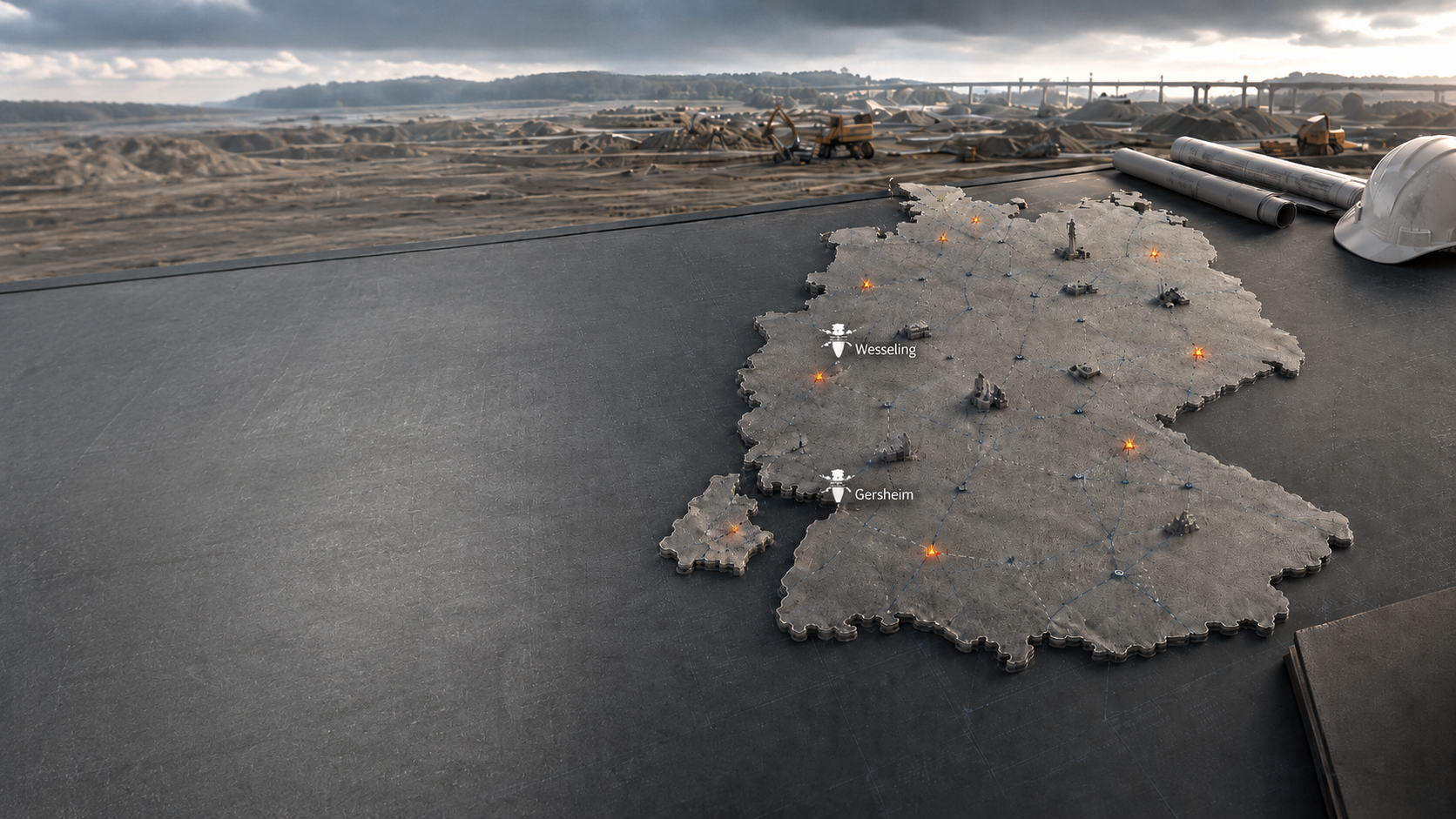
State municipality, address and, where applicable, plot reference. Include existing official correspondence in full. The next specialist question can thus build on the previous status without guessing the content of earlier coordination.
Understand the project location and responsible interfaces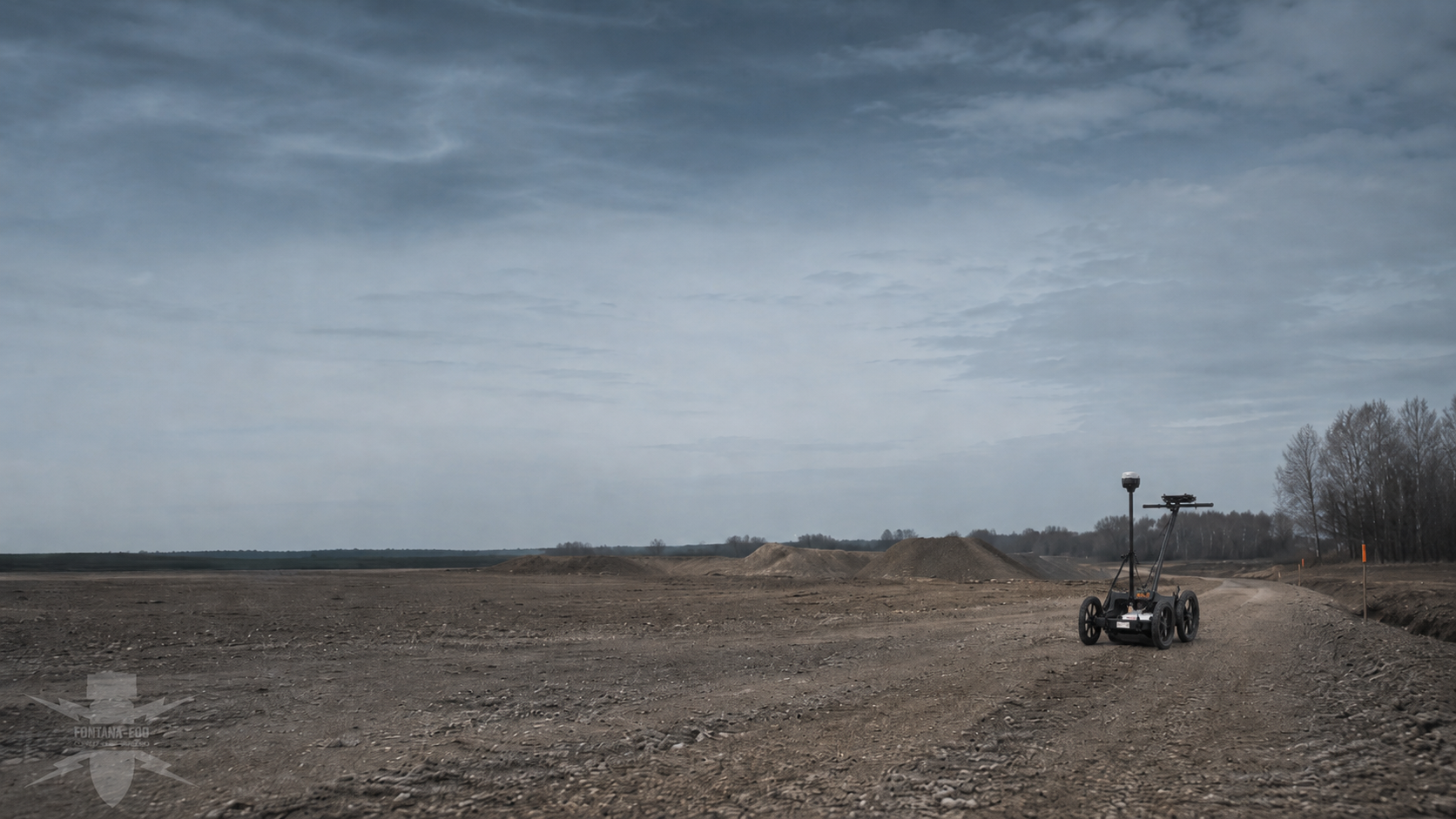
Describe the intervention and support needed. State which reports exist and which questions remain. A traceable initial situation facilitates agreement on an appropriate scope.
Enquire about the task with available documentsCoordination considers activities, ground volumes and existing project documents together. Historical information, a technical investigation report and current construction design contribute different information. The shared spatial reference shows which areas the documents cover and where more information is needed.
Historical assessments may provide important information for planning. Their spatial reference and assessment limits are retained when passed on. They answer a different question from the record of a later completed technical investigation.
Understand the conclusions of a historical assessment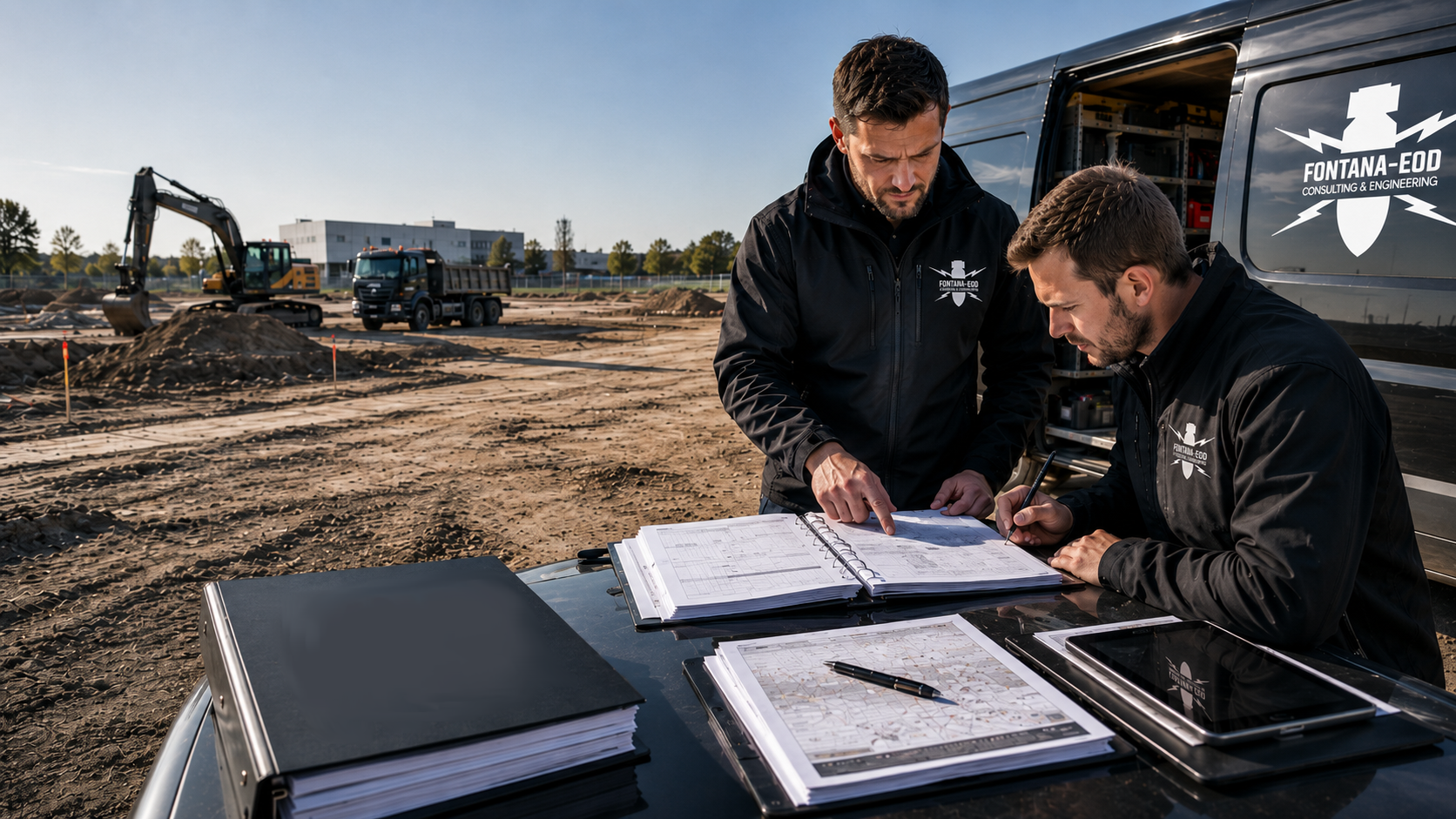
A report is read with the commission and site plan. Documentation should show site management which status it can actually use. Outstanding questions and changed plan versions are connected clearly.
Use records for the next decision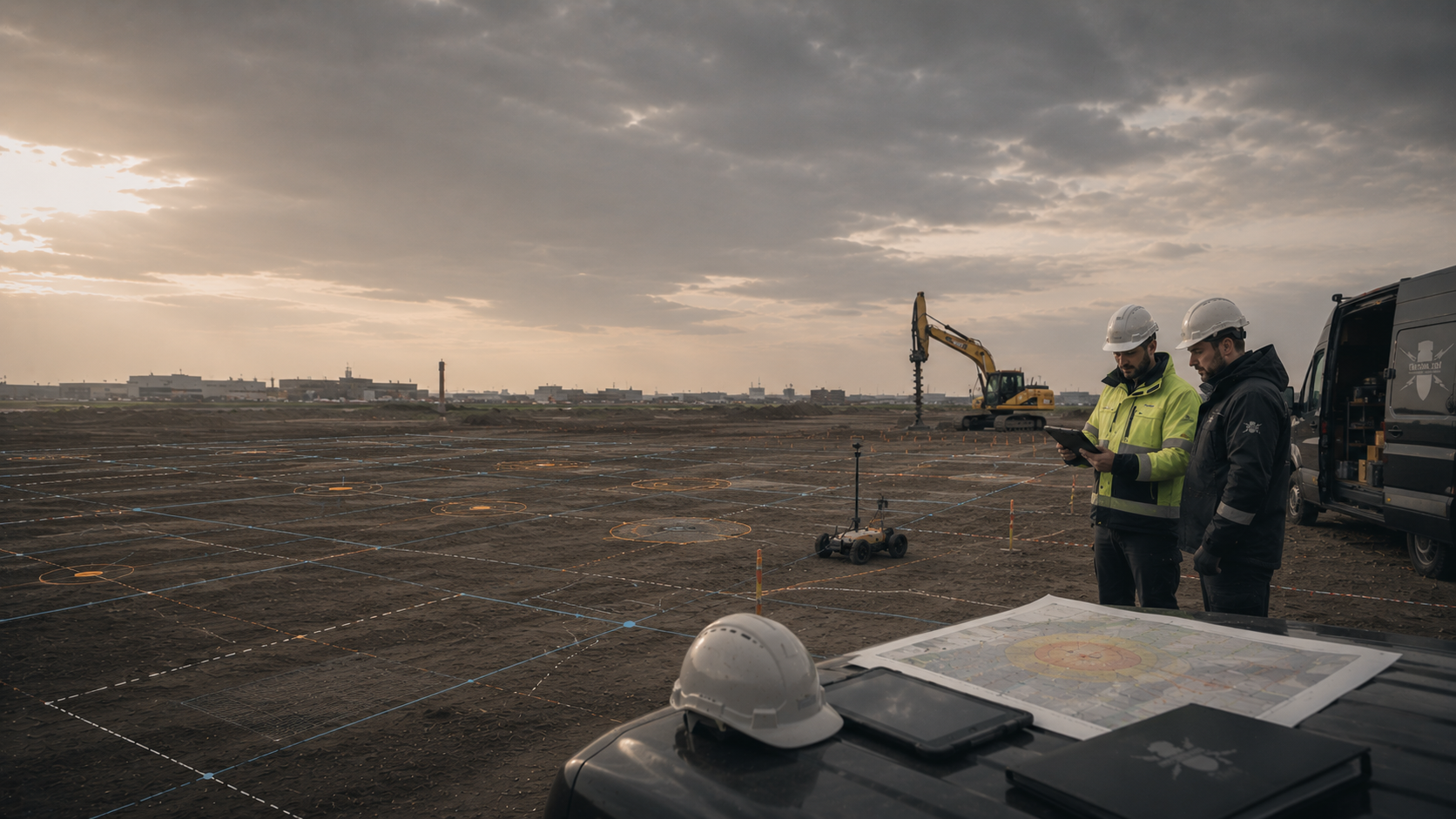
Method, volume and result needed are defined together. Historical assessment interprets existing sources; technical surveying investigates a defined volume. A specialist service during construction is described with its investigation scope and execution within the construction sequence. The enquiry identifies the unresolved task and result needed before the next intervention.
Distinguish specialist services by investigation need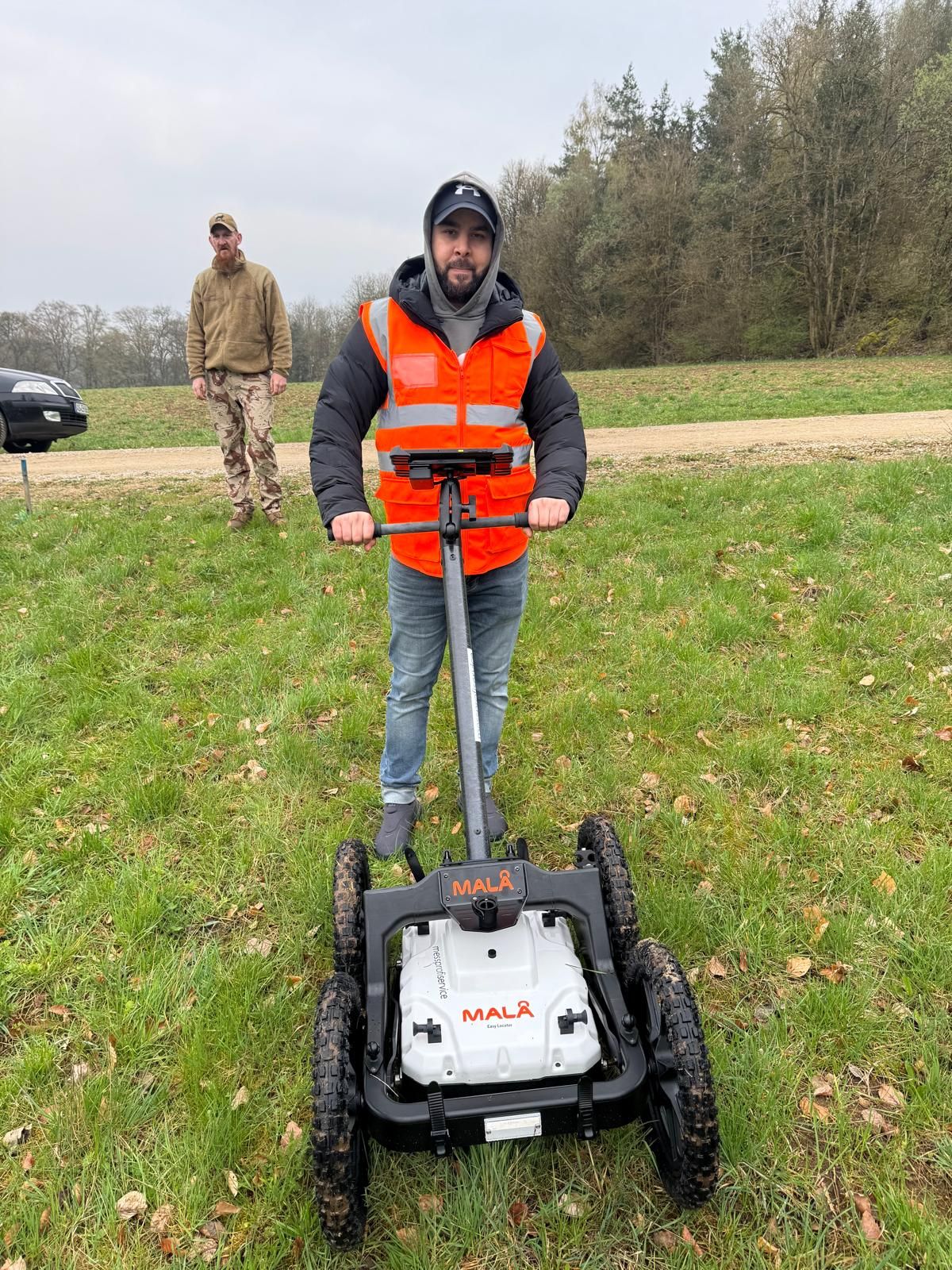
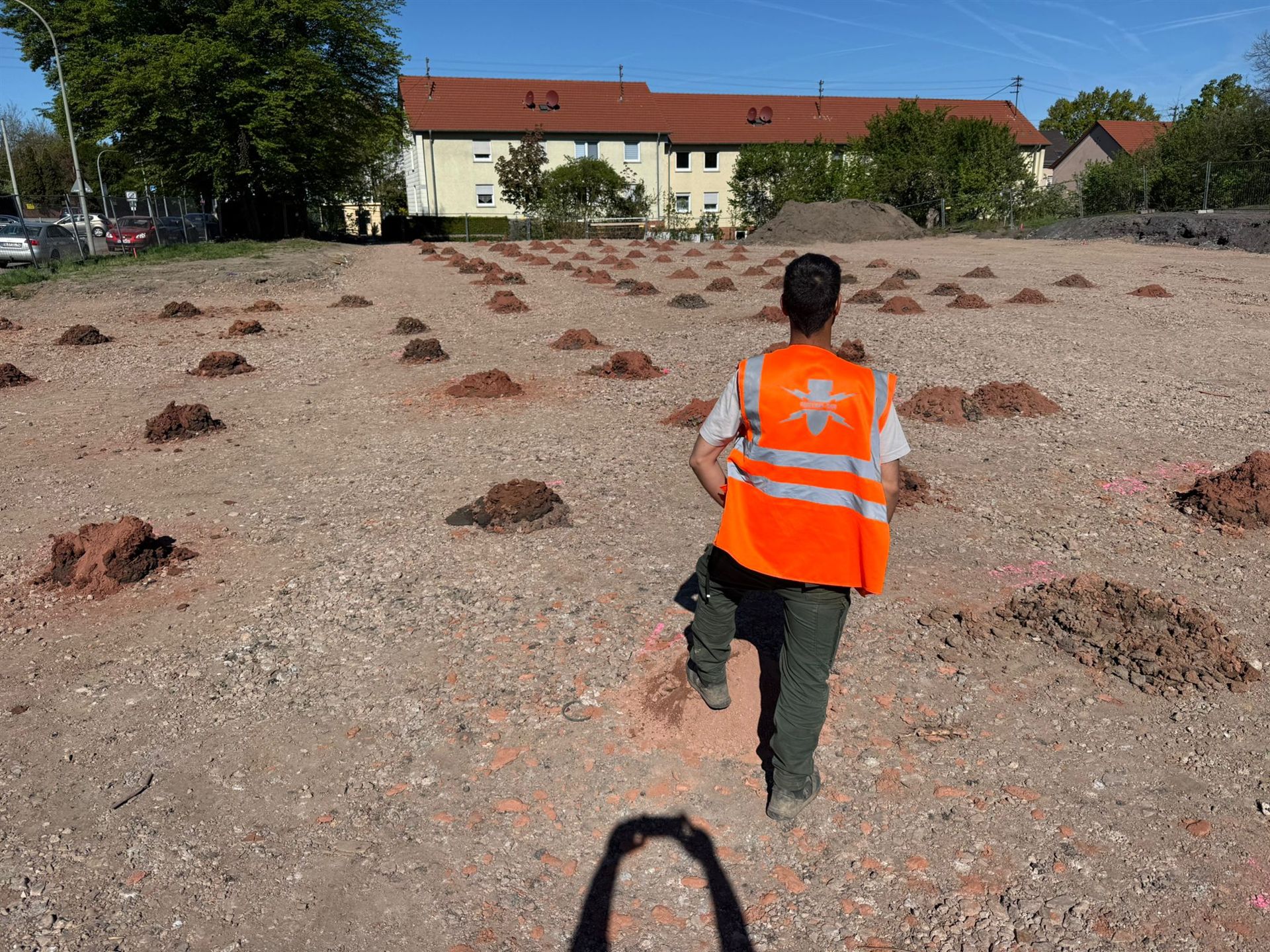
Before commissioning, the unresolved specialist task, affected ground volume and existing evidence are brought together. Parties agree which document or investigation is needed for the next decision.
Terms in a report are read in relation to the task performed and result described. Investigation volume, depth reference and limitations determine what the assessment can be used for. For unclear wording, the specific passage is compared with the associated plan and next intervention.
Understand the background to explosive ordnance assessmentCommission clarification, investigation and record preparation relate to the next work step. Handover includes reports and plan appendices needed with the stage actually reached. Unresolved areas and necessary follow-up measures remain identifiable for subsequent project parties.
Agree assessment scope and handoverState location, intervention and existing documents. Describe the outstanding decision. Specialist coordination can then build on your actual project status.
Discuss the project question with documentsIn Germany, assessment of its own working conditions and resulting occupational safety measures remain each employer's task. Specialist investigation results provide important information for this. In its assessment, the employer considers the actual investigation scope and limitations described in the report.
For construction sites in Germany, coordinator appointment and the safety and health plan are checked separately. For the plan, Section 2 paragraph 3 BaustellV specifies, where several employers are involved, the additional condition of a prior-notification requirement or particularly hazardous work under Annex II. The number of employers alone is therefore insufficient to assess the plan requirement.
In Germany, the duty under Section 20 SprengG concerns the responsible persons designated by law and their activity. Commission, role and necessary authorisations are defined specifically. For other employees, qualifications, instruction and tasks depend on their actual activity.
DGUV regulations are legally binding rules in Germany within their respective scope. Rules and information publications support practical fulfilment of duties. The document types are distinguished in application; technical recommendations remain relevant to selecting suitable measures.
No. A suspicious object remains untouched; work at the find location must stop and the police must be notified immediately: 110 in Germany, 113 in Luxembourg. Identification, recovery and further technical handling of the find are undertaken by the responsible authorised specialists.
A site plan, intervention description and all existing explosive ordnance documents in full help. Add known authority conditions, plan versions, construction dates and the decision desired. This distinguishes the specialist task from general site organisation questions.
This is checked using its commission, volume, depth interval and limitations. A relocated point or deeper excavation may exceed the existing assessment. Before further use, specialists compare the change with the documented status.
It depends on the unresolved task, scope and condition of documents and coordination needed. For a sound estimate, the proposed intervention and result needed are described. The number of companies involved alone is insufficient.
The enquiry should identify the affected ground volume and support needed. Unresolved issues are stated explicitly.
Provide the address or region, plot reference and a current site plan. Mark the construction site, route, borehole points and additional working areas. Describe intervention depth and construction method insofar as already defined.
Submit aerial photograph assessment, earlier documents, survey reports, utility plans and known authority conditions. Correspondence from authorities involved is included in full. Missing appendices or unclear assignments remain visible as outstanding issues.
State project status, construction dates, companies involved and the task to clarify. Does it concern tendering, investigation, report interpretation or handover? This information helps agree the specialist contribution and necessary interfaces. Also identify who needs the specialist results for the next decision and which plan version the enquiry concerns. For several construction sections, sequence and upcoming ground interventions are assigned clearly.
Whether historical aerial photograph analysis, explosive ordnance surveying, surface surveying using GPR, magnetometry or TDEM, deep-ground surveys, downhole surveys, excavation supervision, area clearance or ordnance recovery is needed depends on the location, ground disturbance, depth, ground and existing documents. An early ordnance assessment provides clarity for tendering, programming, occupational safety and construction.
FONTANA-EOD combines its Section 7 SprengG licence, specialists holding Section 20 SprengG certificates of competence, suitable survey and clearance methods, and traceable documentation. Send the site plan, depth of ground disturbance, construction phase and existing documents for an initial technical assessment.


