Project pathway
The quickest route to the right decision.

News, interviews and specialist articles on explosive ordnance and ground conditions: read reports, understand historical context and find further information for planning your construction project.
Read news and interviews.
Understand history and specialist questions.
Find information for your project.
A historical report can provide information relevant to assessing an area; suspected ordnance and the measures required are considered in relation to the specific area and proposed intervention. Existing evidence and suitable investigations are assessed professionally for this purpose.
For your construction project, the specialist links lead to terminology, responsibilities and required documents. An enquiry brings together the project location, groundworks and the decision still needed.
In the explosive ordnance glossary you will find terms ranging from unexploded bombs to clearance objectives. This helps you read a specialist statement without replacing its project-specific content.
A find report initially describes a specific event. Its location, date and type of information matter for further interpretation. A published report about a bomb find, a historical aerial photograph and a technical investigation report answer different questions. When making an enquiry, record which text or document you refer to and what information is still needed for your project. A street name may narrow the search area; construction planning also requires the actual property and intervention boundaries.
For historical accounts, distinguish the time of the event from the publication date. An archive article published today may discuss a Second World War attack. A later image may already show rebuilding, demolition or changed ground surfaces. For the construction area, the recorded dates are connected with use at the time and the current plan. A statement about a city's destruction initially describes the historical event. Its significance for an individual property emerges only through spatial and specialist assessment of suitable sources.
An image's subject and evidential value also belong together. A historical photograph may show buildings or damage, while a site plan records a later division of properties. A current site photograph illustrates a work situation. It does not establish the investigation depth or full scope of work on another project. For your own decision, obtain the report and associated appendices. Captions, image dates and provenance help identify illustrations correctly and distinguish a historical view from a technical results presentation.
Terms such as unexploded bombs, combat remnants and legacy explosive ordnance refer to different contexts. Air-war records may indicate dropped ordnance that failed to function; ground fighting or former military uses may involve other remnants. Reliable documents are used to assess which objects require specialist consideration at a location. The size or current use designation of a property does not determine this assessment. For an enquiry, it helps to identify known former uses and existing information and to mark unverified assumptions as such.
Annual statistics and inventories also have different purposes. The number of objects disposed of describes recorded activity within a reporting period. Mass in tonnes, the number of operations and counts of particular bomb types can only be compared using their respective definitions. They do not produce a simple ranking of property risk. If using a figure in a project discussion, keep the publisher, reporting year, counting category and geographical scope together. The specialist property assessment then draws on the specific local evidence.
A measurement initially records a physical quantity. An anomalous measurement indication must therefore be distinguished from identified explosive ordnance. A finding gains meaning through evaluation, local conditions and, where necessary, further work. The term clearance statement is also read with its documented scope: area worked on, depth, method used, clearance objective and limitations. A single word from a report cannot convey this information. Text, results plan and legend remain available together for subsequent use.
Spatial relationships are particularly important in historical preparation. Photographs, maps and records may differ in scale, coverage or accuracy. An earlier building outline is therefore compared with the current site plan before a specific investigation area is derived from it. Ground changes, earlier fill and previously worked areas are considered with their respective dates. A specialist assessment identifies which evidence could be reliably assigned and where information is missing. The next investigation task follows this evidence and the groundworks actually proposed.
The historical aerial photograph analysis links suitable images and other sources to today's construction area. The enquiry brings together the site plan, planned interventions and existing historical assessments.
Specific local records also illustrate different historical contexts: the Grand Ducal commemorative account of Pétange describes the municipality's liberation by American troops on 9 September 1944 and Lieutenant Hyman Josefson, who was killed in action. The municipal remembrance trail in Bettembourg addresses the American bombing of the railway facilities on 11 May 1944 and damage to residential areas and the cemetery. Such sources explain events at a particular location; specialist assignment to today's property remains a separate task.
The guidance on construction projects involving suspected explosive ordnance supports gathering existing information and clarifying the next steps.
Start with the construction activity that comes next. In addition to its excavation, a new building may include connections, foundation drilling, access routes and external works. For utility alterations, trenches, crossings and chambers belong together in the task description. Preparatory ground investigations or sampling may also involve ground interventions. Enter the affected areas with their locations and proposed depths on the current plan. This enables specialist planners to identify which decision is needed before which activity and what existing evidence can already be used.
Bring existing documents together in full. These include official information, historical assessments, investigation reports, results plans, conditions and associated appendices. State which construction plan version your enquiry is based on. A report from an earlier construction phase may contain useful results, but its areas, depths and limitations must fit the current intervention. Identify missing appendices and options still unresolved. Initial coordination can then distinguish additional document needs from specialist investigation that is genuinely still outstanding.
Where changes occur, describe the difference spatially. A relocated utility, additional chamber or deeper foundation may affect an area not covered by the earlier investigation. Mark both changed parts and unchanged sections. A common elevation reference helps compare depths from different plans. Site management can then identify which results remain usable and what additional work is required before the next construction activity. A new file version alone does not explain the technical change.
The specialist process connects document review, necessary historical research and method selection with investigation or appropriate supervision. Results are evaluated and documented within their actual scope. The next intervention is then compared with that status. The extent of these functions may differ with the starting situation. Where suitable evidence already exists, further work builds on it. Unresolved historical questions, inaccessible subareas or a changed construction method are identified as specific next tasks and agreed with those involved.
Where construction proceeds in sections, handovers are defined early. Roadworks, utility work and foundations may take place at different times on the same site. The project file must therefore show which investigation status applies to which working area. Responsible contacts receive changes and results documents in time for their respective tasks. An unresolved connecting section remains identified even if neighbouring areas have already been investigated. The work sequence is linked to access, investigation and the decisions required, rather than being derived solely from the project's overall deadline.
For tendering, describe the investigation objective and service scope traceably. Identify areas, individual points, depths, available evidence, known obstacles and expected supporting documentation. Assign necessary preliminary work and provision of access. Quotations can only be meaningfully compared when they address the same specialist task under comparable conditions. Measurement, evaluation, reporting and results handover may be separate service components. Record which documents site management needs at the handover point and how changes to the initial conditions should be handled.
The completed investigation is retained in the project file. The survey report and results plan link the commission, measurement data, findings assessment and ground volume worked on. Where clearance work was actually performed, the clearance record documents areas, depths, clearance scope and results. Unresolved zones and technical limitations remain part of the documents. Before later replanning, this information is compared again with the proposed intervention. If the client or site management changes, the complete appendices are passed on so that existing evidence remains findable and understandable for the next specialist decision.
The process and documentation section explains specialist handovers from commissioning through to documentation. There you can identify the documents and decisions needed for your next construction phase.
The respective responsibilities of authorities and the role a specialist company can undertake are explained on the page about public explosive ordnance disposal services and specialist companies.
For an official enquiry, the actual project location is decisive. Procedures and responsibilities may differ between countries and individual cases. Provide existing correspondence with sender, date, file reference and appendices. Identify the municipality, property and construction task before applying general information about responsibilities to your project. For a route spanning several municipalities, assign the respective sections clearly. Clarify the information, requirements and decisions needed for the specific case with the responsible authorities.
The client describes the project and provides available background information. Designers translate the construction task into areas, depths and technical requirements. The contractor needs the investigation and decision status relevant to its work. The specialist company undertakes the agreed investigation, evaluation or other permitted specialist service. Official decisions are made by the responsible authorities. A coordinating contact can bring information together; individual tasks remain assigned to the named parties. For each unresolved question, the recipient and next step are recorded.
In Germany, the legal requirements for the respective activity and local procedural requirements must be observed. Authorisation, personal competence, technical suitability and the commissioned service scope concern different aspects. An investigation report documents the specialist service performed within its limits. The official decision needed for the specific project is clarified separately according to its location and task. For cross-border projects, activities are assessed against the requirements of the respective country and its responsible authorities. Necessary Luxembourg requirements are clarified separately for the specific commission.
For a suspicious object, reporting the find safely takes priority. Stop work in the affected area, keep your distance and do not touch, move or open the object. Warn others without putting yourself at risk. In Germany, notify the police immediately on 110; in Luxembourg, on 113. From a safe distance, describe the location already known and follow the responsible authorities' instructions. Do not approach the object again for a photograph or to identify it more precisely yourself.
An ordinary project enquiry prepares planned work. It is a different process from immediately reporting an actual find. After the immediate response to the hazard, known circumstances, affected working areas and instructions received can be documented for project organisation. Subsequent specialist assessment distinguishes confirmed observations from information still unresolved. Protection, reporting and the emergency services' instructions determine immediate behaviour. Deadlines or requests for additional documents do not alter this priority.
In Luxembourg, SEDAL, a service of the army, handles identification, assessment and treatment of found ammunition. For planned private specialist services, the commission, permissibility and interfaces are clarified with the locally responsible parties. Cross-border services may also involve activity-specific requirements and rules on posting workers. Initial coordination therefore identifies the project location, proposed activity and companies involved. Reporting a find on 113 remains separate from this organisational preparation and is initiated immediately for a suspicious object.
For construction organisation, reporting channels and information handovers are defined before work starts. It should be clear who receives plan changes, who makes a working area accessible and who accepts results documents. Employers consider the hazards of proposed activities in their occupational safety arrangements. Where several companies are involved, shared hazards and interfaces are coordinated. The specialist investigation status informs this organisation within its actual scope. New construction phases, changed access or different working conditions are communicated to the responsible parties before the affected activity.
Through the regional project information you can connect the project location with the specialist and procedural information described there. The specific address, planned activity and authorities responsible for the case remain decisive.
The service overview leads to the individual investigation methods. Method selection depends on the specific task and conditions on site.
Selecting an investigation method begins with the question of what information is needed. Area, target objects and intervention depth are considered together with ground conditions, existing structures and access. A historical assessment evaluates evidence from sources; a technical investigation gathers different information on site. Both may be required for the same project decision. Earlier investigations are included with their conditions and results. By contrast, a device name or description of work on another project is insufficient to define the scope needed for your own construction area.
Magnetic and electromagnetic methods and ground-penetrating radar use different measurement principles. Their suitability depends on the specialist task and local conditions. Metal installations, reinforcement, known utilities, ground composition and moisture may affect measurements. Provide existing infrastructure and ground investigation documents during preparation. The specialist company can use them to clarify what information a method can provide and which areas require additional consideration. A particular device name alone does not establish suitability for every depth or target object.
A surface survey needs suitable access and a reachable investigation area. Paving, storage areas or operational restrictions may affect preparation. Describe the existing surfaces and changes actually proposed before measurement. Excavations or other preliminary work are themselves considered with their investigation and occupational safety needs. The work is not determined solely by the desired measurement grid; it is coordinated with the task, construction status and necessary technical prerequisites.
For deep or individual point interventions, an additional deep-ground or borehole survey may be considered. This requires precise point locations, proposed depths and the respective conditions. A borehole clearance statement relates to the agreed point and the depth range actually worked on. Subsequent construction must also fit this information. If a foundation is relocated or planned deeper, the significance of this change is assessed professionally before work. Existing results remain documented within their original service scope and limits of interpretation.
An explosive ordnance survey during construction links suitable technology, qualified personnel and a defined working method with construction progress. Visual observation of excavated material alone does not meet this specialist distinction under DGUV guidance. Commissioning defines the proposed investigation steps, accessible working areas and required supporting documentation. Access, excavation sequence and handovers must be agreed with site management. Zones not yet worked on remain identifiable. Suitable supervision for a particular project depends on the specific conditions and the specialist task clarified beforehand.
An anomalous signal is assessed professionally and assigned to its spatial reference. Known interfering objects and measurement conditions form part of this assessment. If the investigation performed cannot yet answer a question, the further work required is described. Additional measurements, other technical tasks or coordination with responsible authorities may be necessary. Site management needs an understandable status with usable results and unresolved areas. A colour marking on a plan gains meaning only with the legend, report and actual limits stated.
Effort and costs depend on the information needed and project conditions. Area size, individual points, depths, access, interference and preliminary work may change the scope. Evaluation, documentation and any further work on findings are additional components. A specific task description is therefore more useful for an enquiry than a general request for an area rate. Providing existing plans and reports in full enables targeted clarification of which results remain usable and which additional services are needed for the next project decision.
The information on explosive ordnance surveys explains technical investigation tasks. The suitable method is determined from your own intervention and local measurement conditions.
For work during excavation, excavation supervision is defined by its technology, working method and documentation. Describe the proposed construction sections and conditions so that a suitable specialist service can be agreed.
For historical information, check the location, period and source. Documentation about a city is not evidence for a particular construction area. Likewise, a measurement method's description does not establish whether it is suitable for the intervention planned there.
For an enquiry, you can use the project documents overview and assemble the project's actual location, planned work and specialist statements already available.
Have you read an article and want your own project assessed? Describe the project location, planned ground interventions and documents already available. For an immediate find, notify the police without delay: 110 in Germany, 113 in Luxembourg.
FONTANA-EOD: +49 6843 9994997 · info@fontana-eod.de
The details already known are sufficient initially for a first project discussion; open questions are explicitly identified. Provide a clearly identifiable site plan and mark the groundworks actually proposed. State maximum depths, construction phase and the decision needed. For utilities, include crossings and chambers; for foundations, the individual points or affected areas. Attach existing information and investigation reports with all appendices. This allows the next specialist task to be developed from the available evidence.
Also identify the conditions for carrying out the work. These may include ongoing operations, access times, known existing utilities, paving and lateral boundaries. Ground investigation documents explain soil conditions or known fill. Where several specialist designs are involved, keep their respective plan versions identifiable. The contact for questions should be able to explain which option will actually be implemented and which remains unresolved. A shared task description helps coordinate investigation, necessary preliminary work and the construction sequence.
Where an investigation already exists, first clarify its relationship to the new project. Submit the report, results plan and legend, rather than only a summary. Mark changed areas, additional depths or a different construction method. Further work can then build on usable evidence and define unresolved tasks. For retendering, describe the available investigation status and the additional work needed together so that all parties use the same technical scope.
The requested date is connected to the decision point. State which groundworks are planned first and which documents are needed beforehand. Specialist preparation can then be coordinated with planning, access and execution. An enquiry cannot be answered solely from the construction start date: even preparatory interventions and evaluation of results need their place in the sequence. Outstanding official requirements and missing project information are explicitly considered in this coordination.
For results handover, identify recipients and intended use. Designers, site management and subsequent contractors must be able to locate their respective working areas in the documents. The project file keeps the information used, commission, work performed and assessment together. Agreed formats and complete appendices make later comparison easier when plans change. The technical conclusions thus remain traceable even where a project is handled in several sections or different parties undertake the next construction phase.
The BFR KMR assessment principles relate information to its technical significance and the specific task. The behavioural guidance from the Arnsberg district government explains how to report an ordnance find safely in Germany.
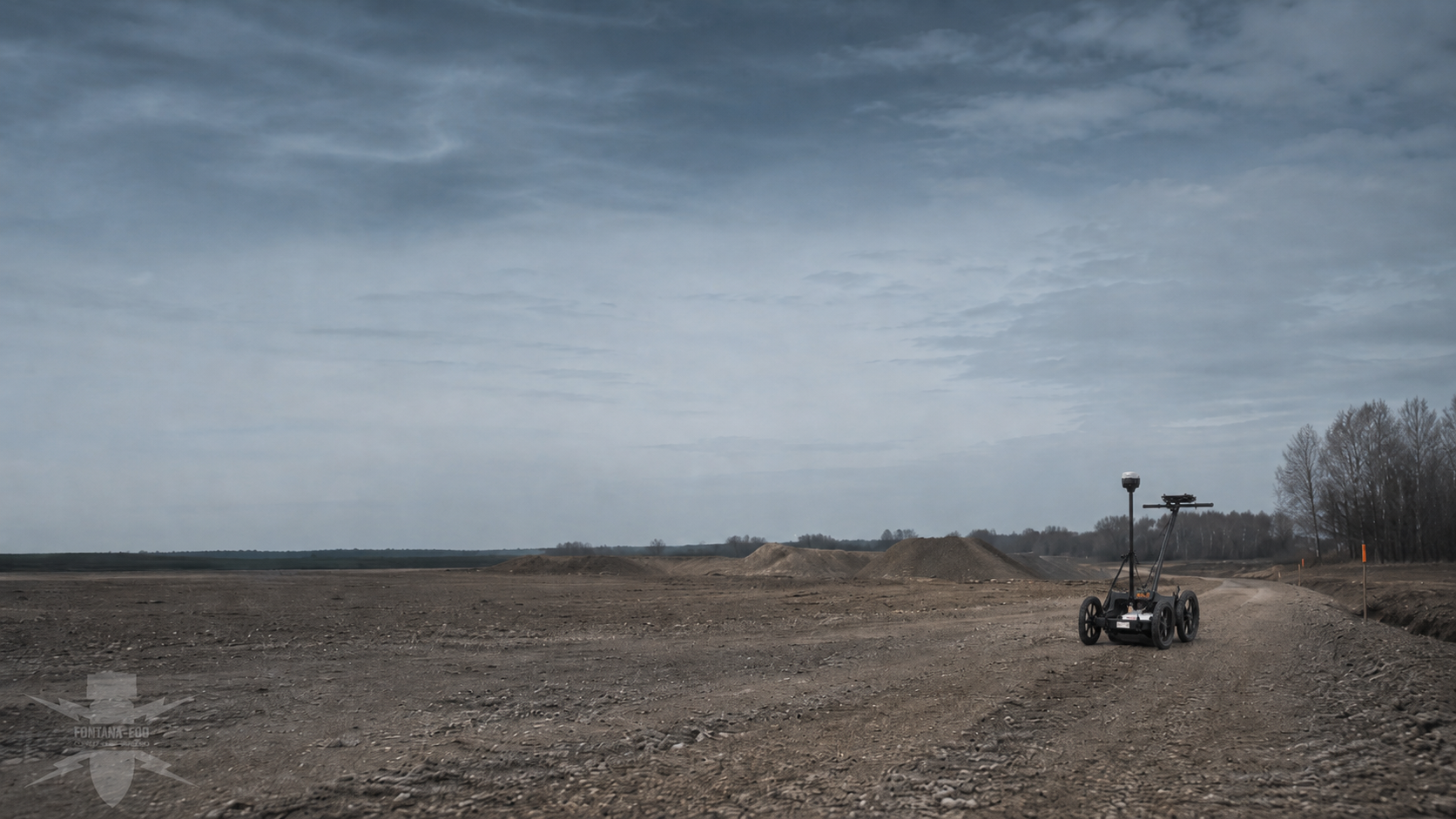
Whether historical aerial photograph analysis, explosive ordnance surveying, surface surveying using GPR, magnetometry or TDEM, deep-ground surveys, downhole surveys, excavation supervision, area clearance or ordnance recovery is needed depends on the location, ground disturbance, depth, ground and existing documents. An early ordnance assessment provides clarity for tendering, programming, occupational safety and construction.
FONTANA-EOD combines its Section 7 SprengG licence, specialists holding Section 20 SprengG certificates of competence, suitable survey and clearance methods, and traceable documentation. Send the site plan, depth of ground disturbance, construction phase and existing documents for an initial technical assessment.


