Project pathway
The quickest route to the right decision.
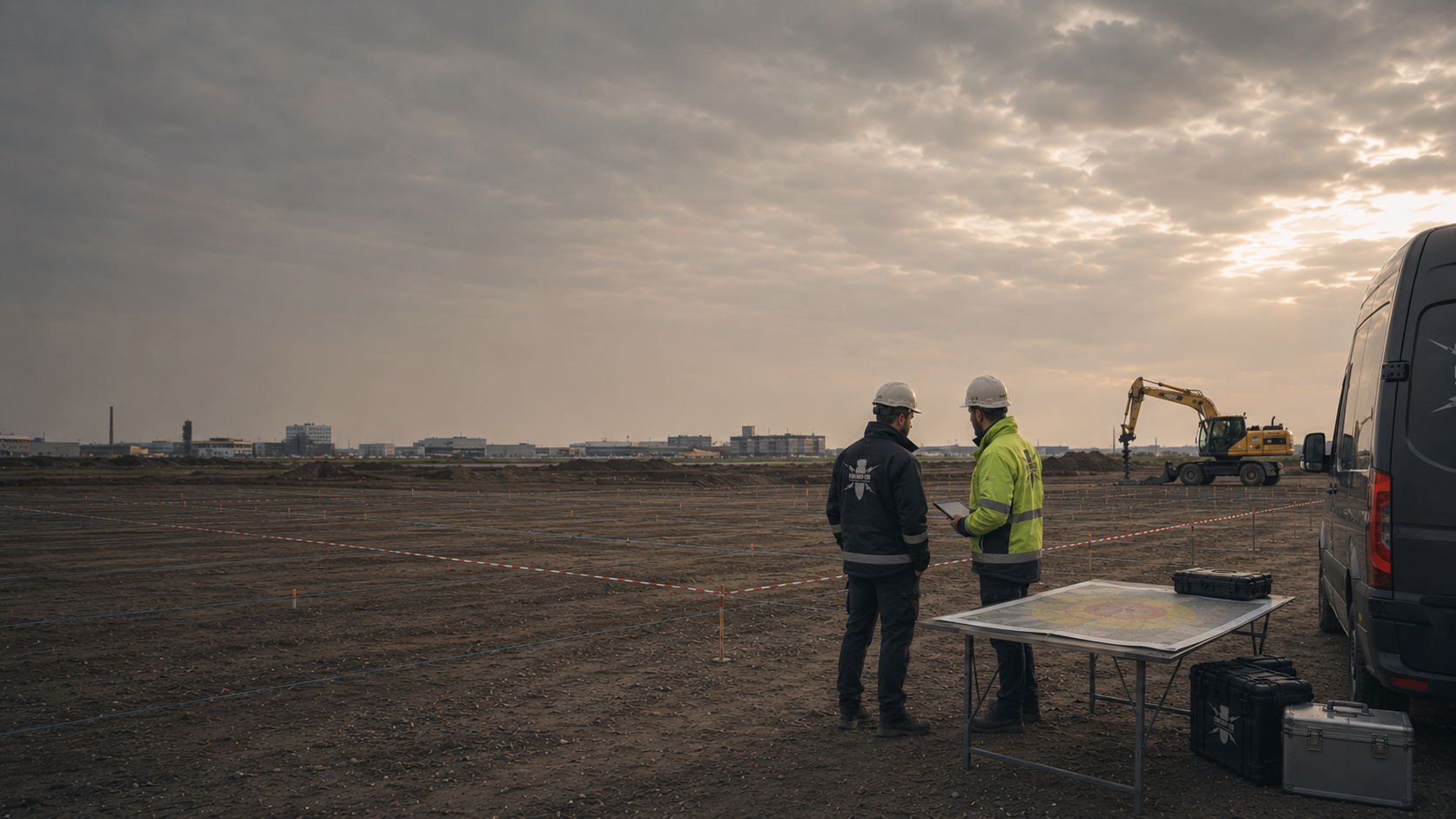
International clients, designers and contractors need to translate EOD/UXO tender requirements into specific tasks at the project location in Germany or Luxembourg. FONTANA-EOD assesses the suspected hazard, ground intervention, suitable specialist service, responsibilities and supporting documentation. Send the relevant specification, site plan and intervention depth so that the necessary investigation scope and next project step can be clarified professionally.
Understand EOD and UXO correctly.
Define the area, intervention and depth.
Define assessment and documentation.
EOD denotes specialist handling of explosive ordnance; UXO means unexploded ordnance. In a construction project, these terms need to be translated into a clear investigation scope, responsible parties and appropriate supporting documentation.
The project area, intervention depth and basis for suspicion provide the starting point.
EOD and UXO terminology is not always used worldwide with an identical service scope. In tenders, it may refer to an initial risk assessment, technical investigation, supervision during construction, investigation of individual anomalies or complete clearance work. For reliable commissioning, each term must therefore be connected to the specific project objective.
EOD means professional handling of explosive ordnance. Depending on the situation, it includes reconnaissance and identification, technical assessment, safety measures, recovery, neutralisation, disposal and documentation.
In a construction project, “EOD” should not be commissioned as a blanket service item. Information is needed on the working area, objective, depth, service limits, responsibilities and desired result.
Specify the EOD requirementUXO means Unexploded Ordnance. In project documents, the designation is sometimes also used for suspect objects or measurement targets; this does not yet establish their identification as explosive ordnance.
A UXO indication is therefore not a conclusive finding. Location, historical evidence, measurement data, exposure and specialist identification establish what work and responsibilities are required.
Have a UXO reference assessedA UXO Risk Assessment or Desk Study assesses risks for a specific location and project using existing documents, historical sources, aerial photographs, maps, former use and known indications.
In a German project context, this may correspond to historical aerial photograph assessment or a more extensive analysis of suspected areas. Scope and depth of interpretation must follow from project requirements.
Examine the historical basis in greater depthUXO Survey means a technical search or investigation for possible explosive ordnance. Depending on the task, it may be performed non-invasively from the surface, at depth through survey boreholes or alongside a ground intervention.
A reliable specification identifies at least the investigation area, target object, proposed intervention depth, technical conditions, required data and treatment of anomalous signals.
Identify the appropriate survey serviceUXO Clearance describes work within a defined area to address defined explosive ordnance risks against an agreed clearance or investigation objective. The term may include investigation, target investigation, clearance and final documentation.
A clearance statement remains tied to area, depth, method, scope of work and documented limitations. A general interpretation as unrestricted absence of explosive ordnance would go beyond what the technical evidence supports.
Clarify clearance objectives and documentationSuspected explosive ordnance arises from historical indications, aerial photographs, former military use, known finds, official information or project-specific anomalies. The suspected area must be related spatially to the project.
Only the connection with the construction area, route, borehole positions, excavation or earthworks area enables appropriate specialist investigation and measures to be planned.
Define the suspected areaA survey searches for and evaluates anomalous signals. Clearance addresses defined suspected areas or target points against a specified clearance objective. Recovery concerns professional handling of identified explosive ordnance within the permitted activity scope.
The terms describe different service stages. International documents should not treat them as interchangeable; each should be supported by specific work steps and documentation.
Compare service stagesKBD, KMBD, KRD and Kampfmittelbeseitigungsdienst are terms used regionally in Germany for authorities and responsibilities. In Luxembourg, the Service de déminage de l’Armée luxembourgeoise, SEDAL for short, carries out state tasks for handling ammunition and explosive ordnance.
Private project services and public hazard response are coordinated according to location and circumstances. Tenders and project communications should name these roles clearly.
Identify regional interfacesBFR KMR stands for Baufachliche Richtlinien Kampfmittelräumung, Germany's construction guidelines for explosive ordnance clearance. DGUV means Deutsche Gesetzliche Unfallversicherung, German Social Accident Insurance. For an EOD requirement, these terms help distinguish specialist process guidance from occupational safety documents; application depends on the task and scope.
Assess the regulatory framework for the commissionExcavation supervision is described as a qualified specialist service during construction with suitable technical investigation. Visual observation alone does not replace this investigation. The service specification identifies the ground volume affected, method, responsibilities and documentation objective specifically.
Define the specialist service during constructionFor an EOD/UXO service that can be commissioned, the tender, safety plan and technical requirements are related to the specific working area. Area, intervention and result required must be clearly defined.
A statement such as “UXO Survey required” or “EOD clearance” alone is not a sufficient service specification. For practical project delivery, location, basis for suspicion, area or route, intervention depth, construction method, target object, technical conditions, regional responsibilities and the documentation owed must be clearly defined.
At the outset, it must be clear why EOD or UXO is mentioned in the project. The trigger may be historical suspicion, a client requirement, an official statement, an insurance requirement or planned deep construction work.
It must also be clarified who initiates the service, who prepares technical requirements, who reviews results and which organisations are involved when a find occurs.
International documents often use terms such as Area of Interest, Survey Area, Work Area or Investigation Area. These areas must be assigned unambiguously to the site plan, property, route, chainage, borehole list or construction section.
Spatial definition determines which areas must be accessible, which subareas are excluded and how subsequent documentation demonstrates the scope of work.
The risk basis describes why UXO appears possible in the project area. This includes historical aerial photographs, archive indications, former military use, known finds, earlier clearance reports, official information and existing specialist assessments.
Sources must be assessed spatially and technically. A general regional ordnance situation does not replace a project-specific justification for the construction area, route or individual intervention points.
In international project documents, non-intrusive generally denotes investigations without deliberate ground intervention, such as area measurements from the surface. Intrusive works include drilling, survey boreholes, exposure or other interventions below ground.
Method selection requires joint consideration of the planned intervention depth, target object, ground conditions, interference fields, existing utilities, sealed surfaces and subsequent construction method.
Target Investigation means closer examination of selected measurement targets or suspect points. A distinction is needed between remeasuring a signal, exposing it, identifying it or addressing it as part of clearance or recovery.
An anomaly is not yet a UXO find. The approach, occupational safety, responsibilities, documentation and any handover are therefore defined before target investigation starts.
International specifications often refer to Survey Report, Target List, Clearance Report, Completion Report, GIS Data or Close-out Documentation. For practical project delivery, it must be clarified which data formats, site plans, measurement data, records and conclusions are actually owed.
Acceptance criteria relate to the agreed service scope. They should clearly describe working area, depth, quality assurance, documented limitations and the procedure for unresolved questions.
Depending on the project situation, this may lead to historical aerial photograph assessment, explosive ordnance survey, surface survey, deep-ground or borehole survey, excavation supervision, area clearance, explosive ordnance recovery or project-specific final documentation. Clear commissioning requires service scope, investigation limits and necessary documentation to be defined for the project.

A Desk Study or UXO Risk Assessment is translated into a project-specific historical aerial photograph assessment or analysis of suspected areas. Available sources, spatial reference, data gaps and planned intervention determine the depth of assessment required.
The result explains whether technical investigations are needed and which areas they should focus on.
Explore historical assessment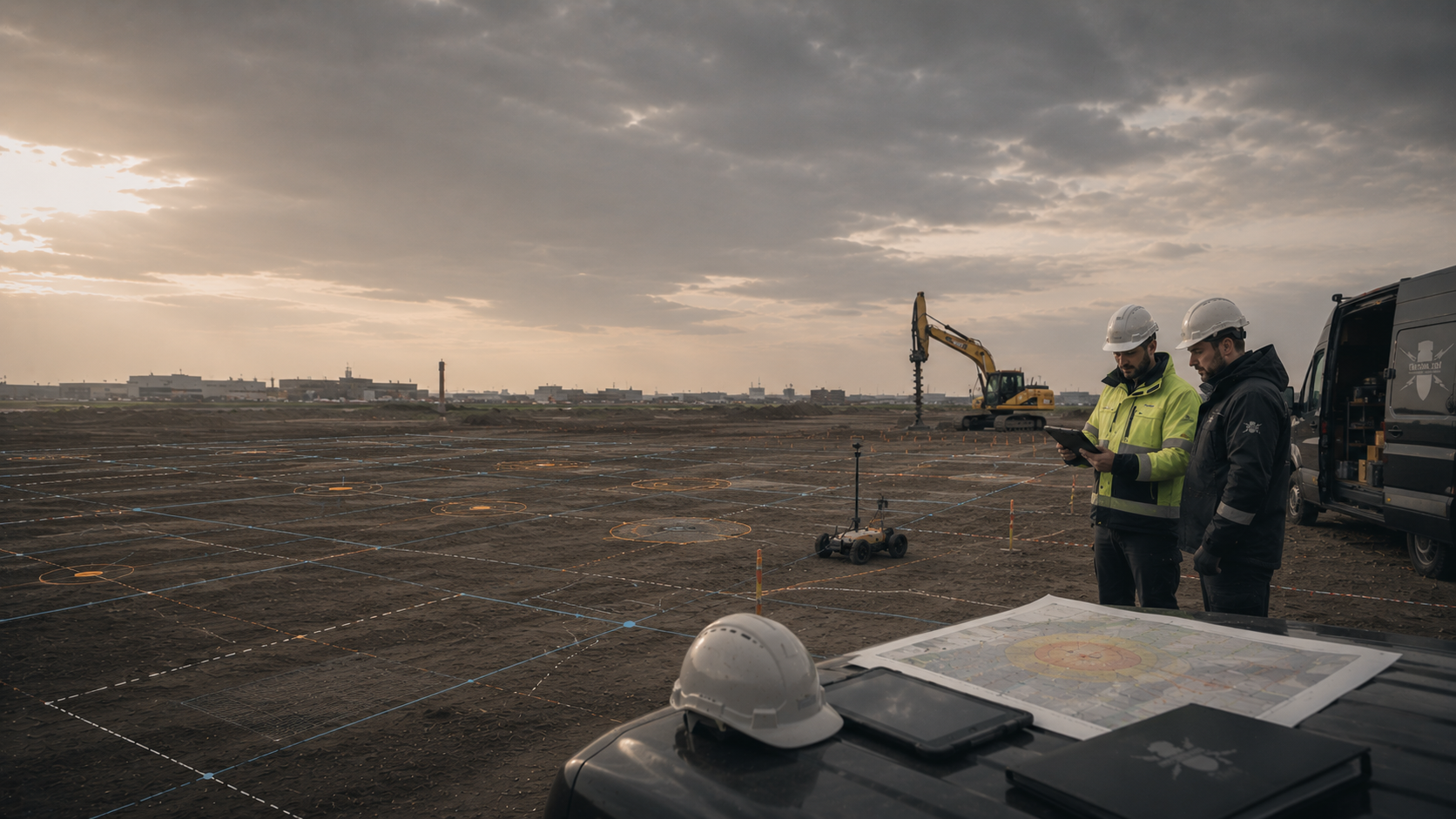
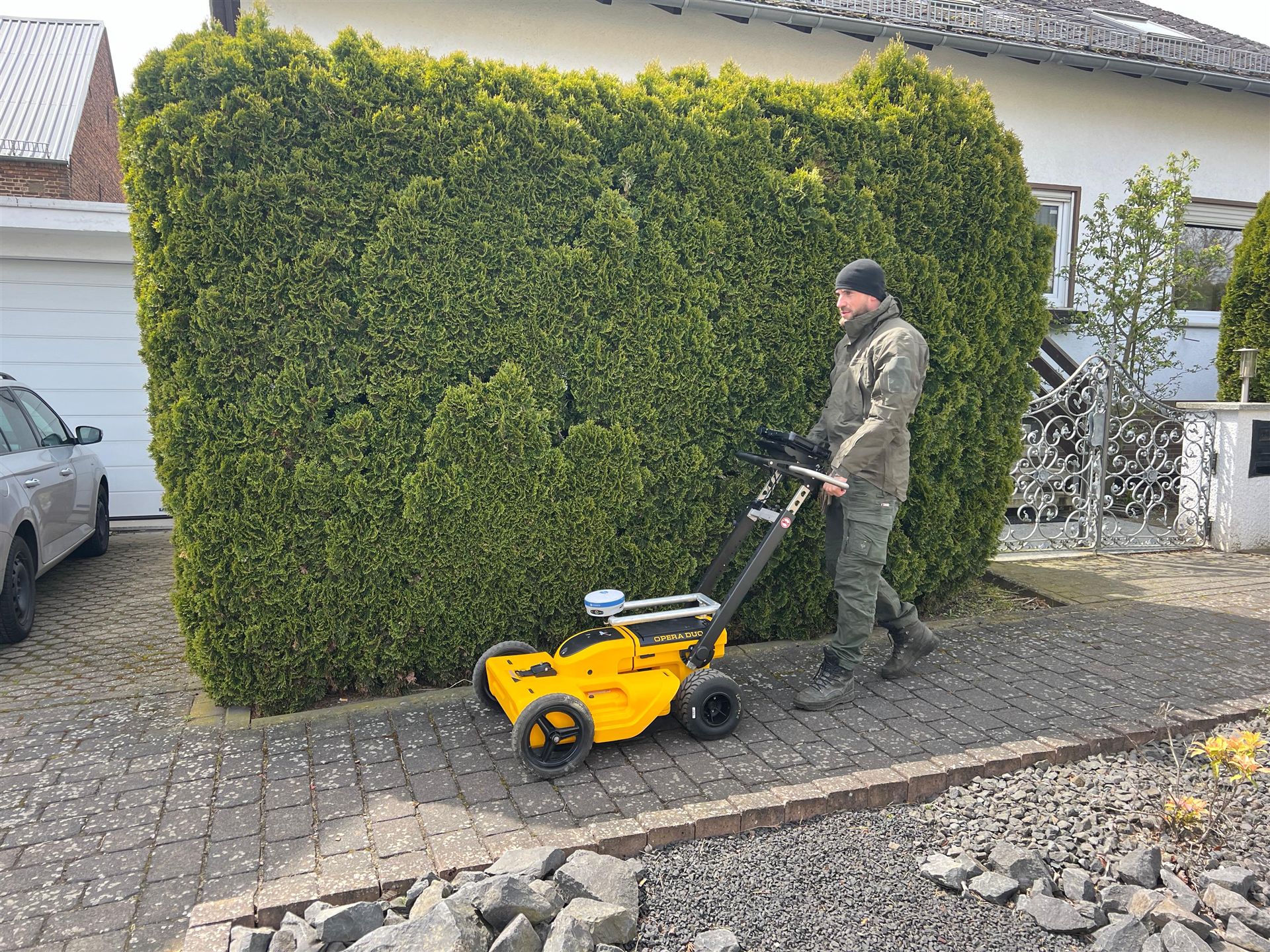
A non-intrusive UXO investigation often corresponds to an area or near-surface survey from ground level. Depending on the target object and measurement environment, magnetometry, TDEM, ground-penetrating radar/GPR or combined methods may be considered.
Suitability depends on ground conditions, moisture, sealed surfaces, utilities, reinforcement, scrap content and the depth of information required.
Magnetometry records magnetic anomalies and is affected by magnetic interference sources. TDEM investigates electromagnetic responses from conductive objects. Ground-penetrating radar images reflections at contrasts below ground; soil composition and moisture affect the investigation. The Survey Report must relate the measurement area, data quality, anomalies assessed and remaining limitations to the method selected.
Explore surface surveys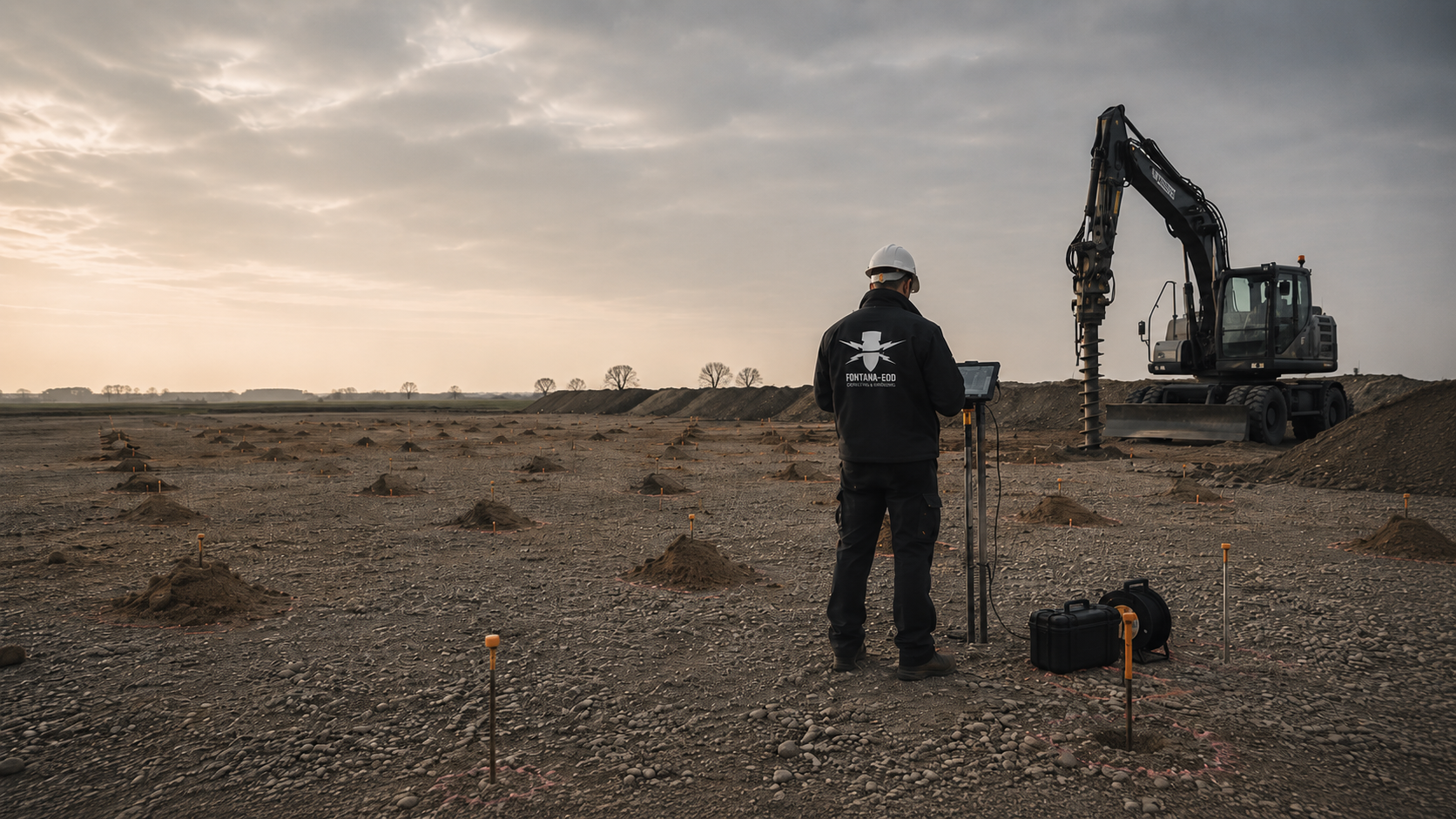
Deep interventions, drilling, piles, sheet piling, anchors or masts may require a depth-related investigation. Borehole position, target depth, measurement geometry, drilling method and subsequent working method must be coordinated.
The investigation addresses the defined point and depth volume, not automatically the entire project area.
Utilities, casing and neighbouring metal objects may affect measurement. The documentation identifies point location, investigation geometry, depth and remaining limitations.
Explore investigations at depth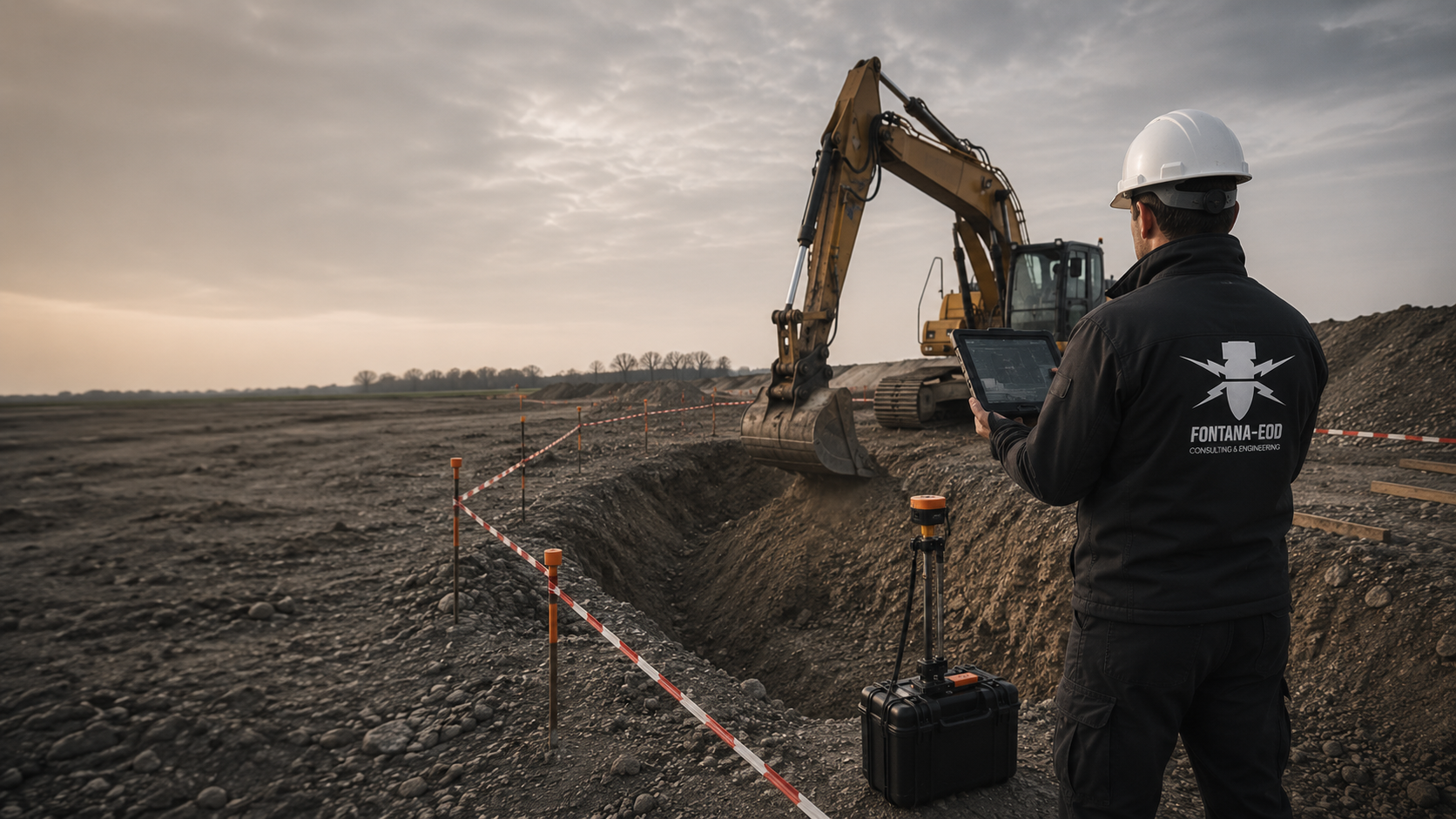
Supervision, Watching Brief or EOD Support during earthworks may require professionally planned explosive ordnance surveys during construction in a German project context. Technical survey and specialist decision precede each removal of ground; excavation proceeds in layers with additional visual checks. Working area, layers, equipment, stop points and documentation are agreed before work starts.
Briefings, instruction channels, find communications and documentation must be integrated into the construction sequence before work begins.
Inaccessible working spaces and changing construction conditions limit supervision. Field records assign documented observations to the sections and excavation layers actually supervised.
Explore excavation supervisionConfirmed target points or those requiring further investigation may need remeasurement, exposure, identification, clearance or explosive ordnance recovery. The scope depends on findings, clearance objective, working environment, qualifications and regional responsibilities.
Work relates to clearly defined target points or areas and the agreed depth horizon.
Accessibility, findings and protective measures determine the work. Findings and clearance records document location, work status, handovers and unresolved areas.
Explore clearance and recovery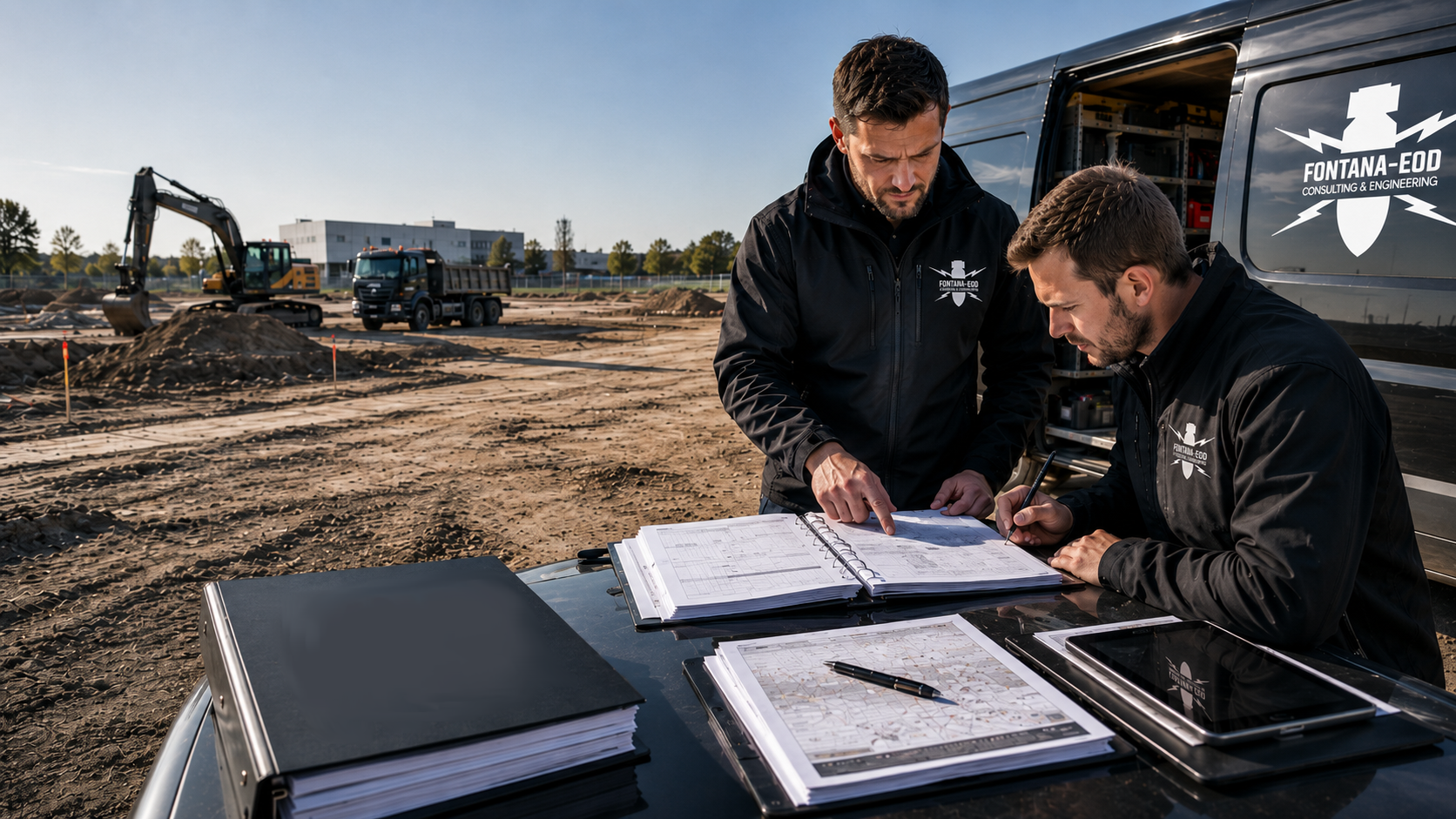
A Close-out Report or Completion Report brings together the initial situation, service scope, working area, methods, data, findings and limitations in a traceable final statement.
Documentation must enable the client, designers and site management to identify which project question has been answered and which matters remain open.
Explore final documentationFor planned development, available indications and investigations are compared with future working areas. The term EOD alone does not define a service scope. Planning status, proposed interventions and existing documents are decisive for a specialist enquiry. They allow the appropriate next service to be defined.
Select the appropriate specialist serviceFor work accompanying construction, technical investigation steps and the excavation sequence relate to the same ground volume. Accessible areas are surveyed and assessed professionally before the next removal of ground; excavation proceeds in layers with additional visual checks. Describe the upcoming earthworks and existing investigations so that outstanding preliminary assessments and suitable further work can be clarified.
Clarify supervision of earthworks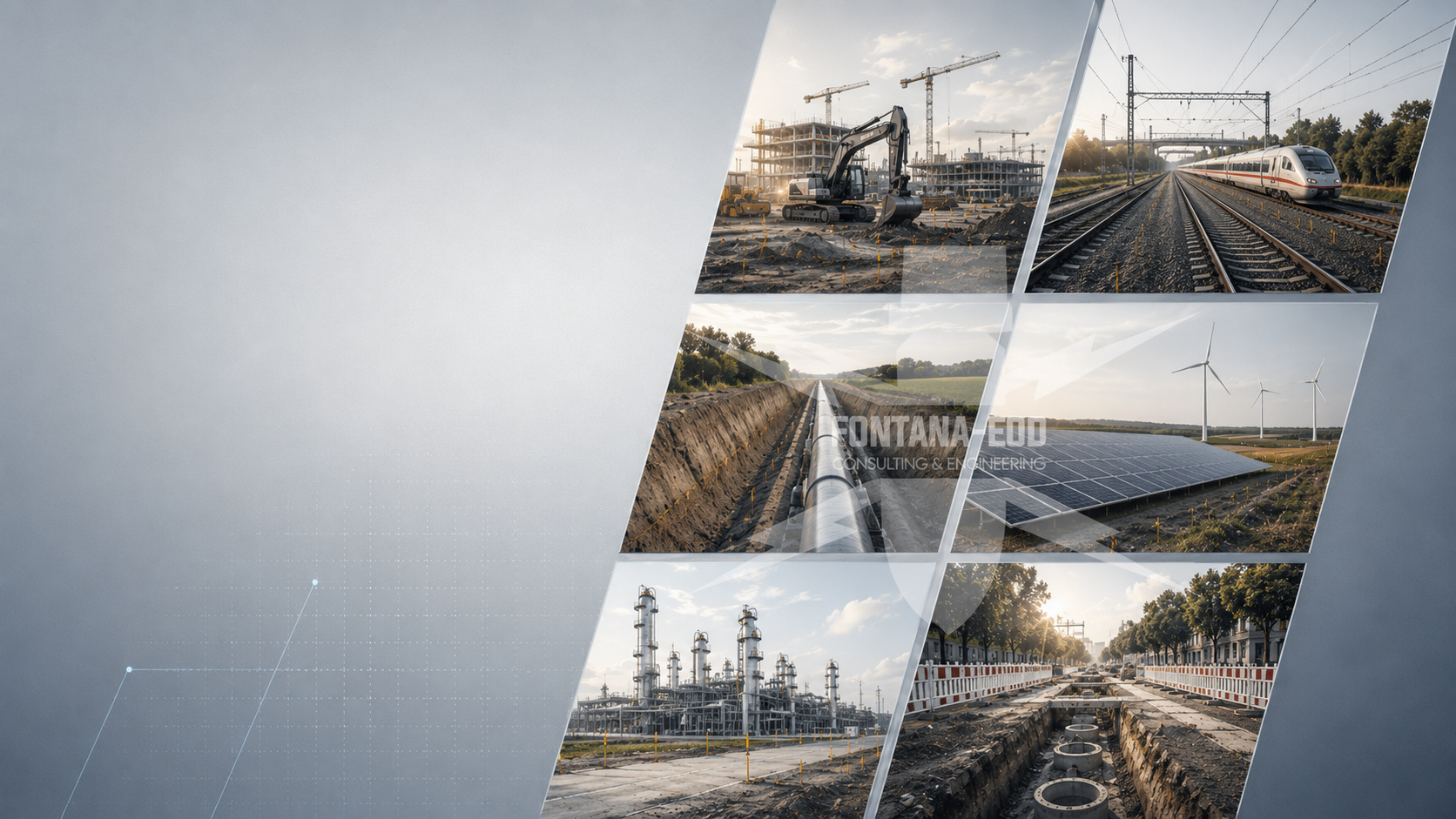
In infrastructure and industrial projects, operational requirements accompany the technical investigation question. These include possible working hours, local access and coordination with other responsible parties. These conditions are described together with the location and depth of planned interventions. The use of an area alone does not establish a particular explosive ordnance situation.
Identify the project settingAfter work, documentation must identify the area, depth and task to which the result applies. Limitations and open questions also matter for the next commission. Where several services are brought together, their respective conclusions remain traceably distinct.
Prepare documentation for handoverEOD/UXO results are usable for planning and construction when the international requirement, local service scope and documented result align. Supporting documents must remain understandable to people who were involved in neither tendering nor fieldwork.
At the outset, record how EOD, UXO, Survey, Clearance, Supervision or Target Investigation are understood in the specific commission. This keeps clear which services are owed and which would need separate commissioning.
These definitions underpin tendering, contract review, assessment of variations and technical communication.
Project address, property, land parcel, construction area, route, chainage, borehole positions, coordinate reference system and work boundaries establish the spatial reference. Where several sections are involved, each work status is assigned unambiguously.
Discrepancies between international plan designations and local existing-site plans are resolved before work.
Historical aerial photographs, archive indications, known finds, former use, official information and earlier reports are documented with source and area references. Data gaps and conflicting indications remain visible as open questions.
This makes it possible to trace why an investigation was initiated and which areas it targeted.
Method, equipment, measurement grid, profile spacing, positioning, survey depth, borehole geometry, surface, soil, accessibility and interference sources affect the conclusions. These parameters are documented in a technically traceable form.
This distinguishes the reach of the result from methodological limitations and areas that could not be investigated.
Anomaly or target lists contain location, identifier, assessment, priority and work status. Remeasurement, exposure, identification and handover are linked to the associated plans and records.
A technical anomaly remains designated as such until specialist investigation allows a more specific classification.
Final documentation describes the area actually worked on, methods used, findings, quality checks, remaining limitations and the subsequent specialist decision. For completed clearance work, the clearance record and associated plan appendices are included in the project file.
This identifies whether further exploration, additional surveying, target investigation, supervision during construction or regional coordination remains necessary.
The process is adapted to the project phase, available documents, construction method and local responsibilities. Each step translates part of the EOD/UXO requirement into a verifiable project basis.
Client requirements, tender, safety plan and desired result are reviewed. Responsible organisations and communication channels are identified.
EOD, UXO, Survey, Clearance, Supervision and Deliverables are translated into specific services, work limits and supporting documentation.
Construction area, route, borehole positions, working widths, proposed depths, construction method and accessible areas are described unambiguously in spatial terms.
Historical records, aerial photographs, known finds, official information and existing reports are related to the actual intervention. If historical questions remain unresolved for the construction task, the necessary research or aerial photograph assessment is carried out. Its evidence is assigned to today's construction area and used for investigation planning.
Historical assessment, surface or deep-ground survey, excavation supervision, target investigation or clearance services are selected according to technical suitability.
Working areas, access, briefings, stop points, instruction channels, find communications and local responsibilities are agreed before work starts. The commissioned surveys are then performed in the defined areas and depths. For an agreed investigation during construction, specialists supervise the proposed work steps; measurement conditions and findings are recorded for evaluation.
Measurement data, target lists, exposures, findings and limitations are checked for plausibility against the investigation or clearance objective.
Reports, site plans, records, limits of interpretation and subsequent decisions are prepared for the client, designers, site management and project file.
An enquiry using the term EOD may concern historical indications, an upcoming investigation or further work on documented findings. Describe the decision needed and information already available. This allows the specialist service to address the actual project question. Comprehensive work is not inferred solely from the umbrella term used.
Existing results apply to the working conditions and investigation limits described in the report. Sealed surfaces, metal installations or inaccessible areas may have affected the conclusions. Further planning considers this information with measurement and location documents. If conditions change, it must be checked whether the available evidence still covers the new task.
The next project decision should identify the documents it relies on and tasks still unresolved. A handover therefore identifies the completed scope of work, associated reports and further coordination required. The respective responsible parties can derive their next steps from this. A general project status does not replace specific assignment to area, depth and proposed intervention.
EOD/UXO projects often combine international client requirements with local planning, execution and responsibility structures. A clear division of roles prevents technical tasks, hazard response, construction responsibilities and documentation obligations from being confused.
Define the project objective, contractual EOD/UXO requirements, working area, interfaces and deliverables needed. They ensure that international requirements are checked against local project conditions.
Translate the project into specific interventions, depths, routes and borehole positions. They integrate explosive ordnance assessment into planning, tendering, scheduling and technical decision-making.
Implement working areas, briefings, protective measures, stop points and reporting channels. Changes to the construction sequence are reported back if they alter the investigated area or EOD/UXO assessment.
Reviews documents, interprets international terminology, develops the project-specific approach, carries out commissioned specialist services and documents scope, results and limitations.
Direct relevant work within their appointment, competence and specific task. They make safety-relevant decisions for the agreed working area and coordinate specialist execution.
Depending on project location and circumstances, undertake hazard response, handling finds, neutralisation or decisions on further measures. In Luxembourg, SEDAL and Police Grand-Ducale may be relevant responsible interfaces for finds and hazardous situations.
The local public order authority and building control authority may specify project-related requirements for hazard prevention or construction. Which body makes which decision is clarified at the specific location. Existing letters are passed to those involved with their dates and spatial reference.
International EOD/UXO terminology does not replace legal and organisational assessment at the project location. Activity, find situation, service scope, qualifications, occupational safety and public responsibilities must align before work begins.
In Germany, Section 7 SprengG concerns company authorisation for activities involving explosive substances that require authorisation; Section 20 SprengG concerns the certificate of competence for responsible persons. Applicable requirements depend on the activity specifically commissioned. The 1. SprengV and further project-specific occupational safety requirements may also be relevant.
DGUV Information 201-027 supports risk assessment and definition of protective measures for explosive ordnance clearance activities. Germany's Baufachliche Richtlinien Kampfmittelräumung describe a systematic approach for the federal sector, from historical investigation and technical assessment through clearance planning and tendering to documentation. Their technical structures can also guide clear project organisation outside their direct federal scope.
In Germany, authority and procedural structures differ regionally. In Luxembourg, SEDAL carries out state tasks for handling ammunition and explosive ordnance. For actual finds or hazardous situations, the locally responsible authorities are involved through the prescribed reporting channel. The private project service prepares the agreed investigation and documentation scope and supports orderly communication at interfaces.
DGUV Rule 113-003 concerns dismantling or destroying explosives or corresponding articles and also includes disposal of found ammunition. Its application is assigned to the actual activity; a general EOD or UXO requirement does not yet define this scope.
The company, responsible persons, appointment and activity scope must fit the specific EOD/UXO service.
Working methods, personnel, equipment, protective areas, briefings, stop points and communication are defined for the project.
Work objective, area, depth, methods, responsibilities, quality control and acceptance criteria are described clearly.
Working area, data, findings, limitations and conclusions are brought together traceably.
Federal state, municipality, official statement and type of specialist service commissioned determine regional interfaces. International requirements are adapted to this project structure.
Project documents and private specialist services are coordinated with the Luxembourg interfaces. SEDAL and Police Grand-Ducale may be relevant for finds and hazardous situations.
For a suspicious object, stop work immediately. Do not touch or move the object; leave the immediate area and keep others away without putting yourself at risk. Notify the locally responsible authorities through the applicable emergency reporting channel; they determine further handling.
Choose the task closest to your tender, suspected hazard or construction phase.
For tenders, safety plans or client requirements using terms such as EOD, UXO Survey or UXO Clearance.
For areas and routes where the basis for suspicion still needs spatial and source-based clarification.
For area or near-surface investigations requiring selection of a suitable geophysical method.
For drilling, piles, sheet piling, anchors and other depth-related interventions with clearly defined point geometry.
For ongoing earthworks where the actual ground intervention is to receive specialist supervision and documentation.
For clearance objectives, target investigation, quality control, final reporting and documented limits of interpretation.
International requirements, local conditions, technical suitability and supporting documentation address the same project question. Relating the contractual term, the ground volume affected and the investigation provides the basis for execution and documented handover.
FONTANA-EOD checks what EOD, UXO Survey, UXO Clearance, Supervision or Target Investigation mean in their respective document context. These requirements are then connected with project location, basis for suspicion, construction task, intervention depth, existing documents and regional interfaces.
Method selection does not follow from the English term alone. Ground-penetrating radar/GPR, magnetometry, TDEM, deep-ground survey, borehole survey, excavation supervision and clearance services answer different questions and have different limitations. These limitations are considered in the service specification and documentation objective from the outset.
For relevant activities, FONTANA-EOD holds the necessary company authorisation under Section 7 SprengG; work requiring personal competence is the responsibility of appropriately qualified persons under Section 20 SprengG. The specific assignment depends on the activity scope commissioned.
EOD and UXO references are interpreted in the context of the tender, contract, safety plan and project phase.
Area of Interest, route, borehole positions, working area and depth are translated into unambiguous investigation geometry.
Methods are determined by target object, ground conditions, interference environment, accessibility and the information needed.
Private specialist services, client tasks and public responsibilities are coordinated for the project and region.
Measurement data, target lists, findings, work status and final documents remain spatially linked.
The close-out describes the work status achieved, inaccessible areas and any further measures.
Briefings, maps, survey plans and records show how international requirements, historical evidence, technical data and fieldwork are brought together in a traceable project file.
Connects contractual terms, project objective, Area of Interest, ground intervention, responsibilities and desired deliverables into a clear starting point.
Understand EOD and UXO terminologyDocuments available sources, the spatial justification for suspicion, data gaps and areas where technical investigations may be considered.
Review historical evidence of suspected ordnanceLinks the measurement area, method, location reference, technical limitations and evaluated targets with a traceable work status.
Assign the investigation commission and serviceDocuments coordinates, drilling and investigation geometry, measurement conditions, anomalous signals and the conclusion for the individual intervention point.
Clarify borehole positions and depth referenceRecords the working section, excavation layer, equipment used, observations, interruptions, find communications and documented scope of work.
Agree specialist supervision within the construction sequenceBrings requirements, working area, data, findings, quality control, limitations and subsequent decision together in usable final documentation.
Organise the final report and project file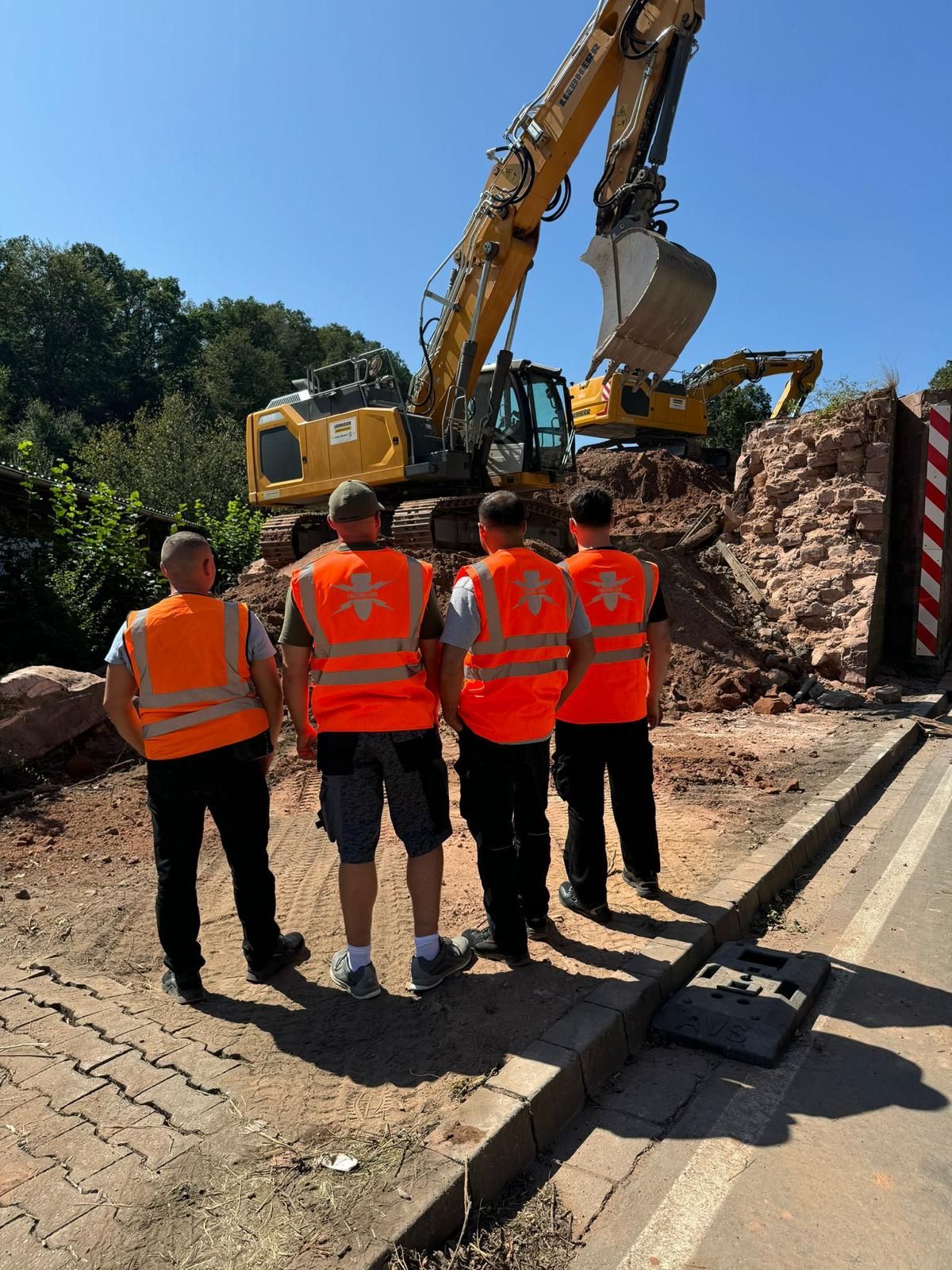
What investigation does your project need? Find out about suitable methods, your construction project's requirements and the supporting documentation needed. Project location determines regional responsibilities.
Translate international EOD/UXO requirements into the appropriate German specialist service.
Open the service areaExplore the Risk Basis, available sources and spatial basis for suspected explosive ordnance.
Assess the suspected hazardExplore borehole positions, investigation geometry and investigations at depth.
Open investigations at depthExplore work organisation, stop points and field communication during earthworks.
Open excavation supervisionExplore clearance planning, quality assurance, final reporting and limits of interpretation.
Open documentation guidanceAssess EOD/UXO needs for civil engineering, rail, energy, industry and public projects.
Choose the project setting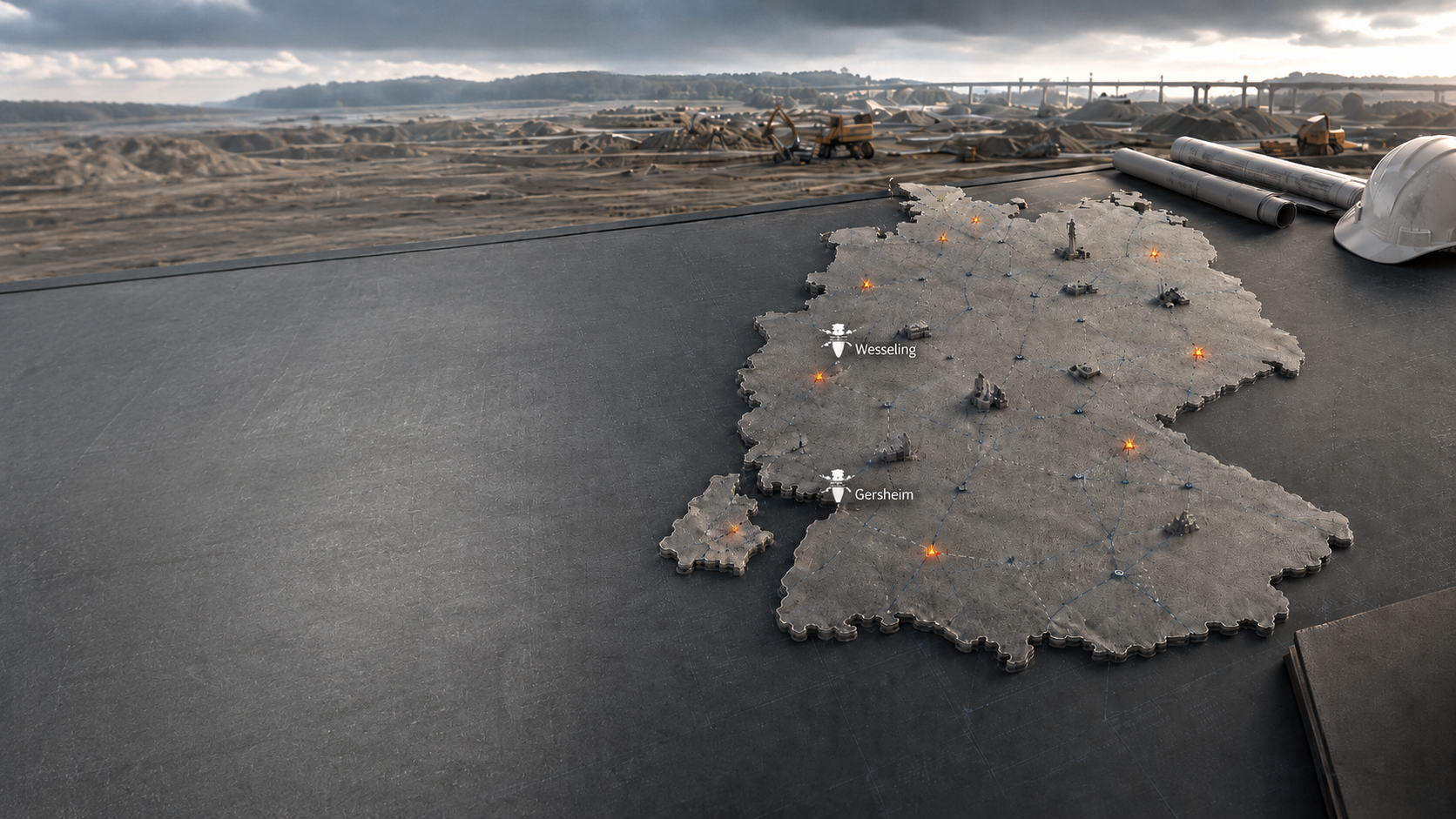
Identify project location, federal state, Luxembourg and regional authority names.
Select a region
Read about terminology, cost factors, tendering, responsibilities and responses to finds.
Open the knowledge section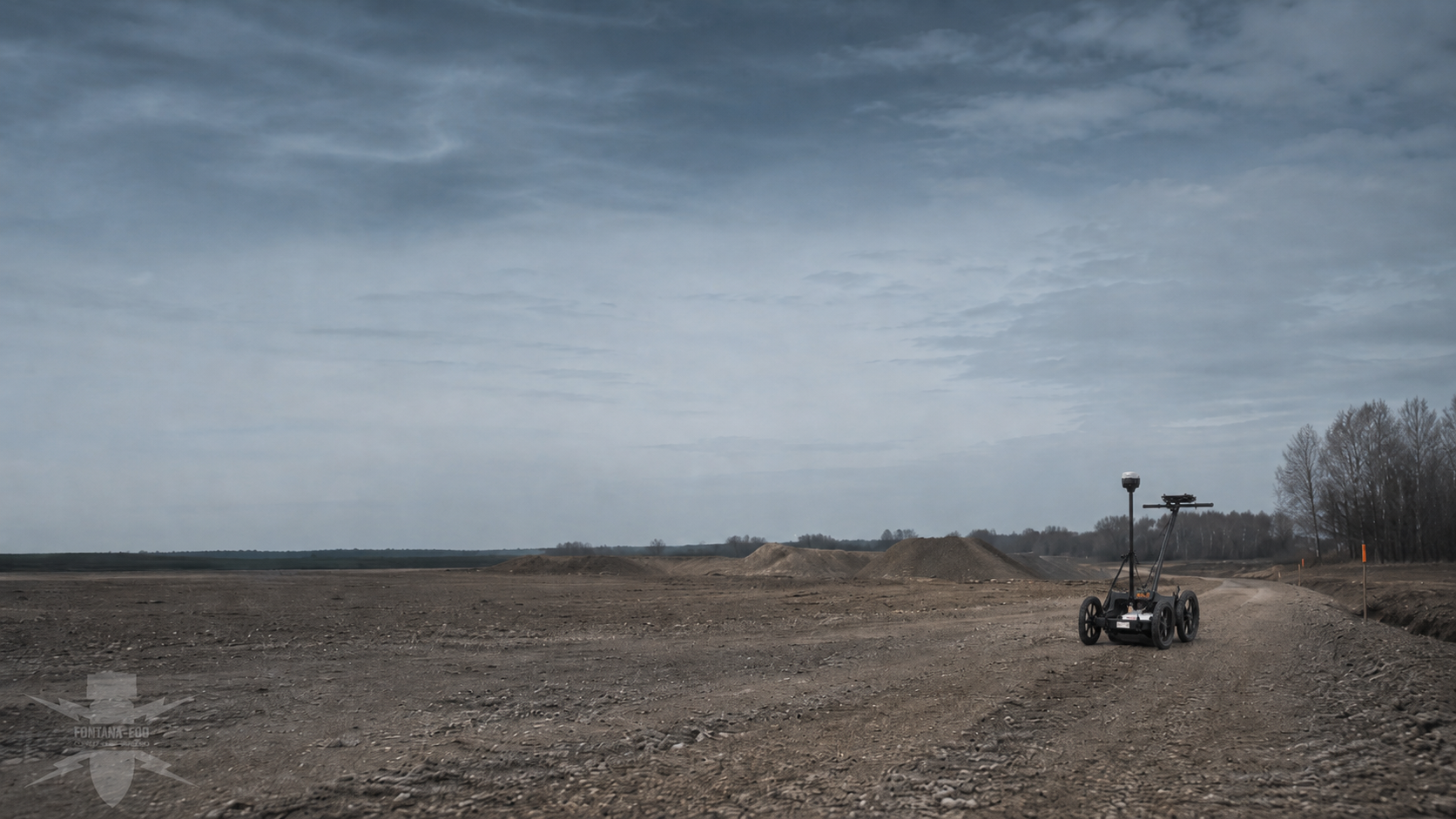
Provide the location, international requirement, ground intervention and existing documents.
Have your project assessedAssessment of an EOD-related construction project needs its specific location and associated documents. State the address, affected land parcels or route sections and known project contacts. Existing information and requirements are passed on with their date and spatial reference. For several locations, this assignment is made separately so that statements about one area are not transferred unchecked to another project.
EOD stands for Explosive Ordnance Disposal. Internationally, the term refers to specialist handling of explosive ordnance, particularly reconnaissance, identification, assessment, making safe, recovery, neutralisation, disposal and documentation by appropriately qualified organisations and specialists.
UXO stands for Unexploded Ordnance. It refers to explosive ordnance that did not function as intended and may remain unexploded. UXO describes the potential object or source of hazard, not the complete process for dealing with it.
Assessment starts wherever possible before tendering and ground intervention. International requirements, location, proposed interventions and existing documents are first brought together. This is followed by assessment of the basis for suspicion, selection of suitable specialist services, their execution and handover of results and open questions. The scope depends on the specific task.
UXO Survey means a technical investigation for possible explosive ordnance. Depending on the project, this may involve a surface survey, magnetometry, TDEM, ground-penetrating radar/GPR, deep-ground or borehole survey, or investigation during construction. The suitable service follows from the target object, intervention depth and measurement environment. Magnetically active installations may mask magnetic survey signals. The technically assessable area and areas that cannot be evaluated therefore belong in the investigation report.
UXO Clearance describes work within a defined area against an agreed investigation or clearance objective. The final documentation must identify area, depth, methods, findings and limitations. Its conclusions apply to the documented scope of work.
Useful documents include the project address, site plan, construction area or route, borehole list, type and depth of ground intervention, construction phase, timescale, international specification, historical assessments, official correspondence, utility plans, ground investigation documents and existing survey or clearance reports.
KBD, KMBD and KRD are terms used regionally in Germany for authorities and responsibilities. In Luxembourg, SEDAL carries out state tasks for handling ammunition and explosive ordnance. Private specialist services, public hazard response and handling finds are coordinated according to project location and circumstances.
For a suspicious object, stop work in the affected area. Do not touch or move it. Leave the immediate area, keep others away without putting yourself at risk and notify the police on 110 in Germany. Outside Germany, use the local emergency reporting channel. Follow the responsible authorities' instructions.
Decisive factors include area size or route length, basis for suspicion, number and depth of borehole positions, accessibility, ground conditions, utilities and interfering objects, method required, target investigation, data formats, documentation scope, construction phase and regional coordination. A reliable calculation therefore needs an unambiguous location and service reference.
An initial enquiry need not contain a complete service specification. It should, however, identify the international requirement, where work will take place, the planned ground intervention and the decision needed for the project.
Send the relevant sections from the tender, contract, safety plan or client requirement. Highlight terms such as EOD, UXO Survey, UXO Clearance, Target Investigation, Supervision or Close-out Report.
Also describe what the result is needed for: planning, procurement, authorisation to build within the defined working area, borehole-point assessment, site management, insurance review or the project file.
Project address, country or federal state, site plan, land parcel, construction area boundaries, route section, chainage and coordinates enable spatial assignment.
Describe excavation, utility trench, drilling, pile, sheet piling, anchor, demolition or another intervention with its maximum depth, working width and proposed construction method.
Historical aerial photograph assessments, official information, known finds, earlier reports, survey or clearance documents, utility plans, ground data and existing-site plans are useful.
State planning status, proposed period of work, accessibility, possession or closure periods, parallel trades and the time by which the EOD/UXO decision is needed.
For an initial assessment, the international requirement, site plan, brief intervention description, maximum depth, planned period and existing indications of suspected explosive ordnance are often sufficient. FONTANA-EOD then identifies what information is missing and which specialist service may be considered for the next project step.
Term and its location in the tender, contract, safety plan, report or official correspondence.
Area of Interest, construction area, route, borehole positions, working width, subareas and inaccessible areas.
Type, maximum depth, construction method, construction phase, start date, possession periods and decision dates.
Required plans, data formats, target lists, reports, records and final statement for the project file.
Whether historical aerial photograph analysis, explosive ordnance surveying, surface surveying using GPR, magnetometry or TDEM, deep-ground surveys, downhole surveys, excavation supervision, area clearance or ordnance recovery is needed depends on the location, ground disturbance, depth, ground and existing documents. An early ordnance assessment provides clarity for tendering, programming, occupational safety and construction.
FONTANA-EOD combines its Section 7 SprengG licence, specialists holding Section 20 SprengG certificates of competence, suitable survey and clearance methods, and traceable documentation. Send the site plan, depth of ground disturbance, construction phase and existing documents for an initial technical assessment.


