Project pathway
The quickest route to the right decision.
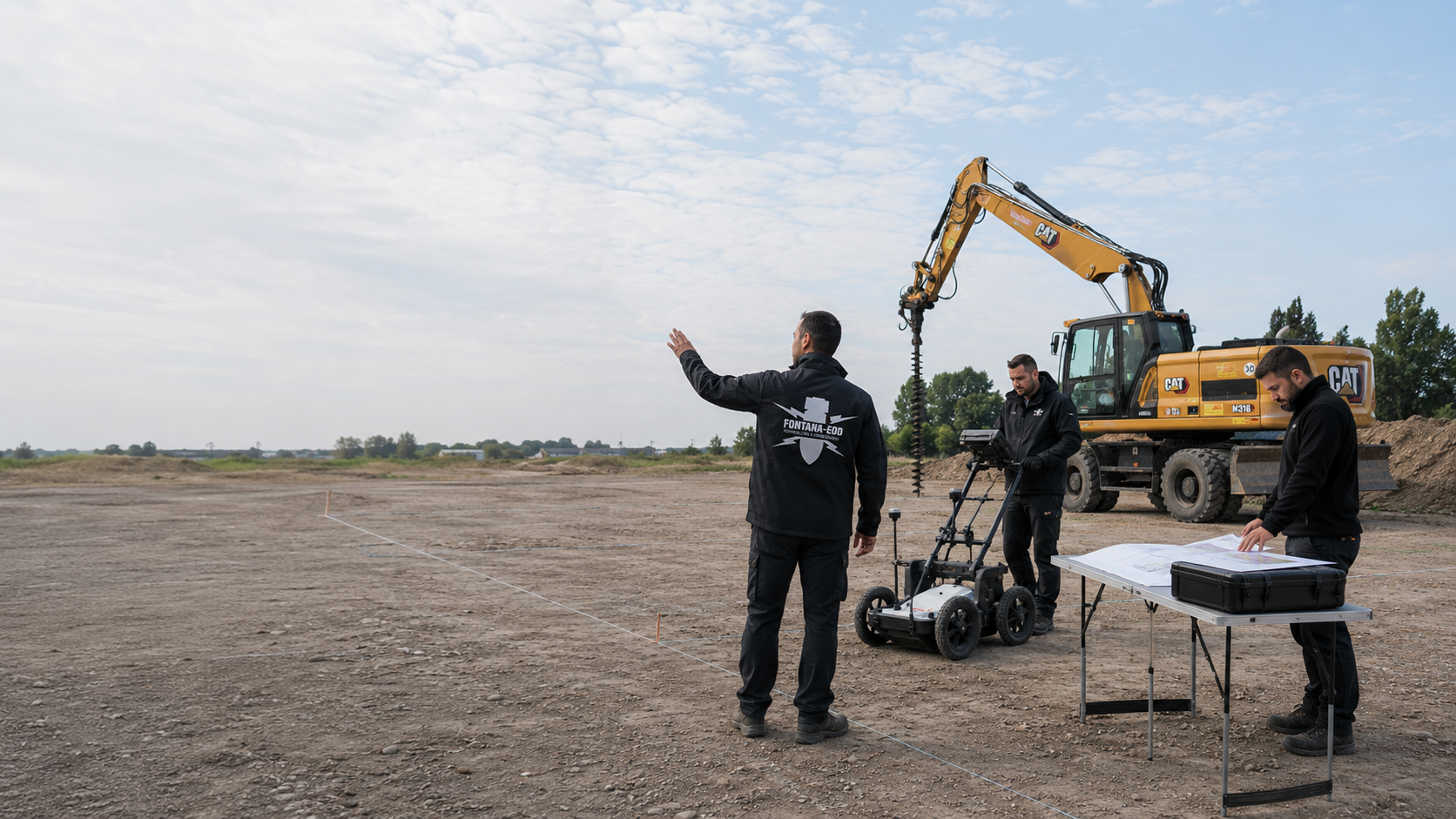
Which documents are missing before construction starts? What belongs in a tender? Which records need to be handed over? Our PDF checklists help you organise ordnance questions within your project and prepare for the next discussion.
Clarify the starting position and available records.
Coordinate investigations and handovers.
Document findings clearly.
Choose the document that fits your role and project phase. Record outstanding questions and organise the available plans, official information and reports. The checklists help with preparation. They do not replace a technical assessment of your site, the requirements of the responsible authority or clearance relating to the commissioned work.
The two overview checklists provide a concise summary of the topics. Twelve separate checklists cover individual tasks. You can open, save and print the PDFs. Each document states its revision status.
Two short summaries help you get started according to your role in the project.
A concise overview of assessing suspected ordnance, commissioning services, organisation and documentation.
PDF (German) · 3 pages · 163 KB
A concise overview for design, tendering, site preparation and handovers.
PDF (German) · 3 pages · 163 KB
These documents help project owners and designers bring together the project information and tasks.
Collect existing information about the site, its historical use and previous investigations.
PDF (German) · 2 pages · 161 KB
Organise cooperation, commissioning, information for the project team and the handover of documentation.
PDF (German) · 3 pages · 165 KB
Include investigations and outstanding questions in the programme and further design work at an early stage.
PDF (German) · 2 pages · 162 KB
Describe the investigation objective, areas, depths, responsibilities and documentation required.
PDF (German) · 3 pages · 165 KB
Review the image sources, dates, assessment quality and how the findings are used.
PDF (German) · 2 pages · 162 KB
Choose the checklist for the next construction phase or documentation task.
Prepare reporting procedures, access, area handovers and coordination with the construction sequence.
PDF (German) · 2 pages · 162 KB
Organise investigation sections, technical handovers and documentation as construction progresses.
PDF (German) · 2 pages · 162 KB
Clearly record the scope of validity, investigation depths, methods and remaining limitations.
PDF (German) · 2 pages · 162 KB
Bring reports, plans, clearance records and agreed arrangements together in the project file.
PDF (German) · 3 pages · 164 KB
Identify mistaken assumptions and gaps in responsibilities, investigation and documentation.
PDF (German) · 2 pages · 162 KB
Collect questions about official requirements, liability and insurance for discussion.
PDF (German) · 3 pages · 165 KB
Stop work immediately. Do not touch or move the object. Leave the danger area and keep others away without putting yourself at risk. In Germany, notify the police immediately on 110 from a safe distance. Do not approach the object to take photographs or investigate further. A project enquiry to FONTANA-EOD does not replace reporting a find.
The checklist helps with organisational preparation. In an actual incident, the instructions of the responsible emergency services take priority.
Guidance on stopping work, reporting procedures and organisation in the event of a find.
PDF (German) · 2 pages · 162 KB
If the initial information is incomplete, start with the documents for use before construction begins. For ongoing works, there are checklists covering preparation, construction supervision and handovers. The two overview checklists organise tasks for project owners and for designers and site management.
No. A checklist organises questions and records. A technical statement must relate to the specific area, investigation scope and conditions. Ticking the boxes confirms neither that the site is free of ordnance nor that official approval has been granted.
The PDFs are designed for reading, saving and printing. They contain boxes that can be ticked on paper, with no interactive form fields. You can record completed items and outstanding questions separately for the project file.
Stop work. Do not touch or move the object. Leave the area and keep others away without putting yourself at risk. In Germany, notify the police on 110 from a safe distance. Do not wait for a response to a project enquiry, and do not approach the object to take photographs or investigate further.
If a checklist raises specific questions, tell us the project location, planned works and previous investigations. A site plan, proposed depths of ground disturbance and existing official information help us prepare.
Prepare a project enquiry View the process and documentation
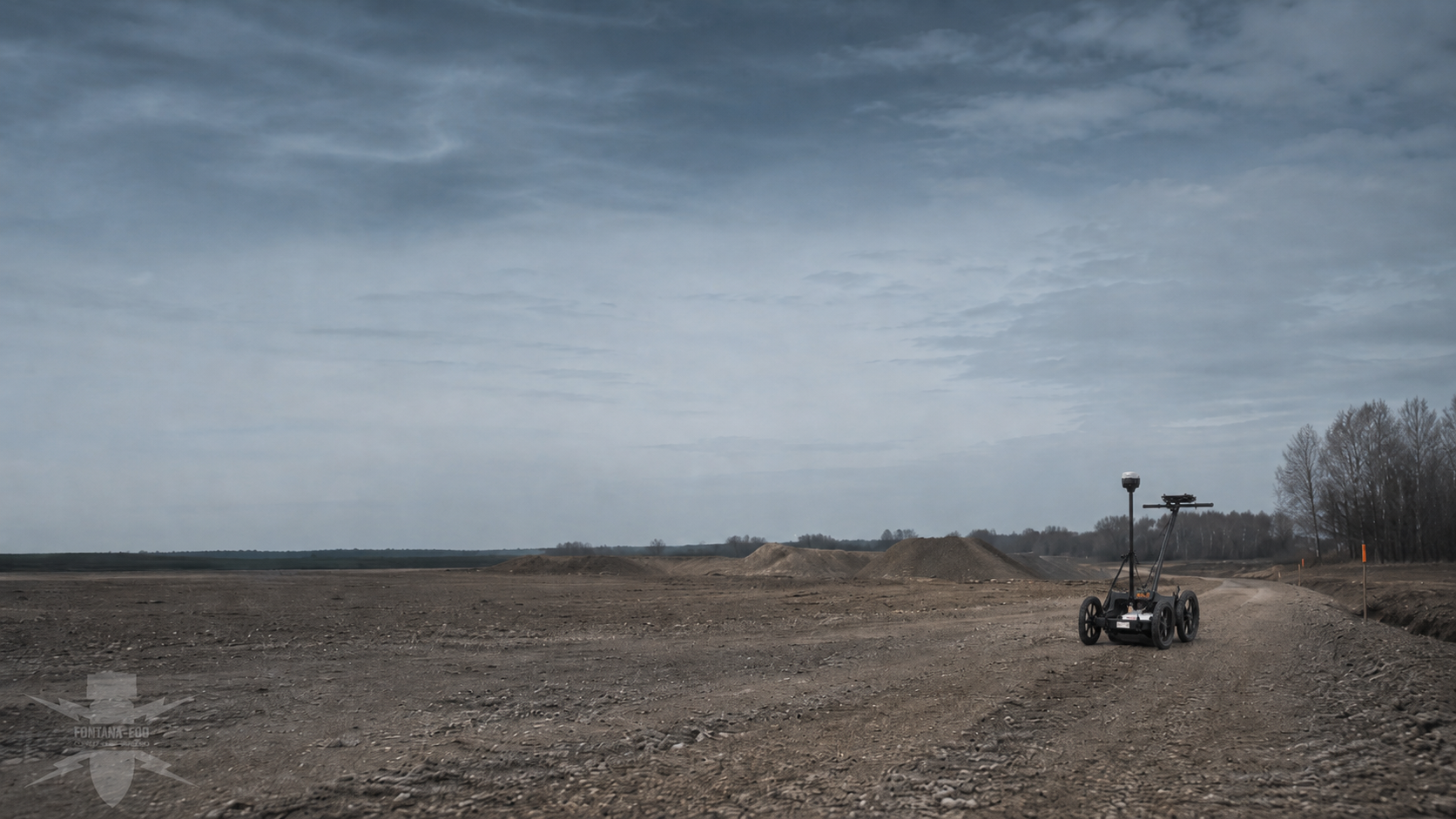
Whether historical aerial photograph analysis, explosive ordnance surveying, surface surveying using GPR, magnetometry or TDEM, deep-ground surveys, downhole surveys, excavation supervision, area clearance or ordnance recovery is needed depends on the location, ground disturbance, depth, ground and existing documents. An early ordnance assessment provides clarity for tendering, programming, occupational safety and construction.
FONTANA-EOD combines its Section 7 SprengG licence, specialists holding Section 20 SprengG certificates of competence, suitable survey and clearance methods, and traceable documentation. Send the site plan, depth of ground disturbance, construction phase and existing documents for an initial technical assessment.


