Project pathway
The quickest route to the right decision.
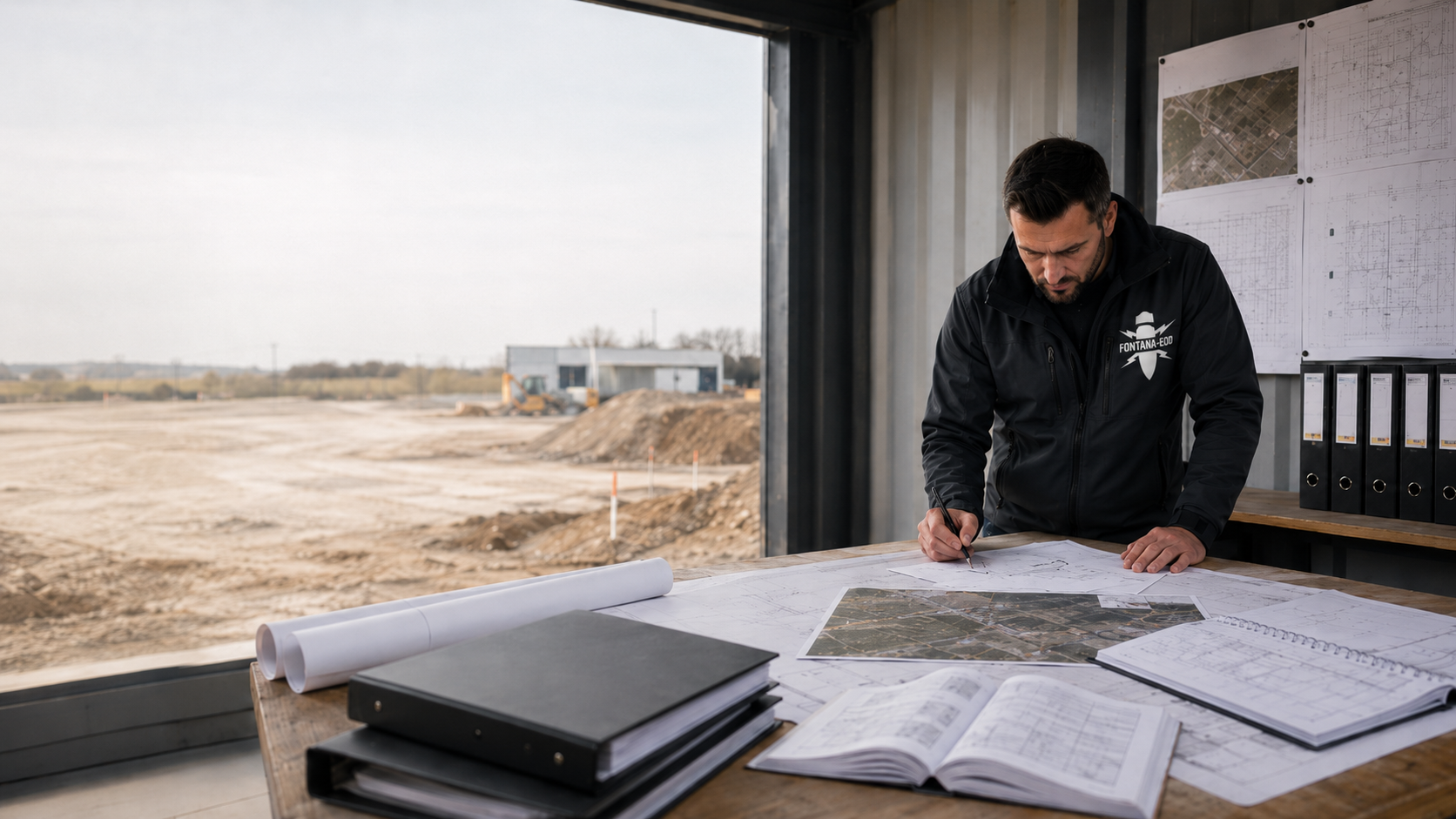
What does investigation of your construction area cost? For a quotation, we need information on area, intervention depth, access and existing documents. FONTANA-EOD calculates investigation and documentation scope using these conditions and identifies assumptions still needing clarification.
Consider the service rather than area alone.
Identify factors affecting effort.
Compare assumptions and limits.
Explosive ordnance survey costs depend on the specific investigation task: area or individual points, depth needed, measurement conditions, access and result scope determine effort. Two areas of equal size may therefore need different services, such as an open construction site, a reinforced operational area or deep foundation points. The current site plan and existing evidence allow clarification of which specialist service must be described for comparable quotations.
For quotation comparison, the investigation task, possible follow-up work and result handover are described separately. What matters is which ground volume each item covers and which interpretation the client receives afterwards.
BFR Kampfmittelräumung assign cost factors to site conditions, suspected or identified ordnance and the legal framework. Calculation needs specific information about area, work and execution from this. Known property characteristics are separated from assumptions still requiring specialist clarification; no fixed number of later finds is derived from suspected contamination.
Suspected explosive ordnance describes the specialist clarification needed. A suspected area assigns it spatially. Calculation depends on the documents available and ground volume to be investigated. Property size alone describes neither the actual commissioned area nor the depth needed. A construction section may contain several separate investigation volumes: excavation, connection trenches and individual foundation points. Identify areas covered by the enquiry and those planned only later. Quantity calculation and price comparison then concern the same task.
Assess suspicion in relation to the projectA survey is described with investigation objective, area or points and suitable conditions. Quotations should identify the technical investigation included. Selecting measurement equipment alone does not establish which interpretation and assessment will be delivered for the proposed intervention. Magnetometry records magnetic anomalies; TDEM records time-dependent electromagnetic responses from electrically conductive objects. Ground-penetrating radar may provide supplementary information under suitable ground conditions. Methods differ in prerequisites and assessment limits. A calculated measurement therefore also includes coverage needed and specialist interpretation for the agreed investigation volume.
Distinguish survey tasksClearance and recovery are separate specialist tasks whose prerequisites and scope need clarification. They do not follow solely from a measurement item. Cost planning must distinguish traceably what can already be commissioned from further services established only after specialist assessment. An anomalous measurement is initially a finding requiring interpretation. Whether targeted further investigation or recovery is needed depends on assessment. The quotation may describe these follow-up tasks separately; their actual scope is agreed using the results. Initial investigation costs thus remain distinguishable from later work.
Distinguish clearance and recovery technicallyThe record needed is agreed with its area, depth and method references. General clearance wording does not describe a comparable quotation item. Identify reports, plans and data needed for the next decision and how limitations and unresolved areas will be handled. Later use in site management or procurement must show, for example, which points were investigated and which plan version was used. A brief result notification and a report with spatial appendices are different handover scopes. The scope needed is identified before calculation.
Read evidence and its limitsEOD means Explosive Ordnance Disposal. UXO stands for Unexploded Ordnance and describes ammunition prepared for use or deployed that has not exploded. In international service specifications, these terms relate to the specialist task actually required. Price comparison depends on the investigation or clearance task, record needed and local commissioning route.
Translate EOD requirements into specialist tasksThe tasks of the authority and specialist company are clarified by project location and case. The responsible ordnance authority participates according to its tasks; the private commission identifies the agreed specialist service. Cost planning records client, services to be commissioned and any promised cost coverage separately. Proposed state involvement is agreed with the responsible authority before being included as a secure budget contribution.
Assign authority and private tasksBaufachliche Richtlinien Kampfmittelräumung and German Social Accident Insurance publications each have a technical scope and activity reference. Their requirements are connected with the commission. Merely naming a guideline replaces neither a defined scope nor a description of necessary occupational safety measures. Identify the technical requirements agreed for the project as specifically as possible. A blanket reference to all rules leaves unclear which investigation, interpretation or check is to be priced. The service specification connects relevant requirements with work actually to be performed.
Distinguish the prerequisites of the specialist taskWork during construction is planned with the specific investigation, proposed construction stage and necessary handovers. It involves more than visual observation of excavation alone. A quotation therefore needs affected ground volume, access, technical scope and sequence described together. With a suitable procedure, each working layer is technically surveyed and assessed before controlled layer-by-layer removal; visual inspection supplements this investigation. The sequence down to the agreed excavation level affects cooperation between specialists and construction equipment. Proposed work sections, handovers and interruptions therefore also matter for calculation.
Describe the service during constructionA continuous area can be treated differently from many small points or interrupted route sections. The areas actually needing investigation and assessment needed for the intervention are decisive. Identify chambers, foundations or crossings with their different depths; an average depth may oversimplify the commission inaccurately. For a borehole field, specify the number and location of points with their respective final depths. For a route, show the standard cross-section, crossings and additional excavations separately. Otherwise, total area does not show how many individual worksites need setting up and treating.
Metallic installations, fill, reinforcement and existing utilities may affect the choice of method. Access, vehicle accessibility and usable working areas also belong in the calculation basis. The quotation should show who performs and pays for necessary preparation. Preparatory ground interventions must be agreed technically rather than undertaken in advance without review. Highly conductive soil may limit radar range, for example; existing metallic facilities may interfere with geophysical measurements. Such conditions are considered for suitable investigation and interpretation. Photographs, utility plans and available ground information help prepare a necessary site visit or further clarification specifically.
Several site visits, limited working windows or handovers between sections may organise deployment differently from continuous work. Interpretation, the report, plans and agreed data formats also belong in the scope. Therefore compare the overall service actually needed rather than only fieldwork or equipment use. State whether operations continue, traffic routes must remain clear or the specialist company can access the site only at defined times. The number of deployments needed and handover of individual sections are related to this sequence. Unresolved waiting times remain identifiable as an outstanding organisational condition.
Use a shared site plan and work status for comparison. Then check services included: preparation, surveying, technical investigation, interpretation, any further work and documentation. Distinguish firmly commissioned services from options and services whose scope can be determined only after additional evidence. A lower total is not automatically more economical without this comparison. Unambiguous labels allow the same areas and points to be identified in all quotations. In particular, check whether an item includes only data collection or also interpretation. A lower unit price may relate to a narrower service component; these differences are clarified before award.
A quotation should also identify the prerequisites assumed and what must be agreed again if conditions change. Examples include a deeper intervention, inaccessible area or unexpected interference. Clear triggers, service descriptions and billing bases help for possible additional services. A cost contingency should rest on traceable assumptions about potential additional scope. Define who receives new evidence and agrees any necessary addition. Work on findings whose quantity is still open may be described as a conditional service. Its commissioning and the scope actually performed should later be traceable through plans, records and results.
The quotation describes the scope available for commissioning under its stated conditions. Clarify whether necessary third-party services, site preparation and result documents are included. For a later extension, it must remain traceable which additional commission arises and what its calculation rests on. In a specification, responsibilities for site establishment, surveying and necessary ancillary work are also identified. The client can then establish whether these works are included in the quotation, provided by another party or still to be commissioned separately.
Project planning should distinguish known specialist services from unresolved tasks. Record which information enables a more precise cost calculation. After investigation, preliminary cost assumptions can be updated using the results. The budget should keep clear which amounts rest on defined services and which remain estimates. Cost calculation may be divided into preparation, investigation, any clearance work, planning and documentation. This shows which task each budget part rests on. For quantities still unresolved, the underlying assumption is recorded and checked after the relevant evidence is gained.
Responsibility for costs is clarified using project location, procedure and the specific measure. State rules distinguish investigation, disposal and preparatory measures, for example. The Düsseldorf district government publishes information on this and the North Rhine-Westphalia cost allocation decree. This separates publicly funded disposal tasks from certain privately financed services and considers particular case groups. Responsibility, commission and any cost coverage are therefore agreed for the specific case before commissioning. For a formerly federally owned property, assumed contractual cost obligations may also matter; existing agreements then belong in the documents to be provided.
Before a price decision, it should be clear whether the same task and prerequisites were priced.
Check the intervention depth and investigation objective underlying each quotation. An open area and individual deep foundation points may need separate services. A shared area figure is insufficient to equate quotations technically or assess a price difference. Also compare elevation reference. After filling or excavation, a depth below today's surface may describe a different ground volume from an earlier investigation. For foundations, planned structural alignment and additional working volumes are compared with the proposed investigation.
Clarify the access and working areas assumed and who will provide them. Consider specialist coordination of preparatory ground interventions. If a prerequisite remains unresolved, it should be clear how clarification may affect scope and deployment planning. Examples include vegetation clearance, relocating parked objects, suitable access roads or necessary opening of paved areas. Such work is described according to responsibility and technical prerequisites. Scope and sequence are agreed before preparation itself intervenes in an unresolved ground area.
Investigation may require further specialist decisions. Separate defined services from conditional follow-up tasks. Identify which evidence triggers additional work and how its scope is documented. A cost estimate thus remains identifiable as an estimate without predicting quantities of possible findings. The number of geophysical anomalies must be distinguished from the number of ordnance items actually identified. Further work depends on the type and location of findings and a suitable approach. Calculation is thus linked with the specialist task rather than treating unresolved measurement signals as an established clearance quantity.
For traceable comparison, service specification, quantity reference and result scope are considered together.
Does the item describe an area, point, section or defined deployment scope? Assign each quantity to the current plan. For interrupted routes or dispersed individual points, access and work sections should also remain traceable. Different quantity assumptions are explained technically before totals are compared. A borehole point counted as an item and a service measured in drilling metres have different quantity references. A deployment item may likewise concern one-time setup or recurring attendance. The specific quotation states the unit agreed; its unambiguous connection with the service described is decisive.
Existing utilities, fill, reinforcement and restricted accessibility are communicated. Conditions still unresolved remain identifiable as assumptions. The quotation should explain prerequisites for the work described and what must be agreed again before execution. Before a sound quotation can be prepared, for example, it may need clarification whether vehicles may access the area, an existing utility remains operational or an area stays permanently inaccessible. Identify who provides this information. Once clarified, an unresolved prerequisite is incorporated into the agreed task description.
A changed plan version, additional depths or different interference conditions are compared with the previous commission. Describe the resulting specialist task and its billing basis. The distinction between original service and addition must remain traceable in the later project file. An addition identifies the affected plan area, changed quantity and additional result scope. Work already included remains separate from new tasks. This also helps later invoice review where several plan versions or construction sections have been treated.
An appropriate cost enquiry begins with the evidence objective and proposed intervention.

Identify existing documents and the volume for which historical assessment is needed. The evidence sought determines the specialist task. Existing official information and reports are provided so that the offered scope builds on the actual stage of work. Historical aerial photograph assessment may define investigation needs more precisely or reveal further questions. If a clearance task first needs a clearance plan, its basis and scope are clarified separately. Evidence already usable is considered; missing plan appendices or unclear transfers are requested specifically.
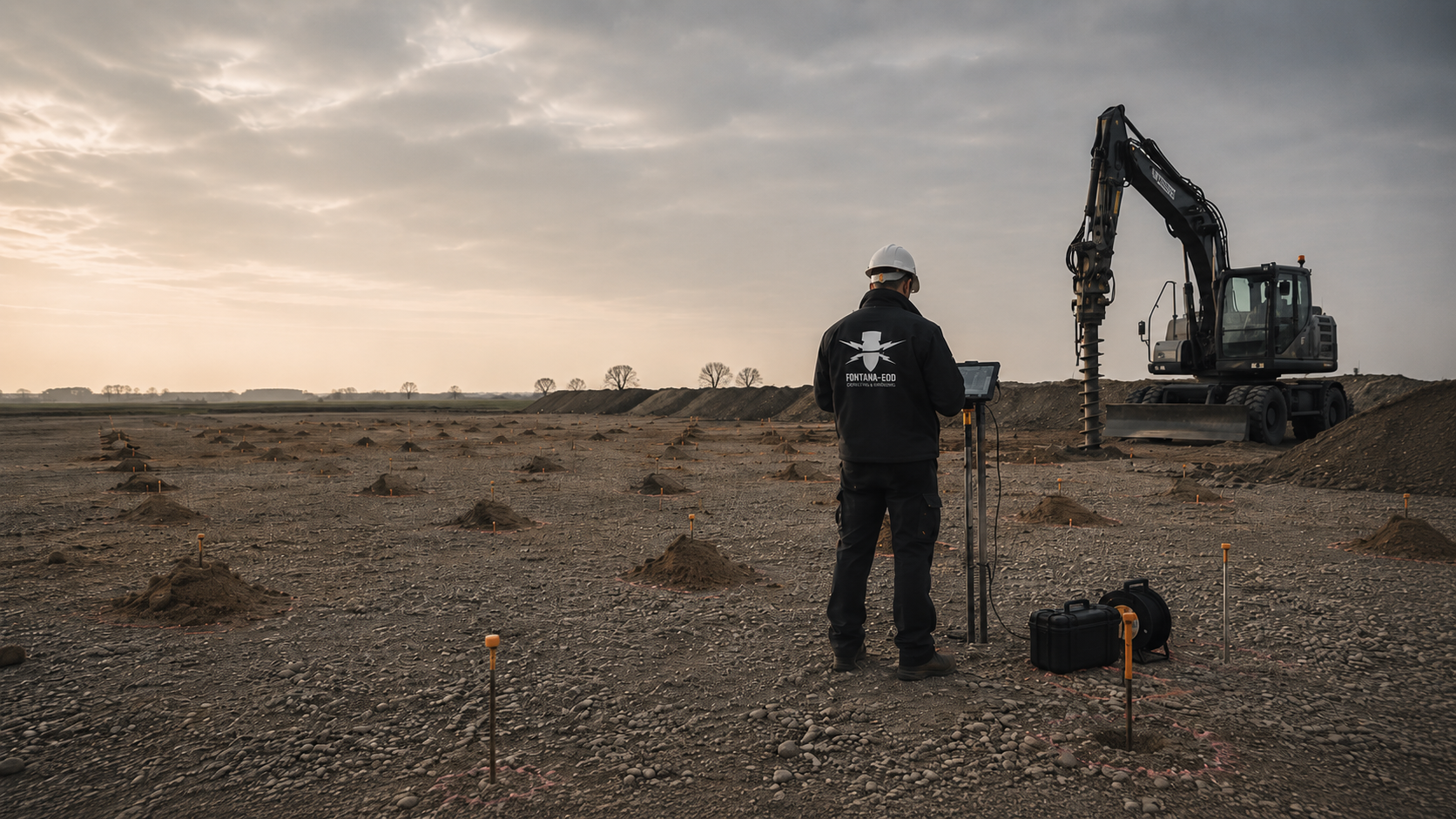
For boreholes, piles or other deep interventions, specify point location, dimensions and depth. Known obstacles and the desired form of result supplement this information. The specialist service can thus relate to specific ground volumes rather than only a total area for calculation. If a borehole clearance statement is requested, describe which proposed borehole and alignment the assessment is needed for. Task clarification includes starting elevation, final depth, known utilities and existing structures. Necessary investigations before creating survey access are also considered in the execution sequence.
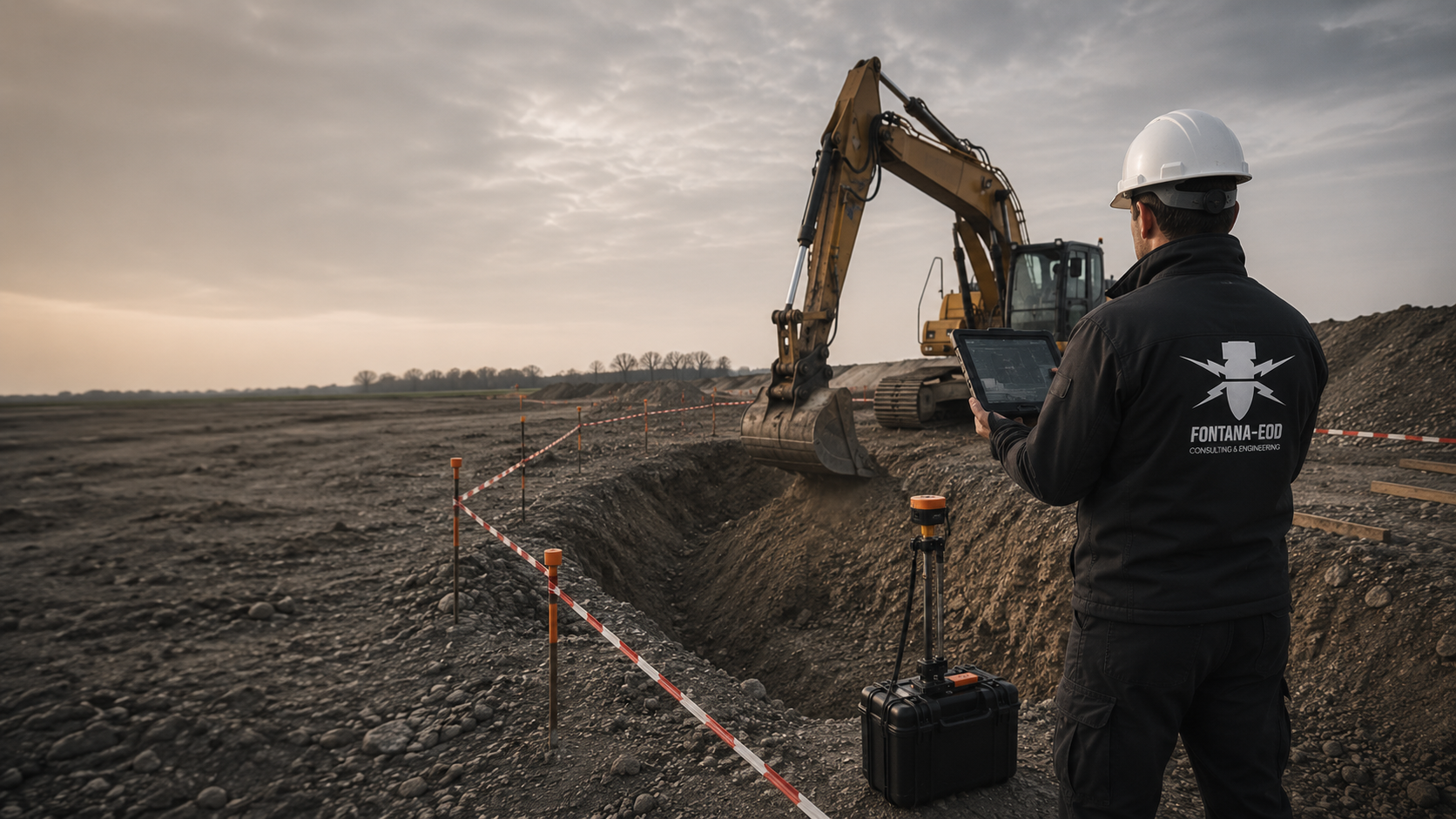
Describe construction status, available working areas and proposed sections. The technical task is connected with the sequence and necessary handovers. Working windows or several sections should already be apparent in the enquiry so that the quotation rests on traceable deployment conditions. For services during construction, responsibilities, stop signal, authority to issue instructions and reporting routes are also agreed before work begins. It must be clear when technical investigation takes place and when the next removal can proceed. Effort is related to the agreed work and actual deployment conditions.
Different construction forms change spatial and organisational effort. The enquiry should describe these differences specifically.

Identify continuous sections, additional excavations and different depths. Work may need different access and handovers. A shared site plan helps assign quantity assumptions in different quotations to the same areas and keep outstanding connection tasks visible. A crossing may have different depths, constraints or investigation access from the adjoining standard trench. Identify these areas individually. This allows checking whether a quotation includes every task or a further service for the crossing must be clarified separately.
Describe route conditions for quotation comparisonOperations, traffic or existing facilities may limit available working windows. Identify these conditions and known installations. Comparison needs to establish which coordination, sections and result handovers are considered in each service specification. Add proposed working times and the contact for access. An already defined operational window must be distinguished from one still needing approval. Changes to use or accessibility are communicated before the deployment affected.
Consider operating conditions in the service enquirySeparate the currently proposed intervention from possible later construction sections. Existing results are compared with the spatial scope needed. This facilitates distinction between a service that can be commissioned specifically and future needs not yet fully defined. An existing report supports the new enquiry if available in full with plans and appendices. Its spatial and technical scope is compared with the next intervention. Additional areas or greater depths become identifiable as a new review need; the earlier investigation retains its documented reference.
Assign construction sections and possible additional needsA specific specialist task is developed from a current plan and existing evidence. Completed investigations inform it with their actual scope; work still needed is agreed according to project status.
State the project location, construction activity and next decision. Explain whether a specific quotation or initial clarification of investigation needs is required. Identify construction type and intended decision date. Initial clarification of available documents and an executable quotation for an already defined investigation have different prerequisites.
Site plans, documents on suspected ordnance and earlier reports are assigned to the same task. Missing information and known limitations remain identifiable. Pass on original reports with all associated appendices. A single overview page often shows neither measurement conditions nor the full investigation volume. Earlier limitations are assigned to the proposed working area.
Available information is related to the area and depth of the proposed intervention. Any historical or technical addition needed is described as a separate specialist task. Where technically necessary, historical research and aerial photograph assessment are performed and evaluated for the agreed area of consideration. Their result may affect technical investigation planning. The work needed for this and subsequent field service remain distinguishable in the quotation.
Investigation, interpretation and handover needed are considered together. Quantity reference, prerequisites and possible follow-up tasks are recorded understandably. The suitable method is selected using investigation objective, ground composition, existing utilities and interference. For later comparison, quantity, method and result are each assigned to the same area or point group. Client and specialist company agree which prerequisites must be met before deployment and which services other parties provide.
The specialist company performs the commissioned survey or investigation during construction within the defined ground volume. Measurement grid, borehole points needed and preparatory investigations follow the task and local conditions. Data, findings and limitations are assigned to the area treated.
Work is assigned to the agreed volume. Different conditions or design changes are documented with their effect on the specialist task. Measurement data and findings receive horizontal, elevation and depth references. Inaccessible areas or restricted measurement conditions are recorded. For completed recovery work, the clearance record connects location, depth, finding and result with the wider documentation.
Results are interpreted by specialists and compared with the proposed intervention. Anomalies, confirmed findings and unresolved areas remain distinguishable. Necessary follow-up investigations or further measures are agreed with the responsible parties. Additional service needs receive a traceable relationship to the result.
Report and plan are compared with the commission. Unresolved areas and next measures needed are carried clearly into further project planning. Assessment identifies which commissioned question is answered and where further investigations or measures are needed. For the next intervention, relevant documents are handed to planners and site management. A construction stage changed later is compared with this investigation status.
The appropriate starting point depends on whether the specialist task is already defined or still needs assessment.
Describe the intervention and existing evidence. The appropriate service is selected for this task before an unsuitable quantity assumption becomes the calculation basis.
Define the specialist task before asking about priceBring plan version, earlier results and unresolved questions together. The same task can then be described traceably for several parties.
Compare documents and result scopeIdentify authorities already involved and official information available. Private specialist commissioning is distinguished from local cost responsibility still to be clarified. For an official case already underway, file reference, contact and associated plan help. State whether the available official information requires a measure still to be performed. This is connected with its own commission and clarified costs.
Understand the project location and existing casesFONTANA-EOD needs location, depth, access and documents for the proposed task. State which results you need for further planning. Distinguish a non-binding description of future needs from an investigation to be commissioned now. If conditions remain unresolved, state when they will be clarified. The quotation can then be built traceably on the information currently available.
Request a quotation using traceable informationDocuments should show what was requested, agreed and actually performed.
Site plan, intervention depths, historical documents and earlier reports describe the starting point. Known measurement conditions, utilities and access limits are added. Documents receive an unambiguous plan version so that later changes remain traceable. Ground investigation information and known groundwater conditions may also matter for the technical task. Pass on such documents with their location and conclusions. The specialist company can derive clarification needed for the offered service from them.
Service specification and quotation assign the investigation to the volume and result needed. Defined services, options and unresolved prerequisites remain distinguishable. Interpretation, report, plans and agreed data formats are also described clearly. BFR KMR connect technical requirements with the project-specific service specification. A selected specification is read with additions and prerequisites needed for the project. Work steps offered and results required thus remain traceable for both sides.
Measurement data, assessment of findings and results plan show the actual scope performed. The report and clearance record where applicable are connected with the agreed task. Unresolved areas and further decisions remain visible so that additional effort can be discussed on a traceable basis. Quantities delivered are assigned to the agreed service units. For work in sections, it must be clear which report concerns which area. An additional task remains traceable in the same project file with its reason, agreement and result. Where clearance work has actually been performed, the clearance record documents the areas and depths treated, clearance scope performed and result.
A quotation describes a technically suitable service under defined conditions. Necessary prerequisites remain part of this task clarification.
BFR KMR apply to the federal scope described; for other projects, their technical or contractual inclusion is clarified. Local procedures and the specific commission are brought together with this. Cost planning identifies the specialist services, checks and handover documents agreed for the project.
In Germany, the permit under the Explosives Act concerns the company's scope of activity; personal competency and responsibility are considered separately. The First Ordinance on the Explosives Act (1. SprengV) includes provisions on specialist knowledge and state-recognised courses. Prerequisites needed are determined by the investigation or clearance task actually commissioned. Personnel and specialist responsibilities therefore form part of preparation of the service to be performed.
The respective employers in Germany assess working conditions, define protective measures, instruct their employees and check compliance with and effectiveness of measures. Where employees of several employers work at the same workplace, measures are coordinated. The DGUV Information 201-027 concerns explosive ordnance clearance. The DGUV Rule 113-003 addresses dismantling or destroying explosives or corresponding objects, including disposal of found ordnance. Its application follows this activity scope. Necessary protective and coordination tasks are assigned to the planned service.
Local authorities and public disposal services undertake their respective hazard response and find-handling tasks. Privately commissioned investigations receive their own spatial and service scope. The Lower Saxony explosive ordnance disposal service describes this task allocation for its federal state. For an officially initiated hazard investigation, the Hanseatic City of Lüneburg explains how survey cost responsibility depends on the result: where contamination is established, corresponding costs are imposed on responsible owners; where no ordnance is found, the authority initiating the investigation bears survey costs. The city also identifies recovery and disposal tasks funded by the state. This local distinction is related to the specific case; payment for a separate private commission is agreed separately. For a possible explosive ordnance find in Germany, the police must be notified immediately on 110; responsible authorities undertake further hazard response.
Information should remain unambiguously assignable for later queries.
All quotations refer to the same design. For later queries, also use the date and designation of plans submitted. An excavation boundary changed in the meantime or an additional foundation group must become identifiable in comparison.
Areas, points and sections are traceable. An identified area, borehole point or route section can be located on the plan. The associated service unit describes what is offered and later documented for it.
Interventions are described spatially. A depth value includes the relevant elevation reference. Filling, demolition or excavation already completed may change comparison with older documents and are therefore communicated.
Unclarified conditions remain identifiable. The quotation identifies information available and the prerequisite still needing confirmation. Project management can then arrange the missing clarification specifically.
Reports, plans and data are identified. The handover desired is defined by the recipient: planners and site management need spatially assignable results. Agreed data formats and appendices therefore belong in the task description.
Additional tasks have a specific reason. A new plan version or different finding is compared with the agreed scope. Necessary additions are described and agreed before their execution is attributed to the existing commission.
Local assignment helps bring the specialist task together with procedural conditions already known.
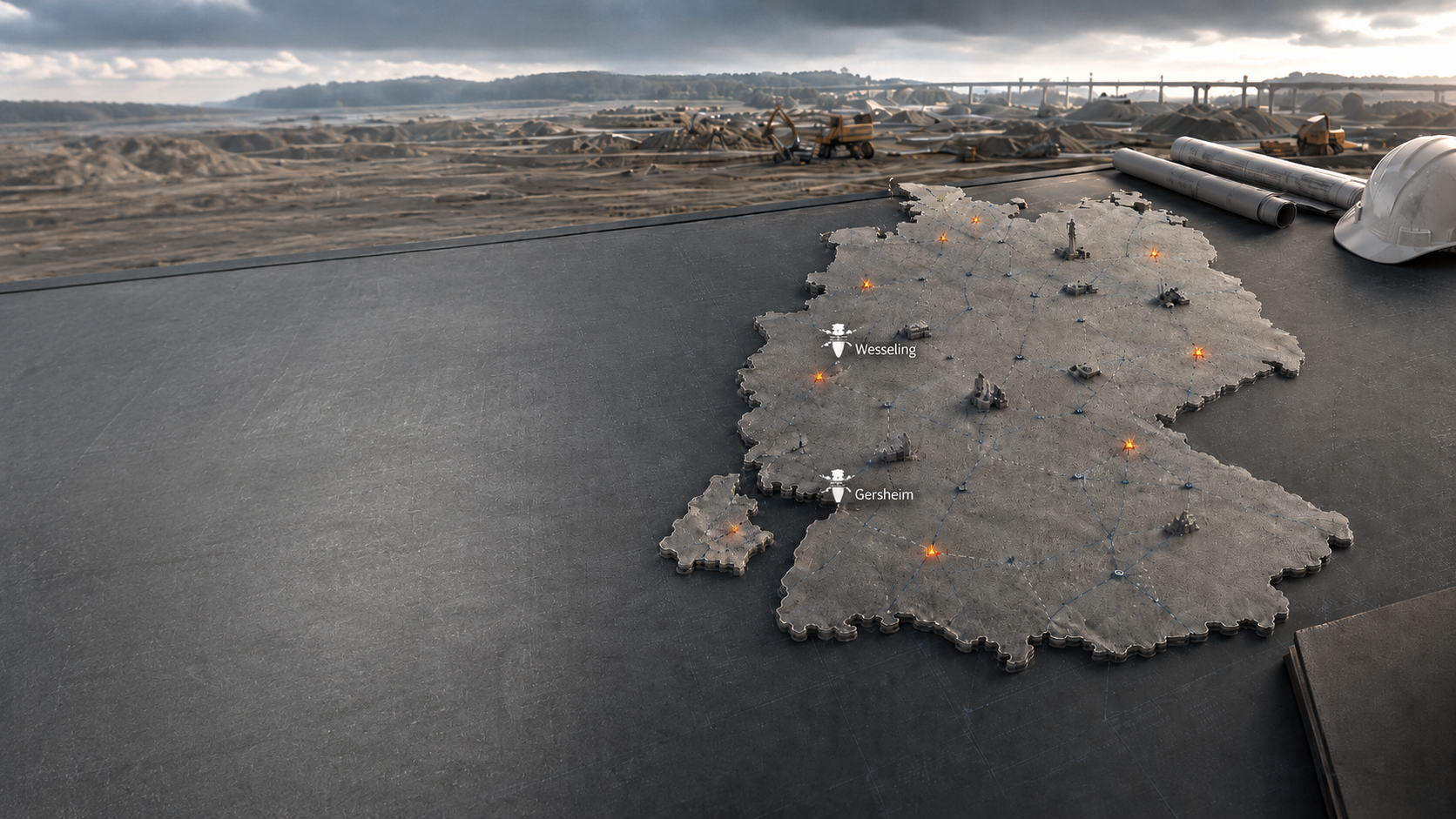
State municipality, address and plot reference. Include existing official correspondence and appendices. Communicate which measures have already been initiated and which services you now wish to enquire about privately.
Relate the project location to existing information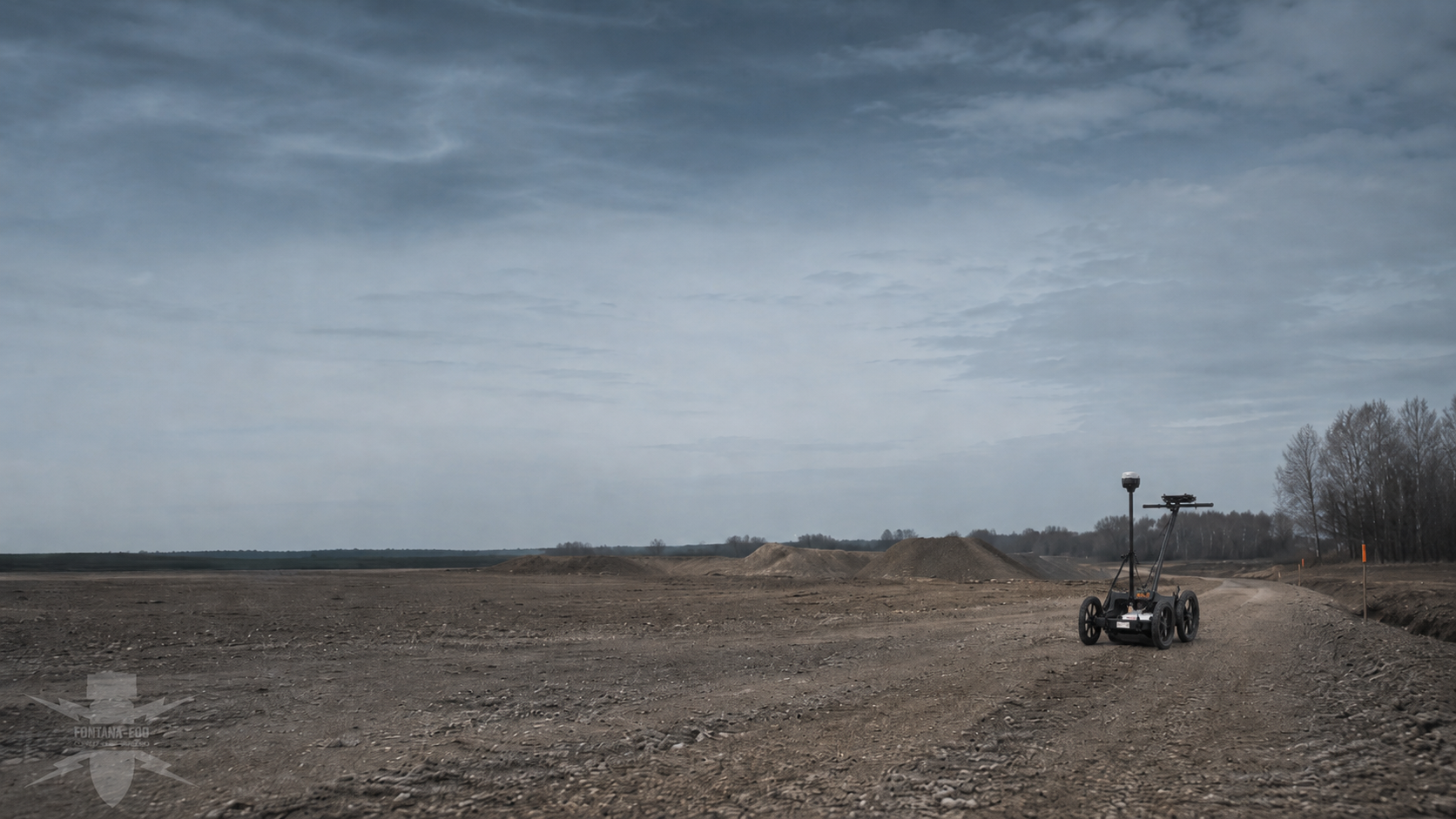
Mark areas, routes and individual points on the current plan. Add depths, access and timeframe. Different construction sections and unresolved information remain separately identifiable so that the enquiry describes a traceable task.
Prepare a service enquiry with location and depthBackground information, investigation and result handover contribute different parts of the specialist service.
An existing assessment is read with its area of consideration and conclusions. Missing information is identified before a subsequent investigation is priced. The additions needed follow from the specific project question.
Check historical information for the service scope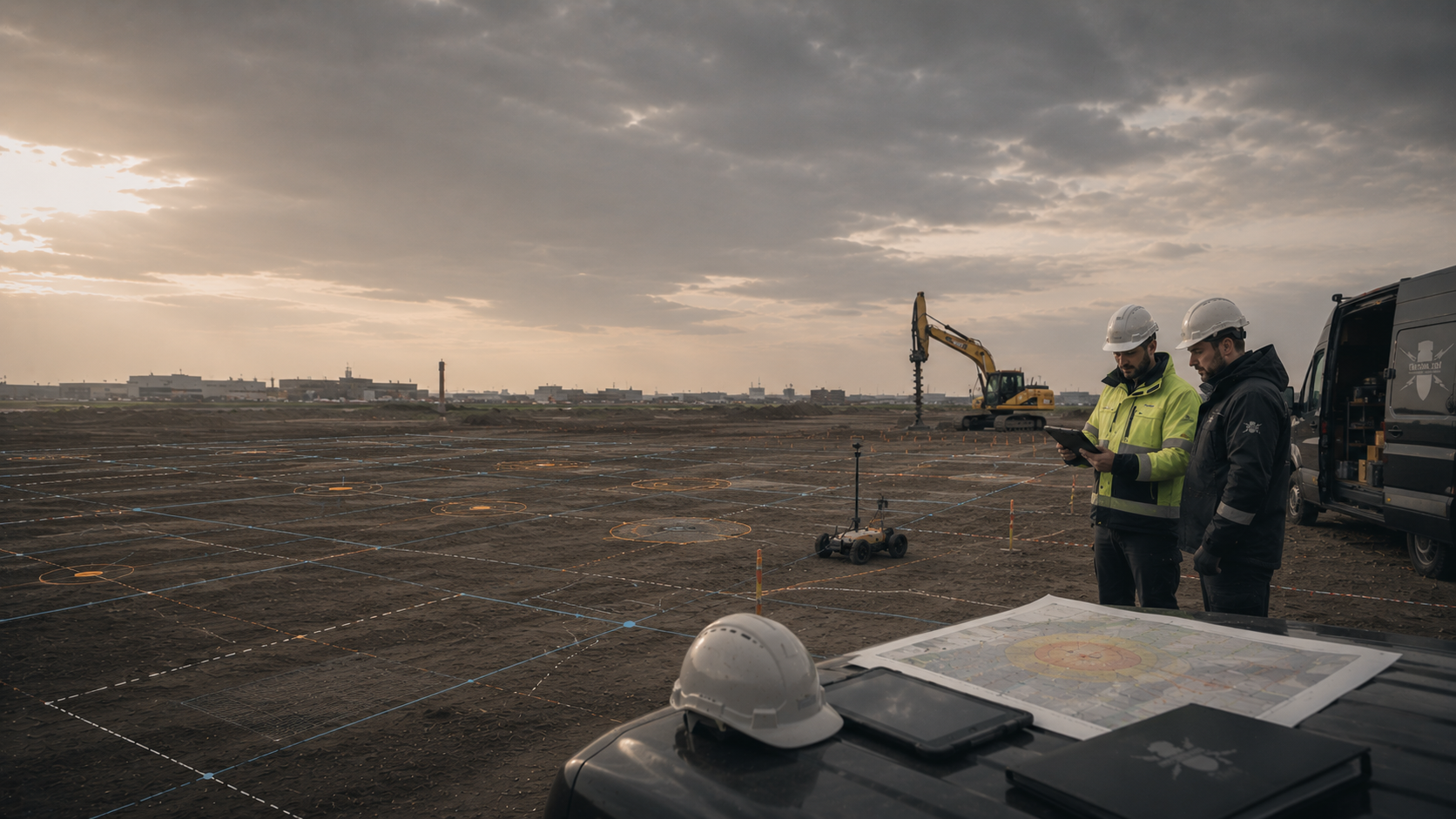
Area, depth, measurement conditions and the assessment desired determine the specialist task. Assign the requested investigation to the actual ground volume. Method selection, interpretation and results needed for the next intervention are described together.
Define the investigation task for a quotation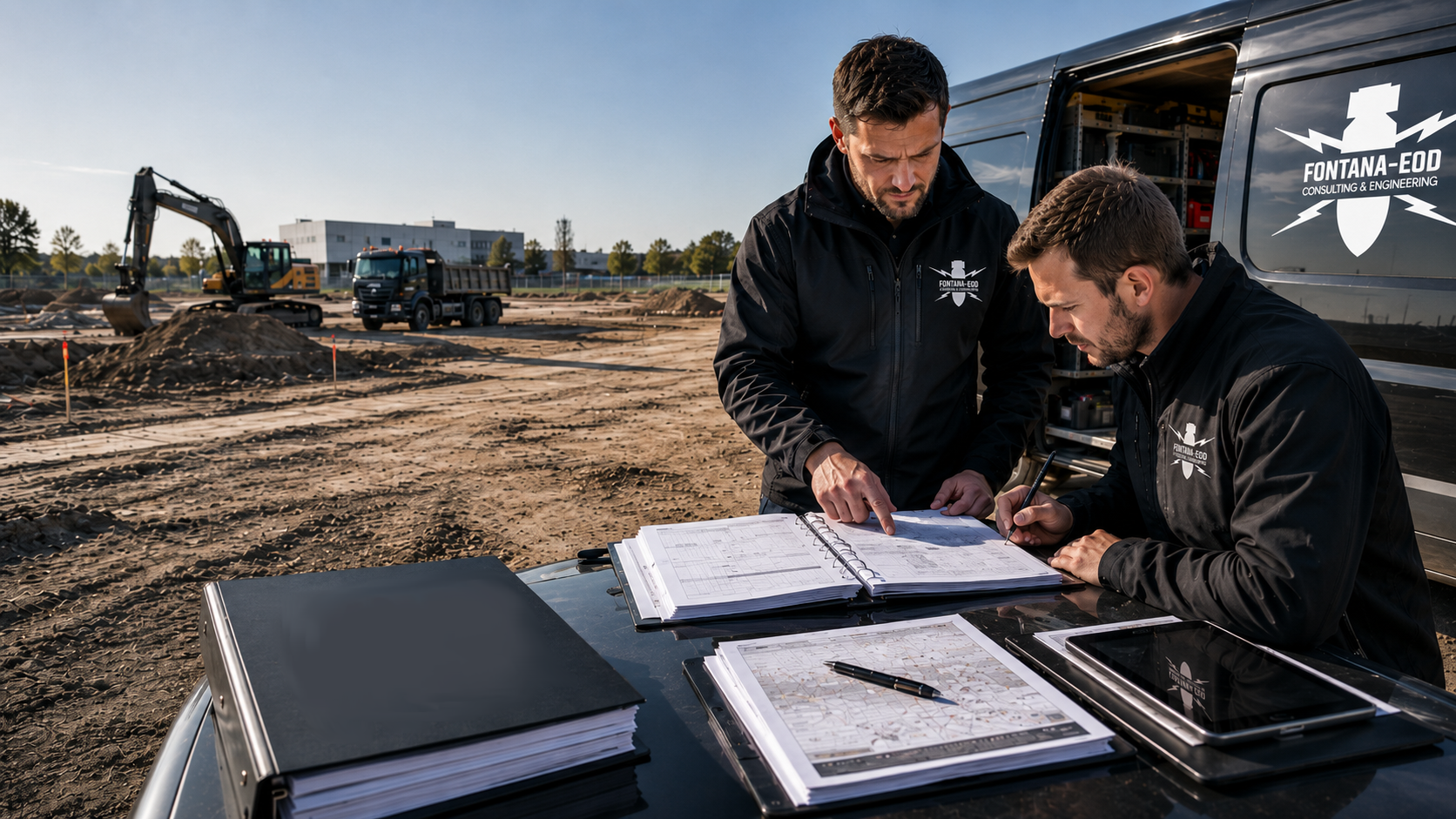
Report, results plan and data handover are agreed explicitly. Comparison makes clear whether these components are included and their scope. Limitations remain traceable with their spatial reference.
Identify documentation scope in the enquiry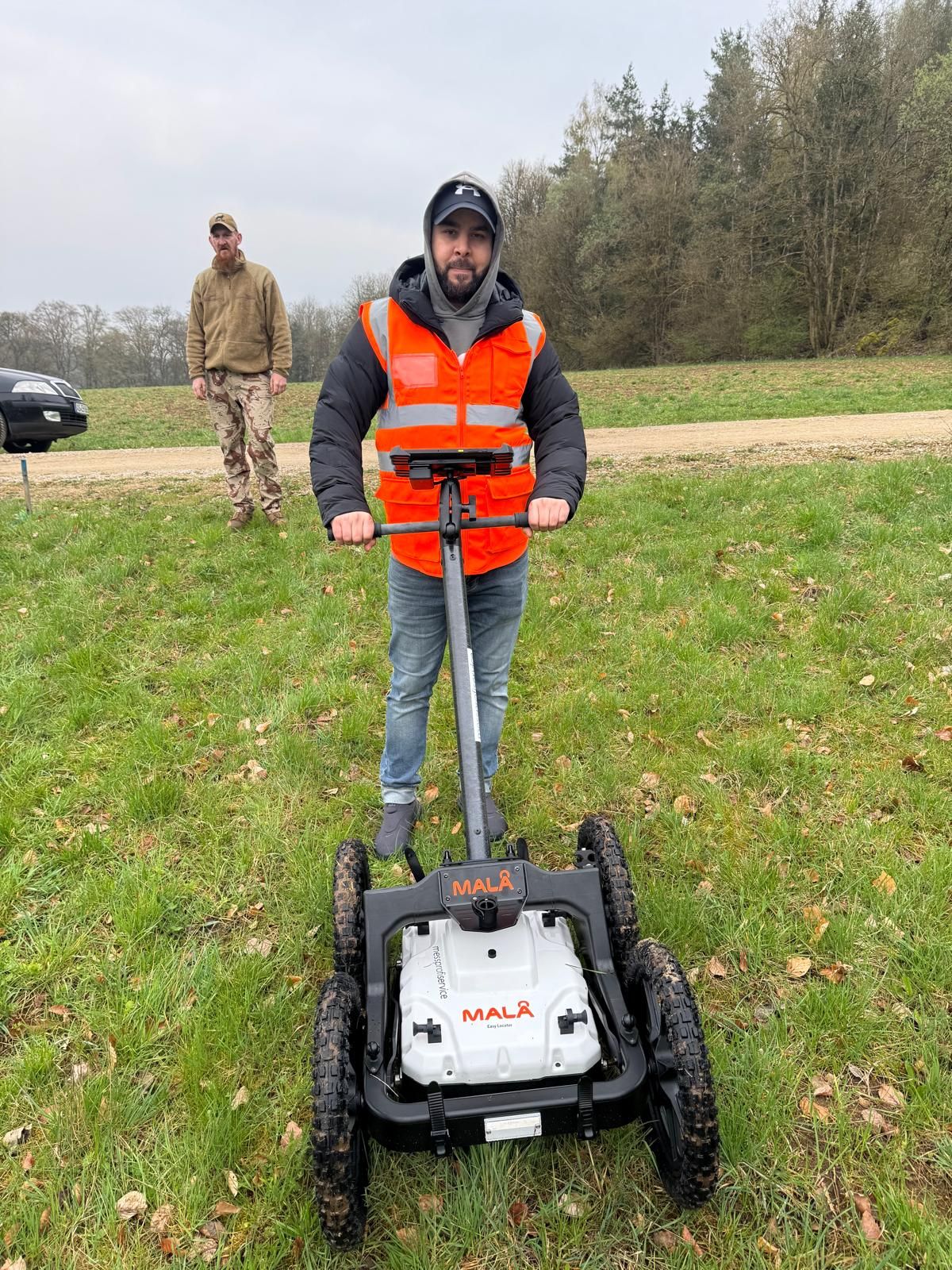
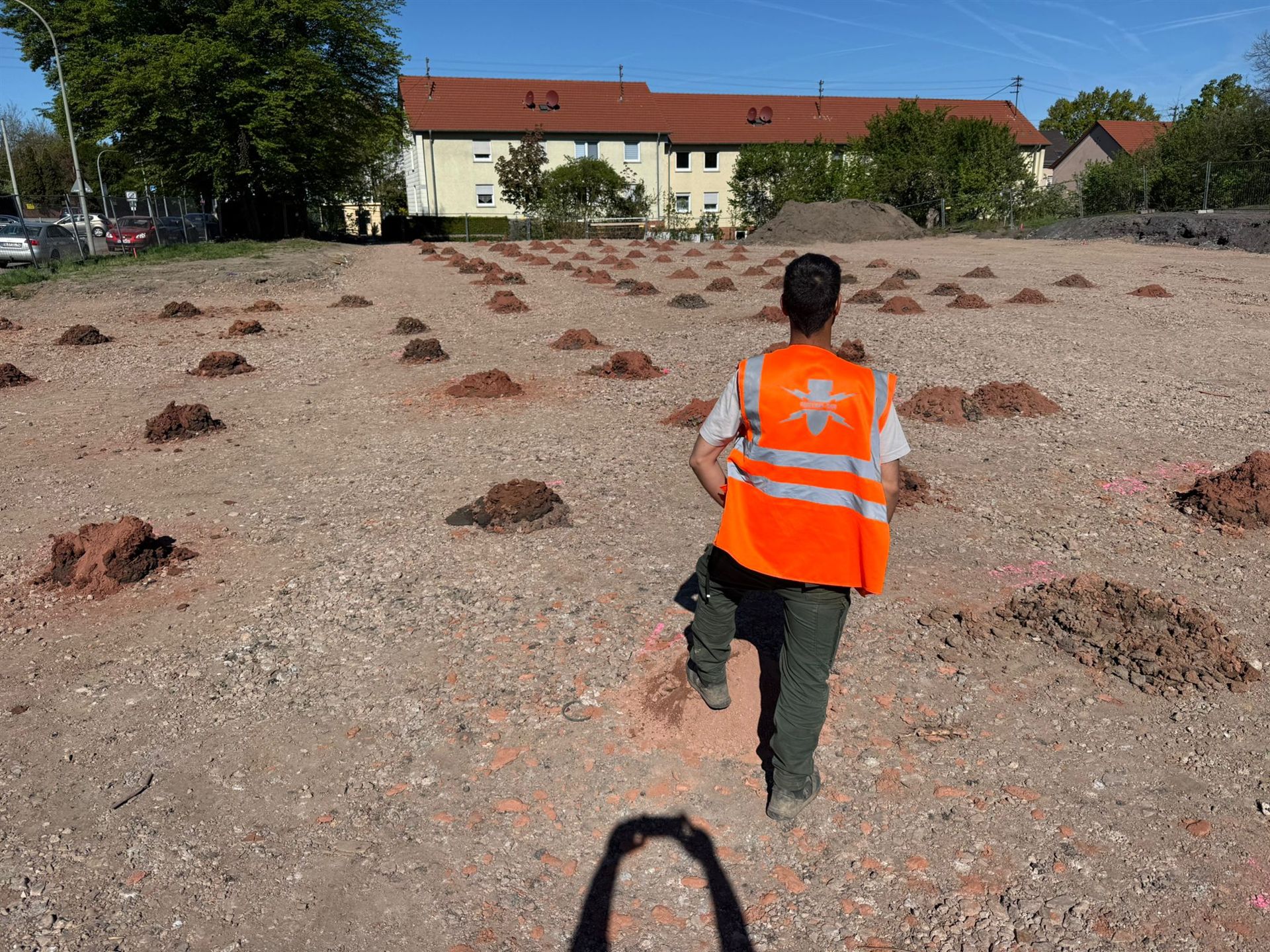
For the next enquiry, specialist service needed, existing evidence and desired result handover are coordinated.
Distinguish the investigation still needed from a possible clearance task and associated record. Identify the unresolved question about area, depth or interpretability. The appropriate specialist support for the project can then be selected.
Read technical guidance for the enquiryCoordinate the commission, necessary documents and result handover with the proposed intervention. For work in sections, intermediate status and outstanding tasks are identified unambiguously. Planners and site management receive records belonging to their working area.
Agree scope and handoverSend the site plan, depth information and existing reports. Describe access and timeframe. Missing information can then be connected specifically with the unresolved specialist question.
Request a quotation using project documentsA price can be assessed only against a clearly described service scope. Area, depth, method, access and interference must fit together. A general square-metre rate without these conditions does not reliably answer your project's cost question.
Project location, site plan, intervention areas and depths, existing explosive ordnance documents, access conditions and timeframe are needed. Add the desired form of result and known limitations. Missing information may initially require separate clarification. Clarify needs early before the proposed groundworks. The process connects document review and any historical research required with method selection, investigation or suitable supervision, assessment and documentation. Results and construction design are compared before the next intervention.
This follows from the specific quotation. Agree the reports, plans and data formats needed explicitly. A quotation for measurement alone is not directly comparable with a service including assessment and the complete agreed handover.
This is clarified according to federal state, procedure and specific measure. Investigation, public disposal tasks and preparatory and subsequent work may be assigned to different cost bearers. For a private commission, client and payment are agreed; any cost coverage claimed from an authority is coordinated and evidenced for the specific case.
The change is related to the agreed investigation scope. New areas, greater depths or different working conditions may require additional services. Their scope and payment should be agreed traceably before they are treated as part of the existing commission.
Assign quantities to the same current site plan and specialist task. Check whether area, individual points, depth and work sections correspond. Only after this comparison can it be established whether different totals concern comparable services.
They should remain identifiable as assumptions. Access, measurement conditions or missing documents may affect the appropriate scope. Identify which clarification is needed before execution and how resulting additions should be agreed.
Stop work in the affected area, do not touch or move the object and keep your distance. In Germany, notify the police immediately on 110 and follow their instructions. Find notification takes priority over further quotation or cost clarification; responsible authorities arrange hazard response.
Compile the documents for the quotation with an identifiable plan version. State whether the initial task is to clarify investigation needs or an already defined service is being requested. Missing information can then be assigned to the specific specialist question.
State address, region and plot reference. Mark the construction site, route and borehole points on the site plan. Add depths and construction methods and additional working areas involving ground interventions. The current plan version must remain identifiable. For several construction sections, areas are named separately. For inclined or laterally extending structural elements, sections and additional location information help. The ground volume requested must also identify preparatory work insofar as relevant to investigation planning.
Include historical assessment, earlier reports, known authority conditions and utility plans. Describe vegetation, vehicle accessibility, installations and access. Present known facts separately from unresolved conditions. Earlier investigations are provided in full with plans and appendices. Their spatial and technical scope is compared with the current intervention. Previously documented results and unresolved areas thus remain usable for defining the new task.
State project status, construction dates and work sections. Describe reports, plans and data needed and the next decision. Explain whether the scope is already defined or first needs specialist clarification. If tendering the service, individual services and results needed are identified so that all companies approached work from the same task. Give contacts for specialist queries and site access.
Whether historical aerial photograph analysis, explosive ordnance surveying, surface surveying using GPR, magnetometry or TDEM, deep-ground surveys, downhole surveys, excavation supervision, area clearance or ordnance recovery is needed depends on the location, ground disturbance, depth, ground and existing documents. An early ordnance assessment provides clarity for tendering, programming, occupational safety and construction.
FONTANA-EOD combines its Section 7 SprengG licence, specialists holding Section 20 SprengG certificates of competence, suitable survey and clearance methods, and traceable documentation. Send the site plan, depth of ground disturbance, construction phase and existing documents for an initial technical assessment.


