Project pathway
The quickest route to the right decision.
For a new cable trench or foundation in an existing substation, the working area and operating conditions must be defined. FONTANA-EOD clarifies the investigation needed in the ground with your design team. The operator and responsible electrical specialists determine which electrical protective measures and operational permissions the work requires. These requirements inform preparation of the explosive ordnance investigation.
Show the location and depth of the groundworks on the plan.
Clarify protective measures with those responsible.
Identify utilities and metal installations.
Operational permission to work and the explosive ordnance investigation are documented for each section according to their different purposes. The responsible electrical specialists clarify the installation's electrical state; the explosive ordnance report describes the investigation carried out on the ground. Describe the planned groundworks and provide existing explosive ordnance reports accordingly. Also state which operational prerequisites have already been clarified.
The scope of services for “Saarbrücken – DB transformer station / maintenance facility – Lot 3 Saarbrücken / Germany” included downhole magnetometry.
Service period: 2026-09
Service areas:Downhole magnetometry / deep-ground survey
View project details · Deep-ground and downhole surveys · Project location: Saarbrücken
Service period: 2024-08
Service areas:Downhole magnetometry / deep-ground surveySurface surveys: GPR, TDEM and magnetometryMethod used in this project: Ground-penetrating radar
View project details · Deep-ground and downhole surveys · Region: Rhineland-Palatinate
View project details · GPR and limitations · Region: Rhineland-Palatinate
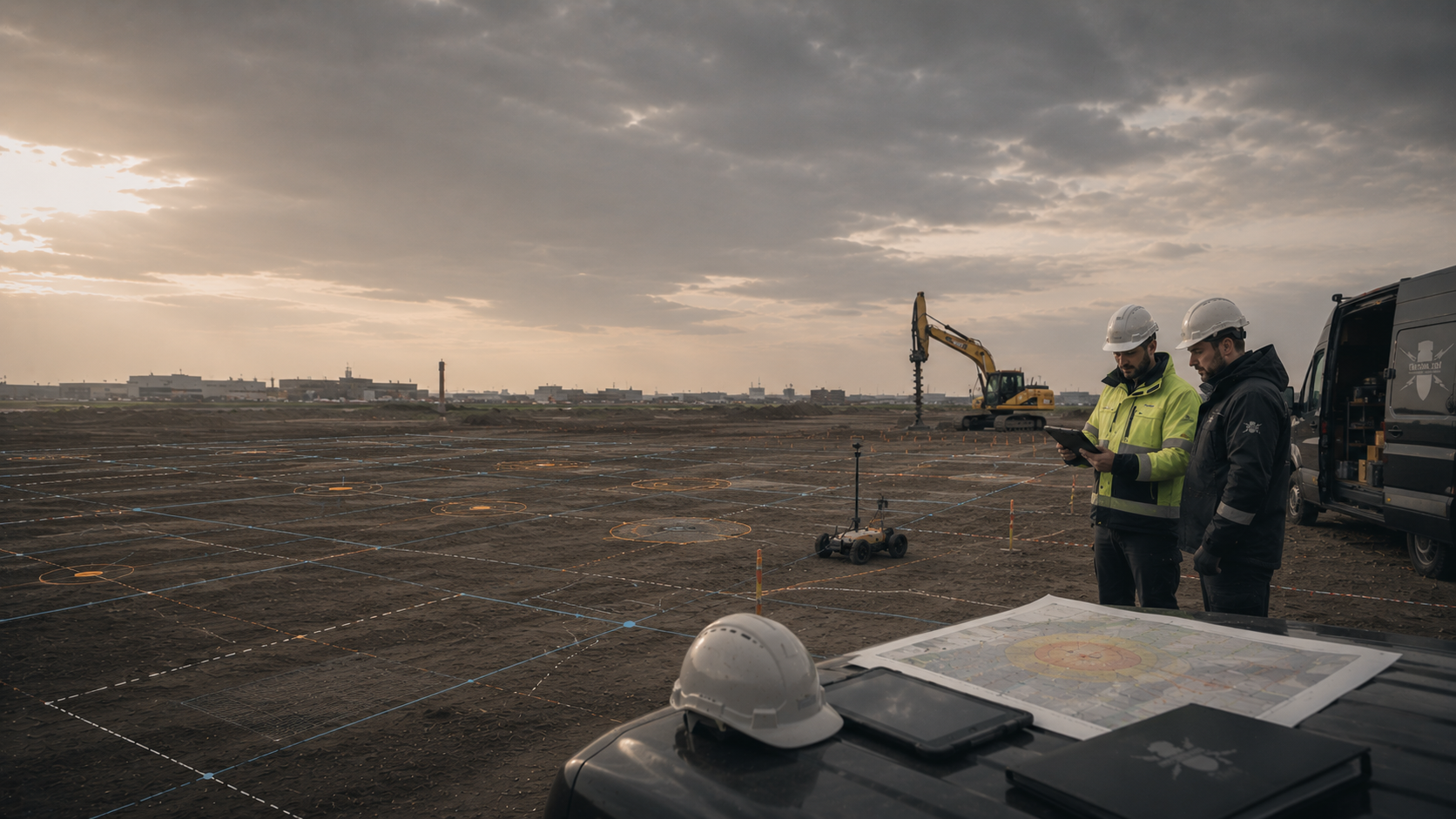
An extension to an energy installation may involve foundations, cable trenches, drainage and temporary working space. Show the location, depth and reference level of these areas of ground disturbance. FONTANA-EOD can then relate available evidence to the work actually planned. Calling a project an alteration or maintenance does not, by itself, define an investigation scope. Even a small technical addition may affect ground previously assessed for a different purpose.
Select services according to the actual volume of ground affectedUtilities, metal installations, foundations and adjacent equipment can affect preparation of an investigation. Add available as-built plans and identify known uncertainties. The technically appropriate approach depends on the task and accessible conditions. Shutdown does not automatically mean that every technical investigation is possible without restriction. Construction conditions, access and remaining structures are still considered for the specific area.
Coordinate methods with existing structures and access
Read an earlier report together with its site plans and described task. For a deeper foundation or altered cable route, check whether the earlier findings remain applicable. The actual limits of the specialist work are decisive. An already investigated installation site does not provide blanket coverage for all later depths and extensions. The new construction design therefore remains the basis of the technical comparison.
Compare investigation scope with new depths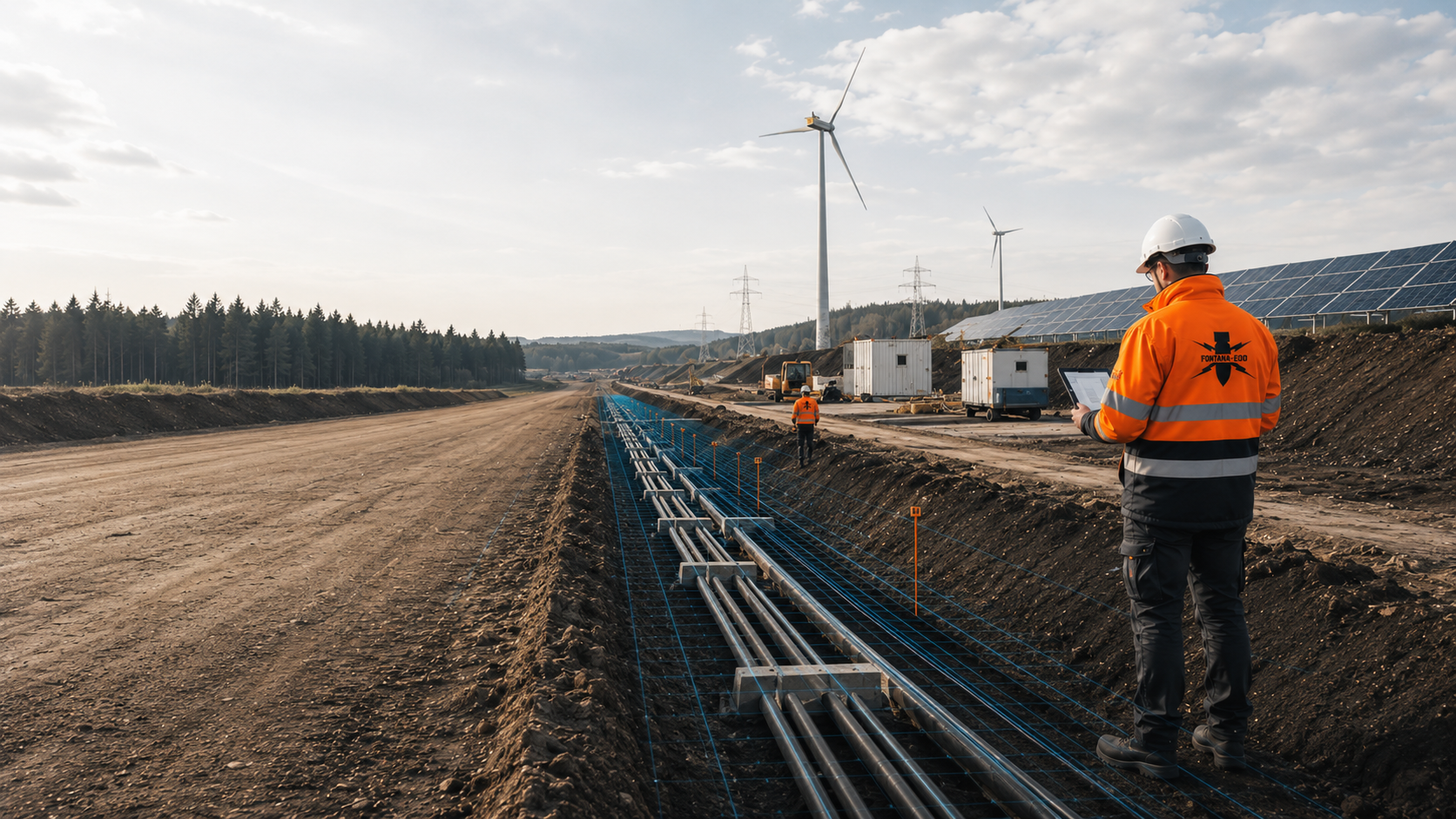
Describe the route, connection pits and local deeper excavations together. Even a short new connection between existing foundations may affect ground not previously addressed. Utility information from the responsible bodies is brought together with the construction plan. Clarification of existing utilities is handled by the bodies responsible for utility information. Both sets of information are needed during preparation so that the agreed specialist work can be related to the actual ground disturbance and local conditions.
Assess connection pits and cable routesFor a new unit, cabinet or load-bearing component, specify the foundation, excavation and required working space. The visible installation footprint may be smaller than the area of ground affected. Additional sections show differing depths. Existing documentation for an adjacent route is used only after a spatial and technical comparison. This makes clear which findings already apply and which additional question needs addressing.
Clarify the investigation scope for installation foundationsChambers, channels and connections may reach different depths from the rest of the works. Mark them on the plan even if they belong to a separate trade. A general description of the installation area should not obscure these local areas of ground disturbance. Preparation distinguishes dismantling, construction and connection. The specialist findings can then be related to the groundworks actually planned.
Select methods for drainage and ancillary installations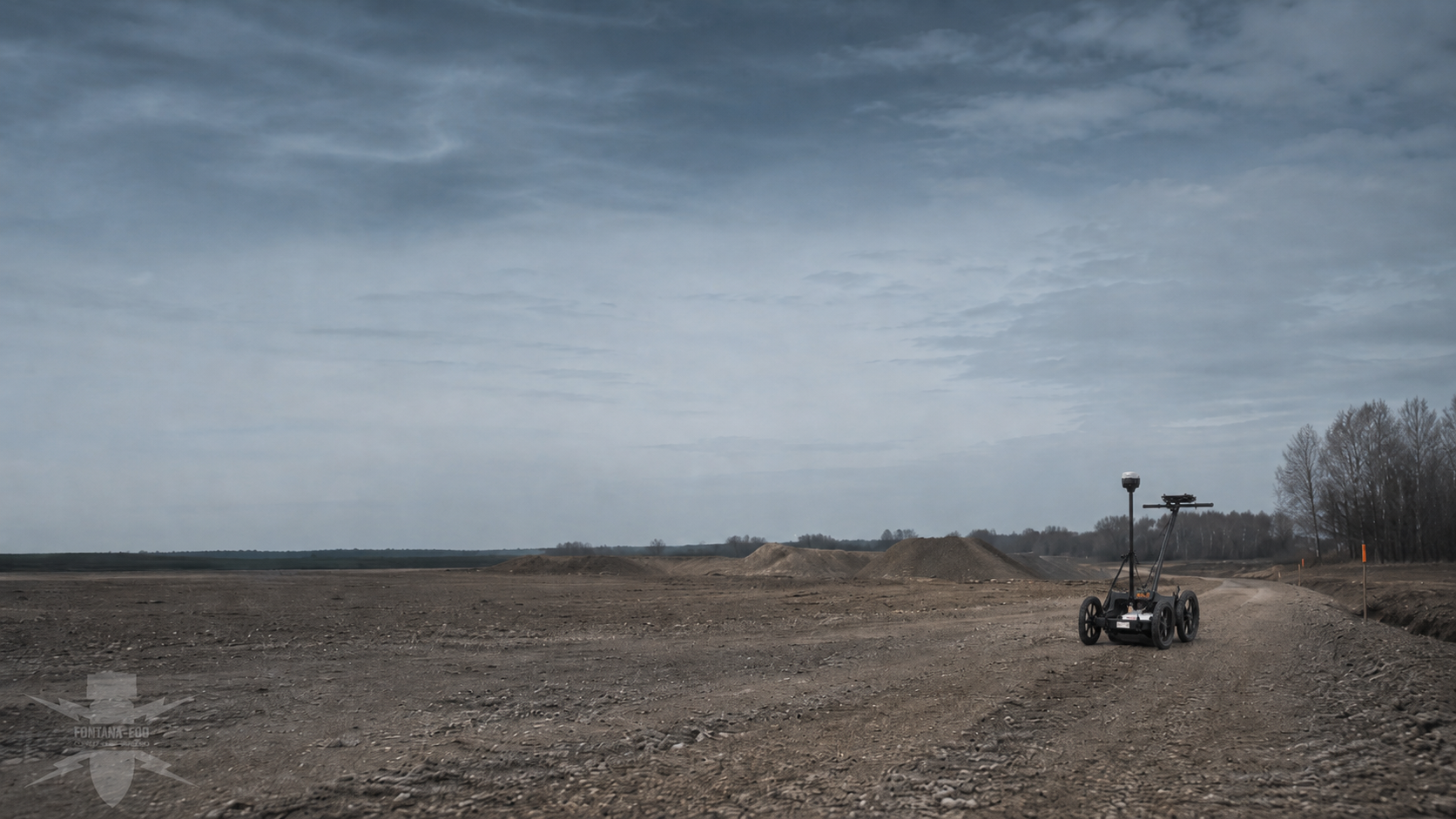
Equipment setup or construction logistics may require additional areas. Describe whether ground will be removed, surfaced or anchored for this purpose. Use as a temporary working area does not, by itself, determine investigation requirements. The actual construction activity is decisive. Access and bearing capacity are clarified by the responsible parties and coordinated organisationally with the requirements of the agreed explosive ordnance specialist work.
Coordinate temporary areas and accessShow new trenches, foundations and connections on a current plan. Add the actual working depths and reference levels. Investigation requirements can then be derived from the construction activity rather than a general description of the entire installation.
Provide as-built documentation and the intended working area. Name known uncertainties. The operator explains the organisational prerequisites so that the specialist contractor can relate its task to the conditions actually accessible.
Name the planned construction phases and contacts for operational and construction questions. Keep provisional details clearly identified as such. The specialist scope required is then compared with the available working windows.
Describe, for example, a new cable trench, alteration of a foundation or addition to an earthing system as separate areas of ground disturbance. Location, extent and depth are required. Mark the specific trenches, excavations or foundation points on the installation plan.
Ask the responsible operator representatives to specify the operating conditions relevant to the work. These include the boundaries of the accessible area and required protective measures. The design team and specialist contractor need the conditions applicable to their assignment. Technical switching operations remain with the responsible electrical specialists.
An available time window must also provide a usable working space. Clarify access, traffic routes and planned equipment and material positions. State which zones become accessible only after an operational change. The investigation can then be planned in the appropriate sequence.
The ground disturbance plan shows spatial boundaries and differing depths. Additional working space and temporary construction conditions are described too. This gives specialist planning a traceable basis for the specific task.
Provide reports with their attachments and the plan revision to which they originally relate. Keep limitations visible. Only the combined comparison establishes which findings can be used for the current works and which questions remain open.
The responsible bodies provide the conditions relevant to the planned working area. Changes follow a clear reporting route. The specialist contractor coordinates its activity using this information; operational decisions remain with those responsible for them.
The specialist report must show which areas were investigated and what the results mean for the agreed assignment. Location references, areas addressed and limitations are decisive for later use. For new groundworks, check whether they fall within the documented investigation scope. Belonging to the same installation is insufficient. Assign necessary follow-up investigations or exposure work to the affected area. Recovery of confirmed explosive ordnance is coordinated with the permitted scope of activities, local responsibilities and documentation requirements. Following actual exposure or clearance work, include the corresponding findings and clearance records.
Operational permissions and electrical requirements remain identifiable as separate documents. Agree which documents construction management needs for each section and who provides them. Security of supply and other operator obligations are clarified separately with the responsible operations staff and specialists.
Technical foundations: BFR KMR: Clearance planning and clearance concept – introduction · BFR KMR: Geophysics · BFR KMR: Documentation · DGUV Information 203-001: Safety when working on electrical installations · § 5 ArbSchG: risk assessment · § 8 ArbSchG: cooperation between employers
The Federal Guidelines on Explosive Ordnance Clearance contain requirements for historical and technical investigation, clearance concepts, procurement and documentation within their defined federal remit. Their application to the specific construction project at the energy installation, together with locally applicable requirements and responsibilities, is clarified separately.
Provide the extract of the installation plan relevant to the ground disturbance, existing explosive ordnance reports and the planned construction conditions. Mark unresolved locations. The information on substations and transformer stations is compared with the installation and foundation design.
Assign each open question to a responsible person: installation operations, construction management or the explosive ordnance specialist contractor. Where employees of several employers work at one workplace in Germany, the employers cooperate on occupational safety under § 8 ArbSchG and coordinate the necessary protective measures. The documents must show who issued each specialist assessment or operational permission.
Existing reports and historical evidence are related to the ground disturbance. Ground conditions, utilities, metal components and accessible areas determine which technical investigation is suitable. Methods, occupational safety and any necessary preparatory work are coordinated with the operator and construction management before work proceeds. Existing information and reports are reviewed for their plan revision, spatial scope and questions still open for the current construction task. If historical evidence is missing, suitable sources are researched and aerial photographs evaluated for the affected installation areas. The results are related to the present-day ground disturbance and used to plan further investigation.
The commissioned investigation is performed in the agreed installation areas. Data, findings and restrictions are recorded with position, depth and plan references.
Survey data and findings are evaluated by specialists. Areas still open, necessary follow-up investigations and the next decision are identified for installation operations, designers and construction management.
Before the following construction section, check whether the working area and planned groundworks still match the documented position. Pass on open investigation areas and operational restrictions separately. Specify in the next assignment which questions still need clarification before groundworks begin. Assessment, areas addressed and the limits of the findings are documented in the report with the corresponding plan attachments.
Metal installations, utilities and cables can affect geophysical investigations. As-built plans and information about visible installation components help preparation. Whether a surface survey or another method is suitable for the planned ground disturbance is assessed using the conditions on site. Necessary investigations and protective measures are planned before ground disturbance during vegetation clearance, dismantling, surface breaking or creation of access routes and working areas. Areas becoming accessible later are investigated before the respective subsequent ground disturbance.
Electrical operating conditions and the ability to obtain geophysical findings are different questions. Even after operational permission is granted, existing metal components may limit the investigation. Conversely, a survey method that is suitable in principle does not permit access to an area closed for operational reasons.
If a cable route is relocated or a deeper excavation planned, compare the new ground disturbance with existing results. Changed working conditions may also require protective measures to be coordinated again. Record which change was assessed and which specialist or operational measures follow from it.
Existing utilities, new structures and operational accessibility are considered together. Use as a utility installation does not dictate a single method; the specific investigation task is decisive.
Historical aerial photograph assessment and other old records help place the basis for suspicion in its spatial context. The available images, their evidential value and the limits of the area considered matter. The absence of an identifiable indication must be distinguished from a technically surveyed ground area. The assessment is considered together with the planned intervention and other available findings. It can support the choice of a survey, but is not a measurement of the present-day subsurface or confirmation for all future works.
Understand aerial photograph assessmentMagnetometric methods detect magnetic anomalies. Whether they can address the specific survey task depends, among other things, on the expected objects, ground conditions, interference and required survey area. Fences, utilities or existing structures may affect interpretation. A measurement signal is therefore not described as ordnance solely because of its strength. Method, interpretation and any further investigation are planned as a connected specialist task.
Understand the scope of magnetometryElectromagnetic surveys may be suitable for particular metallic targets and site conditions. TDEM detects the time-dependent electromagnetic responses of electrically conductive bodies. Suitability is justified for the particular task, not inferred merely from the availability of equipment. Interfering installations, accessible areas and the required conclusion must also be considered. Results are documented with location and survey conditions. Whether a complementary method is needed follows from the specialist assessment and remains a specific project decision.
Understand electromagnetic surveyingUnder suitable conditions, ground-penetrating radar can provide information about subsurface structures and reflections. Ground conditions, moisture, installations and the particular survey task affect interpretability. An anomaly is not automatically ordnance, and an area with no apparent anomalies is not general evidence for arbitrary depths. The specialist interpretation and its limits are documented with the instruction. A survey for another purpose is not adopted without checking as ordnance evidence.
GPR and limitationsFor deeper ground interventions, it may be necessary to assess whether surveying from the surface can provide the required assessment or a different approach is needed. For individual foundation or chamber locations, the ground volume to be assessed and achievable survey coverage are compared before a borehole grid is defined. Necessary surveys and protective measures are defined before boreholes are created. Location, depth, borehole arrangement and existing utilities then form part of preparation. Creating survey access must also be planned using a technically suitable approach. A general depth figure or standard grid does not replace this task. Results remain limited to the areas actually addressed and the method used. For surveys from investigation boreholes, casing, drilling depth and documentation are also coordinated with the task and site conditions.
Prepare deep interventionsIf a necessary preliminary survey cannot be completed in full, the suitability of a technically planned approach during construction is assessed. Each working layer is technically surveyed and evaluated before controlled removal in layers with supplementary visual inspection follows. The steps are repeated to the agreed excavation formation. Excavation layers, stop signal, authority to give instructions, reporting channels and documentation are agreed with site management and specialists before work starts. Pure visual observation of the excavation cannot simply replace a necessary instrumental survey. Site management needs a clear description of when specialist works take place, how new findings are handled and which areas remain outstanding.
Agree the approach during constructionFONTANA-EOD prepares the explosive ordnance specialist work using the planned earthworks, available evidence and specified installation conditions. The agreed scope describes the area and question to be addressed. The responsible bodies provide the operational prerequisites. The report relates the investigation carried out to its areas and depths. Operational permissions are documented separately according to their respective purposes.
Discuss the investigation taskThe design team explains structures and depths; the operator names contacts for operational conditions. Where several specialists are responsible, record which question goes to whom. Central project coordination can bring the information together; individual decisions remain with the named responsible parties. Questions about access, the working area and changes should be answerable in time for the planned deployment.
Preparation is based on a particular plan and the operating conditions supplied with it. Before work proceeds, check whether the agreed working area is actually available. Different installations or changed accessibility may require renewed coordination. The responsible electrical specialists clarify necessary switching measures; the responsible operator representatives clarify operational prerequisites. The specialist investigation scope is adjusted accordingly.
If a section cannot be accessed or addressed to the agreed extent under the available conditions, it remains identifiable in the documents. A shared installation name does not make it part of a completed result. For further planning, describe the open question and necessary prerequisites. Later work can then be prepared specifically without overwriting the previous specialist findings.
Assign the report and plan attachments to the specific construction phase. Construction management then has a basis for comparing the intended work with the documented scope. The responsible bodies provide operational documentation alongside it. Both sets of information matter for construction. A shortened completion notice should not obscure the spatial limits of the explosive ordnance specialist work or requirements still open.
Where several locations are possible for a new structure, distinguish the options on the plan. Include known depths, connection points and operating conditions. Initial specialist coordination can then establish which evidence already exists and which information is still needed for selection. The final investigation scope is related to the selected construction task. It does not follow solely from the size of the entire installation site.
Describe an announced shutdown window in terms of the areas actually available and organisational prerequisites. The specialist work possible within it also depends on the investigation objective and local conditions. The parties therefore coordinate the scope needed in advance. Scheduling should also identify which tasks must be clarified before the window and which areas may need separate treatment.
Where adjacent areas remain in operation, the operator explains the conditions applicable to the working area. The specialist contractor describes the requirements of the planned investigation. A specific sequence is then agreed. If access or operating status changes, reassess the effects on the specialist work that can actually be carried out.
Compare a subsequently relocated route or deeper planned foundation with the earlier results documentation. Retain the existing report as a record of its scope at the time. The new assessment identifies usable findings and open questions. Even within the same installation fence, an additional area of ground may be affected. Specialist applicability therefore follows the ground disturbance, rather than the familiar site name alone.
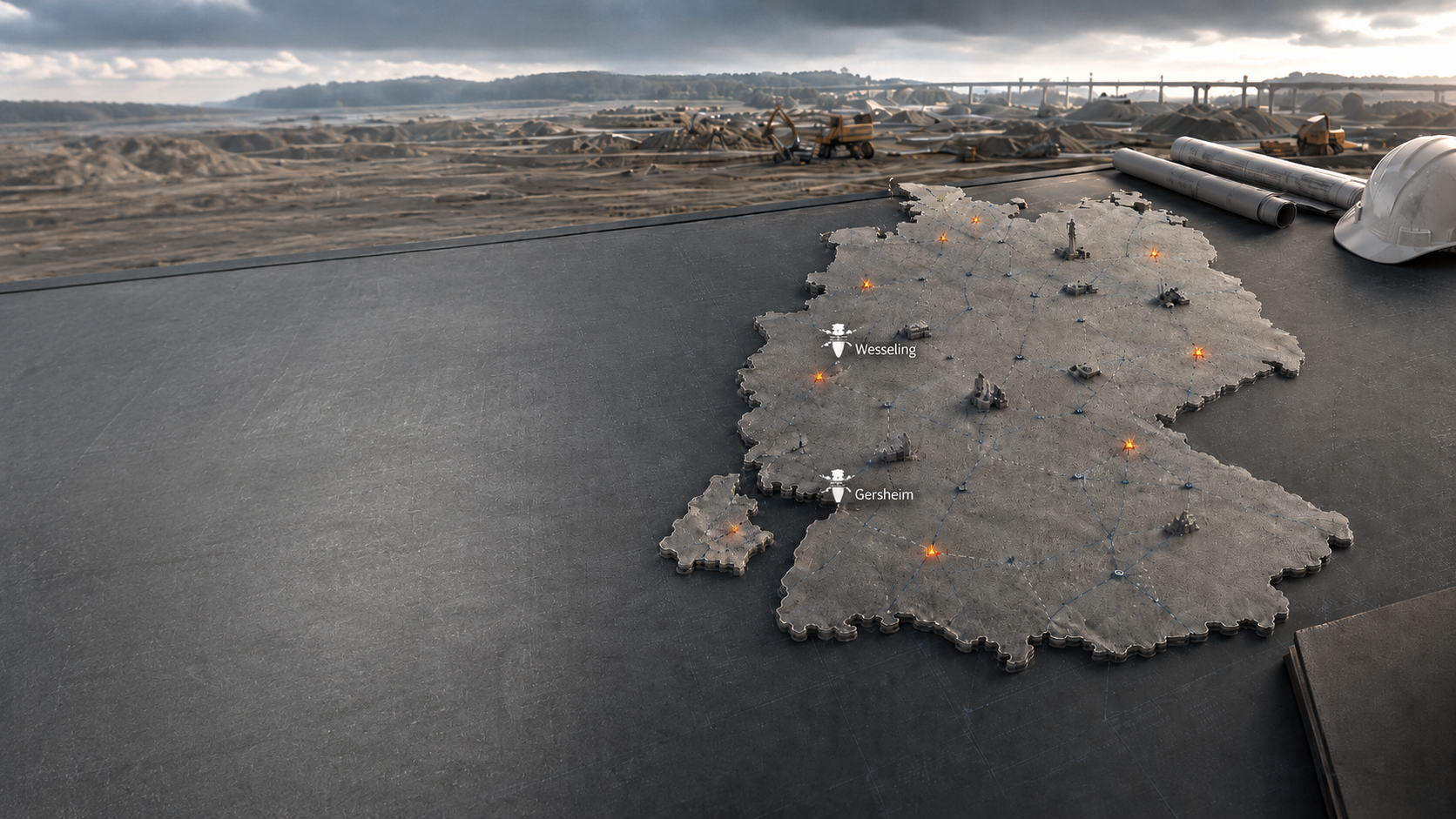
State the site, installation and specific construction section. Where several operational units exist, clear internal names and an overview plan are helpful. Add the intended access route and an available project contact. Identifying the region aids preparation. Operator information and the current ground disturbance plan clarify the individual installation's conditions for the activity actually planned.
Provide authority information, operator conditions and earlier specialist reports in full. Identify the area and works each addresses. A statement about an earlier cable route may have a different scope from the current foundation. Keep the responsible parties named for queries. Local requirements and specialist findings can then be brought together without confusing their respective subjects.
DGUV Information 203-001 addresses protective measures for work on and near electrical installations. The risk assessment and working boundaries defined by specialists govern the specific activity. Necessary electrical measures and responsibilities are clarified with the operator. These tasks remain with those responsible for them even when an explosive ordnance investigation is commissioned.
The responsible bodies provide information about operating status. Preparation requires clarity about the area and period to which it applies. The explosive ordnance specialist work is planned under these conditions. Its documentation then describes the investigation actually carried out. Operating status and explosive ordnance investigation status are documented with their respective areas, time references and limits.
Explore results and terminologyAn investigated area is considered together with its documented depths, boundaries and limitations. Lateral position may be decisive for a later cable trench, and depth for a new foundation. Keep the corresponding report and attachments together. A general note about an earlier contract is insufficient to establish reliably the scope applicable to changed groundworks.
Document areas and depths togetherFirst describe the planned work and the specialist conclusion it requires. Existing documents may affect the further scope needed. The services overview explains different preparation, investigation and supervision activities. FONTANA-EOD relates their selection to the specific installation. Naming a single device replaces neither a description of the volume of ground affected nor clarification of the actual working conditions.
Select appropriate specialist servicesThe operator identifies operational prerequisites and responsibilities. The information relates to the specific working area and period. Preparation of the investigation can then be based on actual conditions.
The design describes the planned groundworks and updates the plan revision when changes occur. Short connection sections and local deeper excavations also remain identifiable. They may be decisive when relating existing investigation results to the works.
The specialist contractor addresses the explosive ordnance question within the agreed scope and documents the work carried out. Results remain assigned to the respective ground disturbance. The bodies responsible for other installation and operational assessments provide them separately.
In Germany, state ordnance disposal services and locally competent authorities carry out hazard response and find management. Their involvement and public-order or building-control tasks are established for the project location. Outside Germany, local responsibilities apply. Contacts, requirements and reporting are assigned to the specific works.
In Germany, a possible ordnance find is reported immediately to the police on 110. Authorities arrange hazard response and involve the public ordnance disposal service under local procedures. Outside Germany, the local emergency procedure applies. Operating processes and private specialist work are assigned separately in project organisation.
The operator names those responsible for operational prerequisites and their coordination. Information about switching states and working conditions remains assigned to the respective areas of responsibility. This provides the explosive ordnance specialist contractor with the conditions relevant to its work. Electrical operation remains with the responsible operator representatives and electrical specialists. This division of tasks is recorded clearly for the specific working area before work proceeds.
The design describes the ground disturbance and records changes traceably. Construction management ensures that documents relevant to each task are available. A changed location or depth is compared with previous specialist findings before the affected work proceeds. This comparison remains necessary even within tight time windows. The planned sequence is limited to the scope actually clarified.
FONTANA-EOD documents the agreed specialist work, its spatial limits and relevant conditions. Other technical assessments remain with the responsible specialists. The different results are considered together when preparing construction. Questions still open are identified explicitly for the next construction phase. The next construction decision can then rely on the findings actually available from the disciplines involved.
In Germany, the requirements for permission, competence and responsibility under the Explosives Act and the 1. SprengV are clarified for the planned activities. § 7 SprengG concerns the commercial permit for activities requiring permission, while § 20 SprengG concerns the certificate of competence for responsible persons. Under § 1b SprengG, searching for found ammunition also constitutes handling. The DGUV Information 201-027 supports the task-specific risk assessment. The DGUV Rule 113-003 is taken into account for relevant activities within its remit of dismantling or destroying explosives or corresponding objects and disposing of found ammunition. The BFR KMR contain requirements within their defined federal remit; their application to the specific construction works at the energy installation and site-specific requirements are coordinated with the responsible bodies.

Older plans or aerial photographs may show the site at a different stage of development. Identify known changes and provide the documents with their spatial references. Specialist evaluation relates this information to the current construction task. Earlier use alone does not establish a comprehensive conclusion about all current installation areas or their differing ground disturbance depths.
Explore the historical basisPhotographs can illustrate surfacing, access and visible installations. Relate the photographs to the site plan and observe the site's conditions for sharing them. Visible conditions help preparation but do not replace information about underground installations or operating states. The responsible bodies and corresponding as-built documentation clarify this information for the planned activity.
Understand documentationFile documentation so that the area, depth, plan revision and actual scope of specialist work can be traced later. Keep attachments with the report. For new connections or further foundations, compare the documented position with the current construction design. This prevents an earlier partial investigation from being used as a complete assessment of a later extension merely because the site is the same.
Documenting results clearly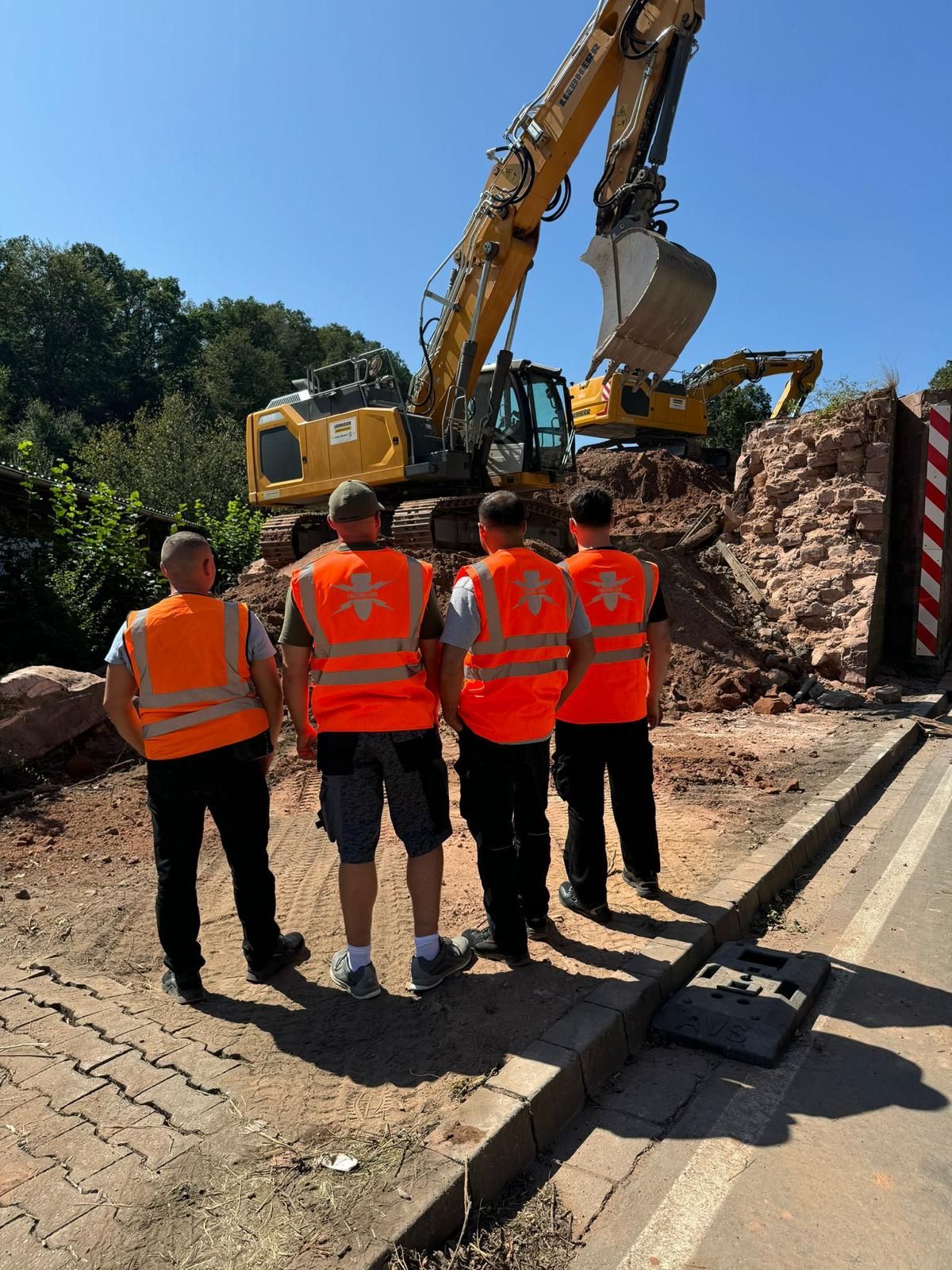
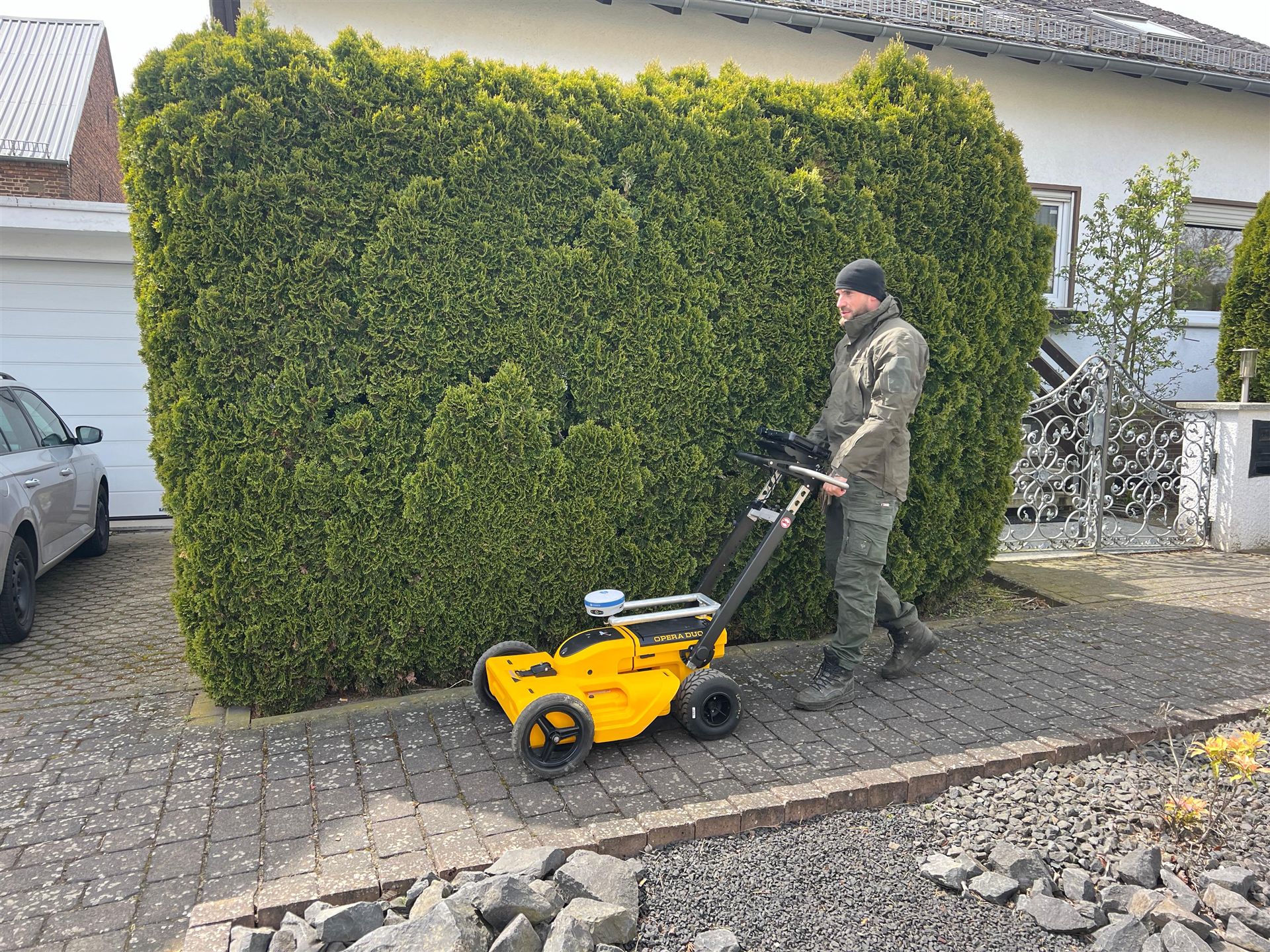
An energy installation may be connected to external utilities, transport areas and other technical facilities. The critical infrastructure overview helps identify the organisational context. The individual groundworks remain decisive for the explosive ordnance assessment. Shared operation does not necessarily mean a single investigation scope. Describe the individual tasks with their locations and the evidence available for each.
Assess critical infrastructure requirementsThe services overview helps relate open construction questions to an appropriate specialist activity. Provide the current plan, existing reports and specified operating conditions. Preparation, implementation and required documentation can then be coordinated. The assignment is given a specific, describable scope. The final report identifies the areas addressed and their depths, together with investigation areas still open.
Compare servicesTechnical information
Work at critical infrastructure requires careful coordination with operations and construction design. The brochure explains preparation, suitable investigations and traceable result documentation.

The responsible specialists determine the measures required according to the specific activity and electrical hazards. Working space, equipment movements and operational conditions must be coordinated for this purpose.
The responsible electrical specialists plan and arrange switching operations. The explosive ordnance contract describes the investigation of the agreed volume of ground; operational and electrical measures are organised separately with the operator.
No. Metal installation components and utilities can affect geophysical results independently of operational access permission. Survey conditions are therefore assessed separately by specialists.
The new route and its depth must be compared with the documented scope of investigation. A change within the same operational site is not automatically covered by the earlier investigation.
If an unexpected suspicious object is found, stop work in the affected area immediately. Do not touch, move or further expose it. Leave the immediate area, keep your distance and keep others away without putting yourself at risk. In Germany, notify the police immediately on 110; outside Germany, use the local emergency reporting route. The responsible authorities decide the next steps. Inform installation operations, construction management and the client; internal reporting must not delay the emergency call.
It is an operational condition. Whether and to what extent the specialist work can be carried out within it also depends on the investigation objective, access and existing site conditions. These points are coordinated together in advance.
Yes, where creating it involves ground disturbance. The visible installation footprint alone may be smaller than the area actually affected. The ground disturbance plan should therefore also show working space and connection points.
Costs depend on the area, depth and volume of ground disturbance, ground conditions, existing utilities and metal sources of interference, available evidence and the suitable method. Available working areas, operational requirements and agreed shutdown windows influence the work. The quotation relates to the investigation required for the construction section, including evaluation and documentation.
Send the extract of the installation plan relevant to the ground disturbance, showing the type, location, extent, depths and reference levels of the planned groundworks. Add existing explosive ordnance documentation and complete reports with attachments, together with the planned construction conditions.
Name the responsible operator contact, available working areas, access arrangements and construction periods. Add known access restrictions and the status of operational coordination. We will discuss the investigation scope for the planned areas and depths. Switching operations, electrical protective measures and continued operation are coordinated separately with the operator and responsible electrical specialists.
Whether historical aerial photograph analysis, explosive ordnance surveying, surface surveying using GPR, magnetometry or TDEM, deep-ground surveys, downhole surveys, excavation supervision, area clearance or ordnance recovery is needed depends on the location, ground disturbance, depth, ground and existing documents. An early ordnance assessment provides clarity for tendering, programming, occupational safety and construction.
FONTANA-EOD combines its Section 7 SprengG licence, specialists holding Section 20 SprengG certificates of competence, suitable survey and clearance methods, and traceable documentation. Send the site plan, depth of ground disturbance, construction phase and existing documents for an initial technical assessment.


