Project pathway
The quickest route to the right decision.

Geotechnical reports, contaminant investigations and explosive ordnance assessments answer different questions. For your project in Ludwigshafen am Rhein, FONTANA-EOD coordinates the commissioned explosive ordnance investigation with proposed ground interventions and site conditions. The report records the areas covered and the findings that results provide for subsequent works.
Show excavation pits, foundations and utilities on the plan.
Consider access and ongoing operations.
Distinguish geotechnical, contaminant and explosive ordnance reports.
For your project in Ludwigshafen, explosive ordnance documents, geotechnical reports and other specialist contributions are organised by purpose. We relate the proposed investigation to actual groundworks and available access. Ongoing operations, responsibilities and outstanding areas are coordinated traceably for the specific commission.
Service period: 2023-07
Service areas:Ordnance specialist supervision of groundworks
View project details · Ordnance specialist supervision of groundworks
Service period: 2023-02
Service areas:Ordnance specialist supervision of groundworks
View project details · Ordnance specialist supervision of groundworks
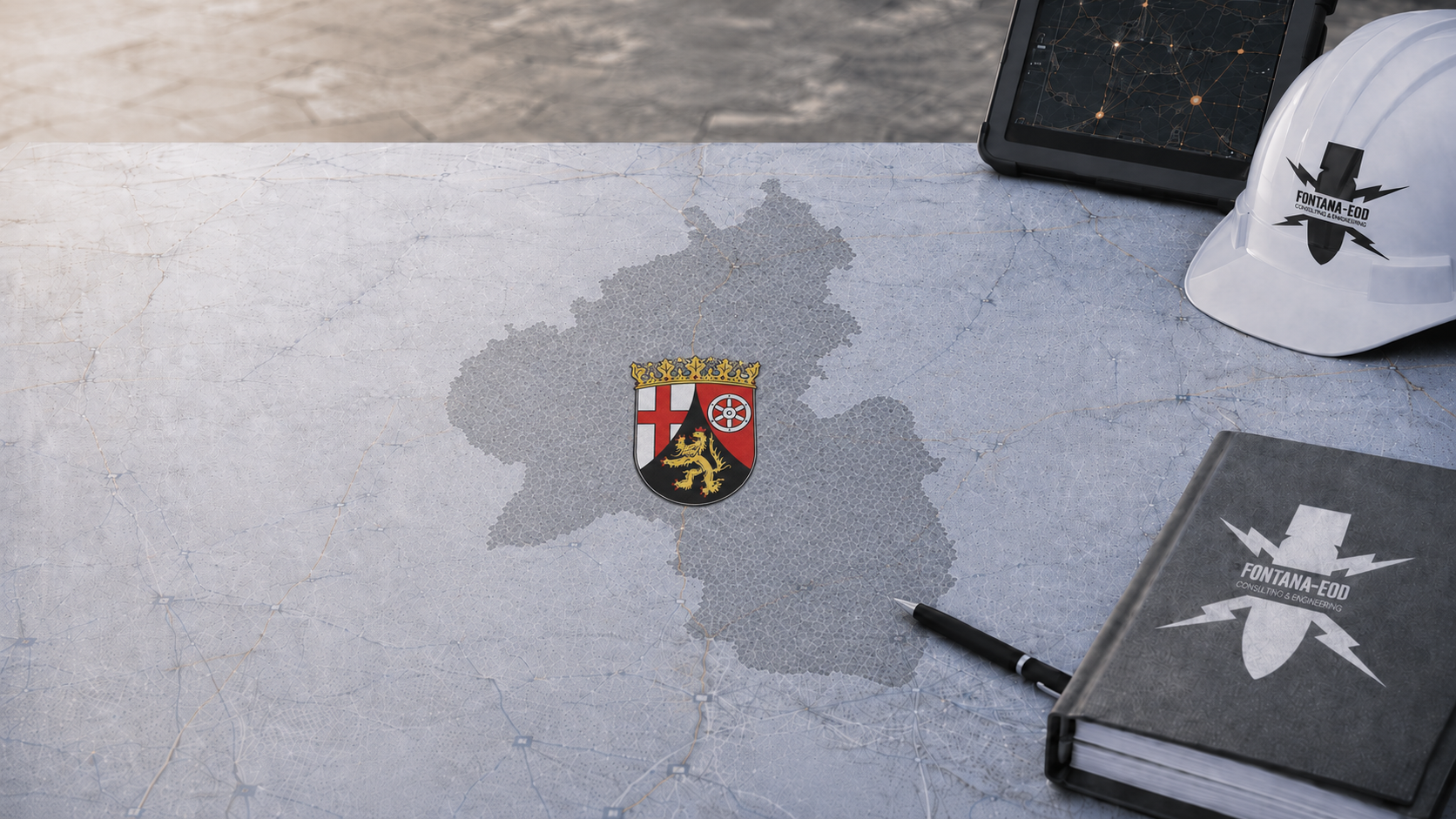
The explanatory statement for plan 680b identifies involvement of the Rhineland-Palatinate explosive ordnance clearance service in the event of finds within its specific area. The current ADD task description distinguishes this hazard prevention from precautionary private assessments. Requirements actually applicable to your project are clarified. The historical public-display status of the plan establishes neither a present-day property assessment nor additional powers for commissioned companies.
Ludwigshafen am Rhein is an independent city in Rhineland-Palatinate. State the precise location in an enquiry, for example in the Innenstadt or Stadtmitte, Friesenheim, Oppau, Edigheim, Rheingönheim, Oggersheim, Mundenheim, Maudach or Gartenstadt. The location designation helps assign plans and former uses to the correct construction area. Projects in the surrounding area, for example Frankenthal (Pfalz), Speyer, Schifferstadt or Bad Dürkheim, have their documents assigned to the respective municipality. Mannheim, by contrast, is in Baden-Württemberg; the official procedure there follows the actual project location. For the Rhine-Neckar metropolitan region, it thus remains clear which local and state-level parties must be involved in each project.
The overview of the SGD Süd provides further local information for the regional context of your construction project.
The City of Ludwigshafen addresses explosive ordnance, for example, in the published explanatory statement for development plan 680b “Innenentwicklung Oppau-Ost, Teil 2”, dated 15 January 2025, at the public-display stage. The section identifies reporting explosive ordnance finds to the state service and distinguishes that service's decision on further action from tasks of commissioned specialist companies.
The explanatory statement for plan 680b links its explosive ordnance guidance to the bombing of Ludwigshafen during the Second World War. For a present-day project, recorded indications are connected to former use of the site concerned. On industrial and chemical sites, production and storage areas may matter for research; in port locations, handling areas, quay zones or former loading areas may be relevant. On railway land, earlier freight, shunting and connecting tracks are assigned spatially using available documents. For inner-city properties, reconstruction, documented rubble removal, filling and later ground redistribution add research questions. What remains decisive is which uses and ground changes are documented for the specific construction area and which information is still missing.
This document concerns the planning area described. It is neither an investigation result for every property in Ludwigshafen nor evidence that all guidance it contains is currently binding. Documents and official requirements actually relevant to your project require clarification. The ADD additionally distinguishes preventive private investigation from official hazard prevention.
For the commissioned activities, the relevant technical requirements and questions of permits, competence certification and responsibility are clarified. The actual planned service scope is decisive. A general company designation does not replace checking that the tasks and interfaces are described appropriately for the specific project.
Risk assessment, work areas and communication must suit the proposed activities. Ordnance specialist works are coordinated with the other construction activities. Operational organisation, traffic safety and other specialist technical inspections retain their own responsible parties. Joint coordination brings the information together without equating the different tasks.
A measurement anomaly first requires specialist assessment; its appearance alone does not identify it as explosive ordnance. If an object is genuinely suspected to be ordnance, the prescribed reporting procedures and the measures set by the responsible authorities apply. Investigation reports specify the work completed and its limitations, so that results are not extended to unexamined areas or later design changes.
The explanatory statement for plan 680b addresses the area described there in the version for public display. For specific explosive ordnance hazards, the ADD explosive ordnance clearance service supports local regulatory authorities through administrative assistance. For a preventive planning question, identify proposed interventions, existing knowledge and any private specialist commission required. The parties assign information and services required to each respective task. A possible find triggers immediate reporting and hazard-prevention procedures. An existing official response is added to project documents with its date and plan appendices.
For preparation, the investigation objective and services required can be compared with the BFR KMR principles of clearance planning. The BFR guidance on geophysics supports specialist assessment of the methods. The guidance on documentationhelps organise results and plan appendices. Assign the official interface to the specific procedure using the ADD information sheet of June 2025. For occupational safety questions, the DGUV information on explosive ordnance clearance is available; the risk assessment remains related to the activities actually proposed.
The BFR KMR are used as technical guidance; locally applicable requirements and responsibilities must be clarified separately.
The permit, qualifications and responsibilities for the specific activity are assessed under the Explosives Act and the First Ordinance to the Explosives Act. The risk assessment under Section 5 of the Occupational Safety and Health Act relates to the planned activities. The DGUV Information 201-027 addresses preventive investigation and clearance of conventional explosive ordnance and defines its scope. The references it explains to DGUV Regel 113-003 concern specific activities involving explosives; they are not applied indiscriminately to every construction investigation.
The project owner describes the proposed work and provides the available project documents. The operator adds requirements for use, access and timing. A coordinating contact makes cooperation easier but does not automatically take on every other party's duties. Before commissioning, record clearly which information is missing, who will obtain it and which decision the result is intended to support.
The specialist designers describe areas, depths, construction methods and changes. Site management coordinates the planned sequence with the construction contractors and agreed specialist works. Results are assigned to the respective intervention. A technical plan change is communicated early enough for its effect on the survey task to be assessed before construction. Organisational construction stage boundaries remain distinguishable from technical survey boundaries.
The private explosive ordnance specialist carries out the agreed investigation and documentation scope. Official requirements and decisions are clarified with the competent authorities concerned. The documents needed for a particular procedure depend on the location and project. The technical report describes the specialist service performed; its conclusions are not presented unchecked as general authorisation for further groundworks or as an authority's decision.
The method is selected using the specific explosive ordnance question and site conditions. Utilities, remaining foundations and other known installations may be relevant. Their influence is assessed by specialists. The scope of another ground investigation or the general term operational site determines neither the method nor sufficient explosive ordnance findings.
Assess historical documentsThe precautionary investigation receives a clear service scope and the technical prerequisites required. The competent authorities are involved in specific hazards. A private commission does not transfer additional official powers. Results and further measures are therefore documented with their actual purposes rather than treating completion of a specialist commission as blanket official clearance.
Compare investigation methods
Allocate foundations, utilities, pits and further interventions spatially. The different specialist reports are linked to these areas. This keeps it clear which question each document answers. A completed ground-condition commission is not used as evidence for another specialist question merely because both works concern the same area.
Document findings and their limitationsState which subareas are accessible and which coordination with the operator is required. Known installations and neighbouring activities belong in preparation. This information is linked to the investigation objective. It does not establish a blanket assurance of uninterrupted operations; conditions are clarified for each work area.
Coordinate the sequence and tasks
If several companies address different areas, the transitions between their tasks are compared. Intermediate areas and supplementary interventions remain visible in the overview. A shared project name does not close a spatial gap. Project management therefore clarifies which commission provides the findings required and where additional coordination is needed.
Specialist services and investigation tasksFor the Ludwigshafen commission, geotechnical reports, contaminant investigations and explosive ordnance documents are compiled according to their respective purposes. Proposed excavation pits, foundations and utilities are described by location, depth and construction method. This establishes which documents already answer the explosive ordnance question and which further permissible specialist task is needed. The commissioned service and results required receive this scope. A result about ground conditions or contaminants does not become explosive ordnance evidence solely through concerning the same area. Existing operational areas retain their actual access prerequisites.
Define the specialist taskBefore work is carried out, actual survey access, known utilities and interfaces with other trades are clarified. On an operational site, the conditions required are coordinated with the responsible parties. Preparatory work required depends on the method and site. Additional opening-up work or other interventions to create investigation access are prepared by specialists and are not undertaken independently. Operational or structural limitations are assigned to the ground volume concerned. The specialist commission does not assume unchecked availability of the entire area.
Clarify preparatory work in the programmeThe commission describes the specific explosive ordnance specialist task alongside the project's other specialist contributions. Assessment and handover of results are part of the process. Effort and dates depend on actual access, documents and coordination. Plans used jointly receive an identifiable revision. A geotechnical or contaminant report prepared in parallel is used within its own findings; it does not automatically extend the commissioned explosive ordnance scope. Changed operational prerequisites or groundworks are checked with the responsible parties before execution.
Discuss the scope and scheduleIf foundations, utilities and excavation pits are planned together, their interventions may differ. Show proposed structural elements with their locations and intended depths. For each activity, check the investigations and records available; a shared property designation is insufficient. For a new foundation beside an existing installation, the foundation body and lateral connections are drawn separately. Proposed depth is identifiable for deep utilities, piled foundations or sheet pile walls. Construction support areas are also identified where groundworks are proposed. The investigation task can thus be assigned to the ground volumes actually used and respective construction sections.
A contaminant investigation, geotechnical assessment and explosive ordnance assessment answer different questions. Assign existing reports to their actual purposes. A favourable result about ground conditions or contaminants does not answer an outstanding explosive ordnance question. A borehole for geotechnical exploration receives its location and proposed purpose on the plan. Associated explosive ordnance needs are clarified before intervention. For contaminated materials, the responsible specialist planners are coordinated using information about the explosive ordnance task. Sampling, ground assessment and explosive ordnance findings remain traceable in their respective reports.
For work on a site in use, available access, known utilities and coordination required with the operator must be recorded early. This information describes investigation prerequisites. Whether operations can continue during an investigation phase must be coordinated separately for the areas concerned. On production or storage areas, individual sections may be accessible only within coordinated time windows. Describe installations remaining and preparatory works actually proposed. For waterside structures, access and the proposed intervention are described just as specifically. Additional tasks required in water are clarified by specialists and agreed explicitly before becoming part of a commission.
If several companies or specialist planners are involved, their tasks should remain spatially and technically distinguishable. Record who supplies each underlying item and the investigation intended to follow from it. Also assess intermediate areas and additional ground interventions. They are not regarded as investigated merely because neighbouring partial commissions are complete. For shared work areas, it is recorded which company prepares each section and who supplies utility and operational information needed. A changed construction programme is coordinated with the specialists concerned. Site management receives an identifiable status for the works approaching immediately next.
Explosive ordnance, geotechnical and contaminant documents are handed over with their respective investigation scopes. Shared filing helps comparison but does not replace technical allocation. Site management receives the applicable results for each intervention. After clearance work, the clearance record adds the actual clearance scope and results, assigned to areas addressed on the site plan. Other favourable findings do not extend explosive ordnance findings beyond areas actually investigated. Site plans and report appendices show the excavation pit, utility or exploration point to which findings relate. The operator receives information concerning its work area. Where there are several partial commissions, transitions between their investigation volumes are identified. Responsibility for an outstanding intermediate area is coordinated before proposed groundworks there.
If an area was inaccessible or only partly interpretable, this remains identifiable in documentation. Further planning receives the boundaries concerned with their associated maps. A later change of use does not itself create a new result. For interventions proposed afterwards, the additional specialist findings needed are assessed. If a previously closed section is released for access later, specialist planning can determine the outstanding investigation scope using the new access. The project file brings the previous result status together with the additional area to be addressed. When work resumes or companies change, this information is handed over with the plan revision, report version and outstanding tasks.
Compile proposed groundworks and existing specialist reports. Identify operator contacts, access and unresolved conditions. The parties can compare their tasks spatially and in time. Preparatory works required are clarified with their own scope, particularly if they themselves affect ground volumes with outstanding questions. For tendering on an industrial site in use, information to be provided by the client is described separately from commissioned specialist services. This includes, for example, utility information, operator contacts and available work areas. Outstanding responses are identified with their actual work status so that the specialist company can assess preparation and investigation needs.
Compare proposed interventions with the results actually available from all relevant specialist tasks. Missing explosive ordnance findings remain separately identifiable. New or deeper structural elements are reassessed. Site management receives complete documents with their respective limitations and can identify coordination still required before the next work step. If foundations, utility routes or construction dates change, the previous service scope is compared with the new intervention. Results already usable retain their subarea concerned. The parties clarify specifically the further service needed for the changed construction task and when its result must be available for construction.
Historical aerial photograph analysis and other earlier records help establish the spatial basis of a suspected hazard. Images, interpretive capability and area boundaries are related to the proposed groundworks. An absence of visible findings is not a technical investigation of the present-day ground. Other existing knowledge is incorporated. Documented former production, storage, port or railway uses receive their actual spatial and time references. Historical explosive ordnance assessment remains distinguishable from findings of a contaminant or geotechnical report. Later ground redistribution is considered using existing documents.
Understand aerial photograph assessmentMagnetometric methods detect magnetic anomalies. Suitability is assessed in relation to expected objects, ground conditions, interference and the ground volume requiring investigation. Utilities, fences and existing structures can affect interpretation. Signal strength alone does not identify explosive ordnance. Surveying, assessment and further clarification are linked to the specific specialist task. Existing installations are considered at their actual locations insofar as known. A result from another subsurface investigation does not, by itself, confirm comparable detection of magnetic anomalies.
Understand the scope of magnetometryElectromagnetic investigations may be suitable for certain metallic target objects and site conditions. Selection considers the findings required, accessible survey areas and interfering installations, rather than equipment availability alone. Results are documented with their location and actual investigation conditions. Additional work required follows from specialist assessment. On an operational site, accessible survey areas and known limitations are recorded for the specific commission. An area provided in general is not treated without assessment as sufficiently interpretable under all conditions.
Understand electromagnetic surveyingUnder suitable conditions, ground-penetrating radar can provide information about subsurface structures and reflections. Ground conditions, moisture and installations affect interpretability. A reflection is not automatically explosive ordnance; an area without anomalies does not confirm any arbitrary depth. Specialist interpretation and limitations are documented with the commission. An existing radar report about foundations, utilities or other structures is read according to its purpose and coverage. Its findings are not passed on as an explosive ordnance investigation result without specialist comparison.
GPR and limitationsFor deeper interventions, it may be necessary to assess whether investigation from the surface can provide the findings required or whether another approach is needed. Positions, depths, reference elevations, borehole layouts and known utilities are prepared for this purpose. Creation of suitable investigation access is also planned by specialists. A standard grid or general depth figure does not replace this task. The ground volume required is linked to the new foundation or utility. A geotechnical exploration profile does not, by itself, document an explosive ordnance investigation carried out beforehand.
Prepare deep interventionsIf a necessary advance investigation cannot be completed in full, it is assessed whether a specialist-planned approach accompanying construction is suitable. Investigation, interpretation and communication of findings are linked to the groundworks actually proposed. Visual observation of excavated material alone does not replace a necessary survey. Site management receives the allocation of specialist work and outstanding areas to the work sequence. Parallel accompanying activities of other disciplines retain their respective purposes and responsibilities. The parties coordinate interfaces without deriving mutual substitution of specialist services.
Agree the approach during constructionA historical aerial photograph analysis supports assessment of existing indications for the specific area. A general statement about city history is no substitute. The commissioned preliminary investigation should establish the knowledge available for the construction area and further questions that need addressing in relation to the project.
A surface survey must be assessed according to its investigation objective and actual conditions. Technical interference or inaccessible areas may limit findings. Identify these limitations in the report and consider them when planning the next works.
Which supplementary survey is required depends on outstanding questions and proposed interventions. A deeper structural element or differently used work area must not be incorporated into existing findings without specialist comparison. The state service's tasks in a specific hazard remain separate from this.
Distinguish structural elements and affected ground volumes on the current plan. The initial project enquiry identifies the address, construction sections and proposed intervention depths. A plan distinguishes existing installations, new structural elements and the ground volumes concerned. Operational conditions and proposed construction dates are attached. This establishes the specialist decision needed before the next work step.
Record explosive ordnance documents and other specialist reports by purpose. Existing explosive ordnance reports, official indications and aerial photograph analyses are checked for revision, spatial coverage and limits of findings. Specialist planning compares this information with present-day works. Geotechnical and contaminant reports are considered within their own purposes. Identifiable gaps receive a specific question concerning the subarea involved.
Where information is missing, historical research or aerial photograph analysis required is carried out for the specific project area. Former industrial, railway or port uses are assigned spatially using available records and images. The knowledge obtained is brought together with present plans and assessed for investigation needs. Existing sufficient information may continue to be used.
Agree the objective, accessible areas and operational prerequisites. Method selection follows the investigation objective, depth, installations and actual survey conditions. On the coordinated basis, specialist personnel carry out the suitable investigation or agreed supervision within the permissible scope. Data are recorded with spatial reference and limitations. Changed conditions or a possible find are handled through the coordination and reporting routes established for them.
Data and findings obtained are assessed by specialists using the investigation objective, method and site conditions. A survey anomaly is assessed on this basis. The report documents areas and depths actually addressed, results, interference and limits of findings. Associated plans remain identifiable. Further clarification needs are assigned to the construction section concerned and coordinated with the parties responsible.
Assign results and outstanding tasks to subsequent works. Before the next construction phase, the report and plan appendices are handed over together to the responsible parties concerned. Site management assigns findings to the approaching interventions. Outstanding works are recorded with their spatial reference and responsible contact. For a changed section, the addition required before construction is clarified.
The explosive ordnance investigation report should show the structural elements and areas to which its findings relate. Other ground investigations are recorded with their own purposes. Project management can thus assess which records exist for a specific intervention and which questions remain outstanding despite completed partial commissions.
FONTANA-EOD documents the scope and results of the commissioned service. The BFR Kampfmittelräumung provide technical planning and documentation principles for this; outside their direct scope, they serve as guidance. Neither such documentation nor a private commission transfers the decision-making powers of the competent authorities in the event of an explosive ordnance find.
FONTANA-EOD addresses the agreed explosive ordnance specialist task for the defined Ludwigshafen work area. Before work begins, existing knowledge, actual access and results required are coordinated. Other specialist contributions are considered according to their findings. Changes to plans or local operational conditions are checked before the work concerned. The report documents the work actually carried out and its limitations. Site management can distinguish explosive ordnance knowledge from results about ground conditions, contaminants or operational prerequisites.
Discuss the investigation taskMethod selection starts with the knowledge lacking for the explosive ordnance question raised by the current intervention. Specialist planning considers existing results, the ground and actual conditions. Available equipment or a soil sample already taken does not suffice as the sole basis. Selection is justified for the ground volume concerned. On existing and operational sites, known installations and areas actually accessible are incorporated. The explosive ordnance specialist task thus receives its own traceable scope alongside other investigations.
Inaccessible areas and areas with limited interpretability are identified with their actual boundaries. Site management can allocate outstanding specialist work and necessary additions to them. A general overall area figure does not replace this distinction. Planning and construction teams coordinate when a suitable investigation will be possible. Results from other disciplines remain linked to their respective investigation volumes. A subarea accessible for soil sampling is not automatically handed to subsequent construction as a fully addressed explosive ordnance area.
A new location, additional depth or different construction method is compared with existing results before the work concerned. Specialist planners receive the identifiable change from the previous status. Their response and necessary additions are assigned to the ground volume concerned. This also applies where a change follows from geotechnical planning or another specialist contribution. A changed foundation is checked separately for the explosive ordnance question. The same project name does not, by itself, confirm an unchanged investigation scope.
At handover, reports and associated plan appendices are supplied according to specialist task and work status. An overview may list results concerning ground conditions, contaminants and explosive ordnance with their respective limitations. It does not replace the documented investigation scope of individual contributions. When designers, site management or companies change, shared plan references and outstanding tasks remain traceable. Subsequent construction receives the information relevant to its groundworks without inferring completion of other assessments from completion of one specialist contribution.
A result about bearing capacity or contaminants provides different information from an explosive ordnance investigation. The documents may matter jointly for planning but retain their respective scopes of findings. For each proposed intervention, the questions actually answered are therefore assessed. Completion of several other partial commissions does not automatically resolve an outstanding explosive ordnance question.
Understand investigation reports and their limitationsIf installations are removed or access changes, conditions for further specialist work may change. This new state is considered with the proposed intervention. It does not itself demonstrate freedom from explosive ordnance. Existing results retain their scope while outstanding areas are assigned specifically to suitable further work.
Understand the service scope
Aerial photograph interpretation is related to the actual groundworks. Its purpose and geographical scope remain distinct from a technical investigation of the ground as it is today.
Understand aerial photograph assessmentThe findings, their locations and limitations are handed over together. This makes clear to those carrying out the work which area has been investigated and which task remains outstanding.
Assess investigation reports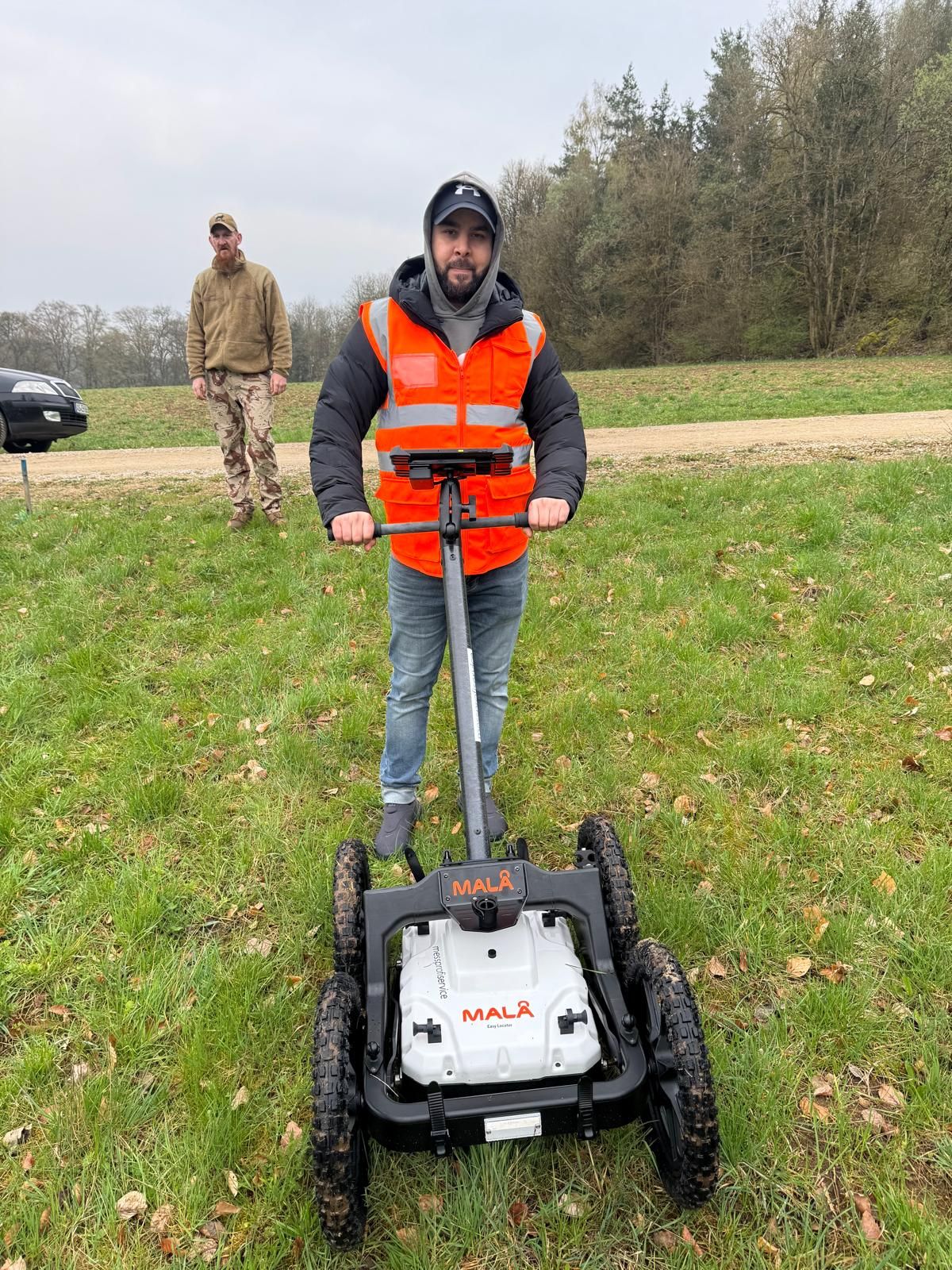
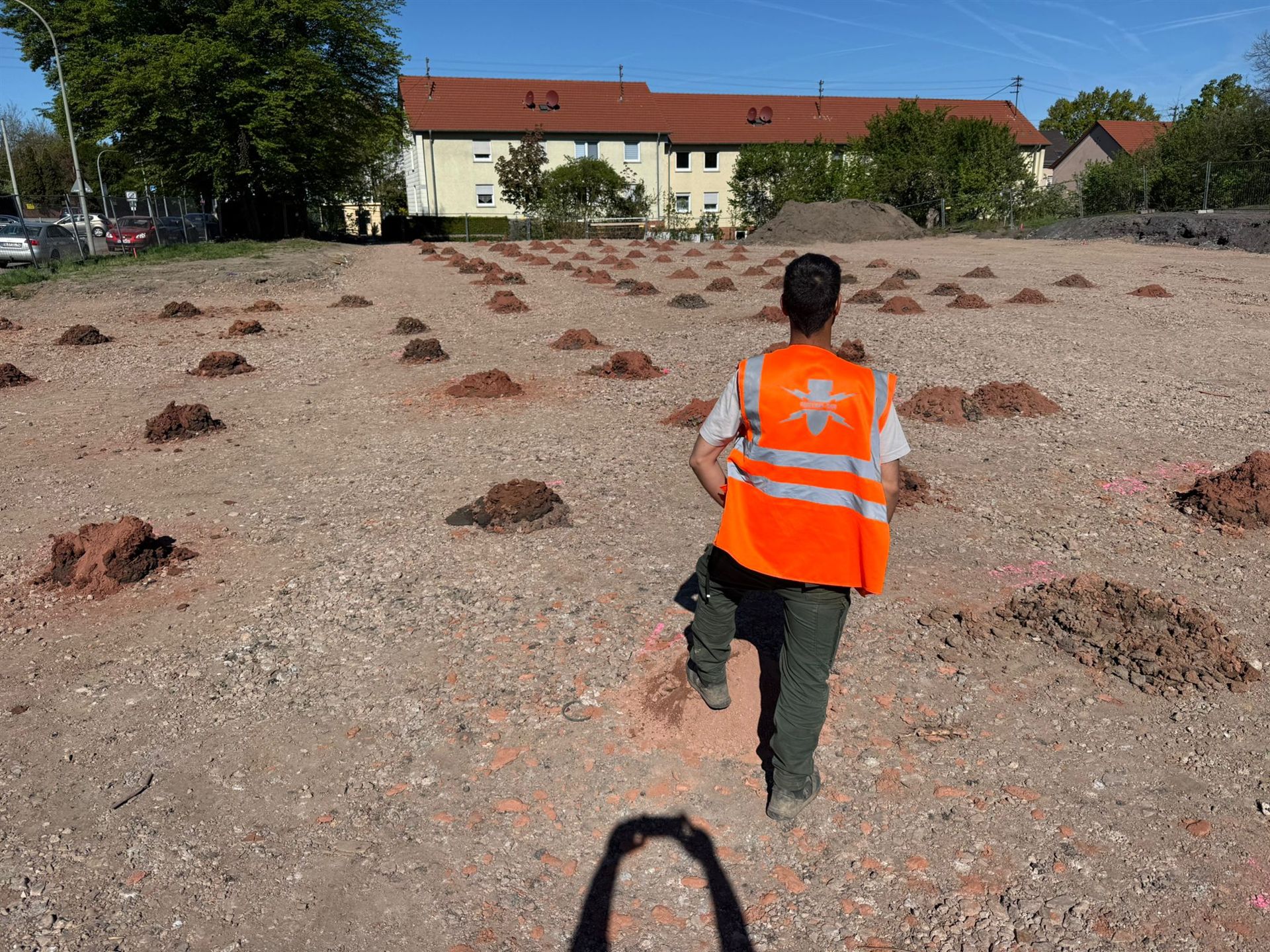
Historical assessment, technical investigation and further work answer different questions. The service overview helps distinguish these tasks in an enquiry.
Compare servicesPreparation connects the commission, site work and handover of findings. Changes to the project can then be incorporated into technical coordination in good time.
Process and documentationNo. The spatial and subject scope of each document must be observed. The document cited for plan 680b concerns the area described there and is identified as the public-display version. Relevant information for another project must be established separately.
The investigations address different questions. Check what each report actually covers. A result about contaminants does not establish explosive ordnance contamination without a corresponding explosive ordnance investigation.
Describe the specific interventions and investigation areas available. Add known utility information, access conditions and coordination required with the operator. Technical requirements and operational prerequisites are brought together for the respective commission. Clarify investigation needs and interfaces required before the drilling, foundation or groundworks concerned.
The Ludwigshafen planning document cited explicitly states that commissioned specialist companies must not independently render found ordnance safe, detonate it or transport it on public roads. The state service decides on further action. A private commission does not replace that responsibility.
Stop the affected work, keep your distance and neither touch nor move the object. Notify the police on 110 immediately and follow official instructions. Do not attempt independent investigation, recovery or transport.
No. Each report retains its identifiable purpose, spatial scope and limitations. The respective findings needed for the specific intervention are assessed.
Only if actually covered by the documented scope. Otherwise, further needs for interventions proposed there are clarified separately.
Changed conditions are considered for the outstanding investigation task. Access itself does not provide a new explosive ordnance result. Effort depends on area and intervention depth, usable earlier findings, installations, interference and available working hours. Preparation, data collection, interpretation and reporting required are agreed according to their specific scope. Privately commissioned services are distinguished from state hazard-prevention tasks.
Identify the purpose and investigation area of existing documents. Send the groundworks plans and existing explosive ordnance documents. Attach information about other specialist investigations, ongoing operations and outstanding project questions. FONTANA-EOD coordinates the explosive ordnance investigation needed and results to be documented with you.
Add access, known installations and operator coordination required. Also tell us which groundworks are due to begin first and which areas are not yet accessible. Necessary preparatory work and handover of results can thus be coordinated in good time.
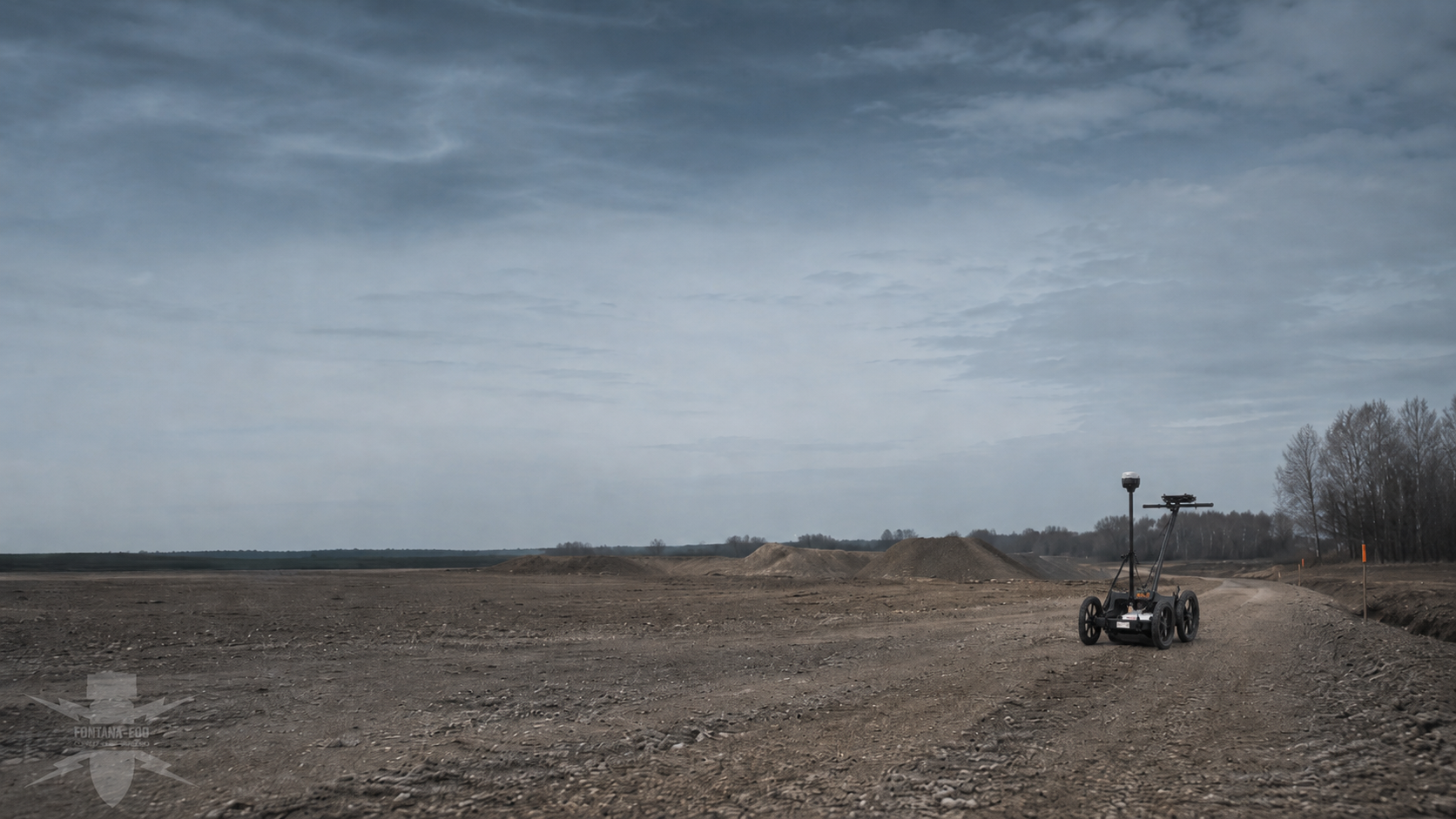
Whether historical aerial photograph analysis, explosive ordnance surveying, surface surveying using GPR, magnetometry or TDEM, deep-ground surveys, downhole surveys, excavation supervision, area clearance or ordnance recovery is needed depends on the location, ground disturbance, depth, ground and existing documents. An early ordnance assessment provides clarity for tendering, programming, occupational safety and construction.
FONTANA-EOD combines its Section 7 SprengG licence, specialists holding Section 20 SprengG certificates of competence, suitable survey and clearance methods, and traceable documentation. Send the site plan, depth of ground disturbance, construction phase and existing documents for an initial technical assessment.


