Project pathway
The quickest route to the right decision.
Are containers, vehicles or fences still on the proposed survey area? Are its boundaries identifiable on site? Such questions need to be addressed before an investigation appointment. FONTANA-EOD helps clients and design consultancies with projects in Rheine coordinate the area required and its preparation with the agreed specialist commission.
Make the proposed area accessible.
Clarify tasks and sequence beforehand.
Distinguish investigation from further work.
For explosive ordnance assessment in Rheine, the investigation area, accessibility and necessary preparation are coordinated together. We assess existing knowledge and the proposed groundworks. Preparation, specialist investigation and subsequent reinstatement each receive a clear scope and traceable responsibilities within the further project process.
Service period: 2025-06
Service areas:Ordnance specialist supervision of groundworks
View project details · Ordnance specialist supervision of groundworks

Rheine is in the Steinfurt district within the Münster administrative district in North Rhine-Westphalia. On its service page, the City of Rheine describes cooperation between the local regulatory authority and the state explosive ordnance disposal service of the Arnsberg district government. Specific preparations are coordinated for the respective assessment. For your project, access to the area, allocation of tasks and findings required are therefore clarified together; general guidance alone does not determine a complete private service or cost scope.
Identify the project address, cadastral parcel and intervention area actually proposed. A site plan shows buildings, access and the working spaces required for investigation. Preparations already agreed receive a responsible contact. For projects in the surrounding area, the locally responsible office is established using the actual municipality. Responses remain linked to the respective project location and its plan revision. For several separate construction sections, the documents and prerequisites belonging to each area are recorded traceably. The specialist findings needed first are identified before deployment coordination. Further project locations are shown in the regional overview.
The City of Rheine describes explosive ordnance investigation as a procedure accompanied by the regulatory authority. Its service page also identifies preparatory and follow-up work: for example, surveying and marking the area, making it traversable, removing interfering movable objects and reinstating it after interventions. These tasks should also be considered during project preparation.
The municipal chronicle of the air raids in 1944 documents attacks on the city, railway station and industrial facilities. For 5 October, it identifies a major attack on the City of Rheine and its railway station. For present-day construction projects, such historical indications are related to the areas concerned using suitable images and further documents. Earlier development and later changes are considered with their respective dates. Reconstruction, demolition and infrastructure development may have altered an area's condition. Research establishes which developments are documented for the specific property and which question remains outstanding before the next investigation.
The list is not an instruction to independently strip or break open an area whose status remains unresolved. Preparatory groundworks must also fit the existing explosive ordnance assessment and proposed work sequence. Therefore discuss in advance the condition required for investigation and which works are permissible and appropriate to achieve it.
When assessing an area with suspected explosive ordnance in Rheine, historical knowledge and the present ground structure are considered together. An unobstructed surface and accessible survey area answer different questions from former use or possible wartime impacts. Available documents are therefore linked to the current site and intervention plan. Documented filling, excavation or structural changes receive their own spatial reference. Historical assessment and selection of the technical method draw on this information. For unresolved areas, the research or investigation required before proposed works is recorded.
For the commissioned work, the applicable technical requirements, permits, competence and responsibilities are clarified. The actual scope of work is what matters. Tasks and interfaces are described for the project and checked against the required authorisations.
The risk assessment, work areas and communication arrangements must suit the planned activities. Specialist explosive ordnance work is coordinated with the other construction activities. Site organisation, traffic safety and other technical assessments retain their own responsible parties. Joint coordination assigns the relevant specialist work and responsibilities to the affected construction sections.
A measurement anomaly first requires specialist assessment; its appearance alone does not identify it as explosive ordnance. If an object is genuinely suspected to be ordnance, the prescribed reporting procedures and the measures set by the responsible authorities apply. Investigation reports specify the work completed and its limitations, so that results are not extended to unexamined areas or later design changes.
The municipal service on explosive ordnance investigation and disposal describes regulatory authority involvement and possible preparatory tasks. Services required for your own project are coordinated with its actual site conditions and investigation scope.
The principles of clearance planning connect the investigation with its subsequent treatment. The geophysics guidance in the BFR KMR supports technical method selection. The documentation requirements relate results to the areas actually worked. The North Rhine-Westphalia Ministry of the Interior explains state explosive ordnance disposal.
The BFR KMR describe specialist work on federal properties. For projects in Rheine, local requirements and responsibilities are determined separately.
The permit, qualifications and responsibilities for the specific activity are assessed under the Explosives Act and the First Ordinance to the Explosives Act. The risk assessment under Section 5 of the Occupational Safety and Health Act relates to the planned activities. The DGUV Information 201-027 addresses preventive investigation and clearance of conventional explosive ordnance and defines its scope. The references it explains to DGUV Regel 113-003 concern specific activities involving explosives; they are not applied indiscriminately to every construction investigation.
For private activities in North Rhine-Westphalia, the specific requirements of the exceptions under the KampfmittelVO and the official guidance must be observed. The private contract connects technical suitability with the scope provided for in law. The authority's state of knowledge and the permissions required for the activity are checked before an agreement.
The client describes the project and provides the available project records. The operator adds requirements for use, access and timing. A coordinating contact brings the parties together; individual tasks remain assigned to the named parties. Before commissioning, it is clearly recorded what information is missing, who will obtain it and what decision the result is intended to prepare.
The specialist designers describe areas, depths, construction methods and changes. Site management coordinates the planned sequence with the construction contractors and agreed specialist works. Results are assigned to the respective intervention. A technical plan change is communicated early enough for its effect on the survey task to be assessed before construction. Organisational construction stage boundaries remain distinguishable from technical survey boundaries.
The private explosive ordnance specialist carries out the agreed investigation and documentation work. Requirements and decisions of public authorities are addressed with the responsible bodies. The documents needed for a particular procedure depend on the location and project. The technical report describes the work carried out, including its documented area, depth and scope. Decisions reserved for public authorities are made by those authorities.
The local regulatory authority accompanies the procedure and involves the state explosive ordnance disposal service at the Arnsberg district government according to its remit. For a private commission, the permissible specialist task and authorisations required for it are checked. Preparatory construction work receives separate coordination with its prerequisites. In the event of a suspicious find, the competent authorities lead further hazard prevention. Project participants record which response is needed before the work step concerned and who passes on the associated documents. Any need for ordnance recovery is coordinated with the permissible task and the competent authorities.
Access and site conditions required depend on the agreed investigation task. Existing utilities, installations and uses are considered during selection. Preparation is then coordinated with the responsible parties. A general list of possible preparatory tasks is not a commission to carry out all listed activities regardless of local conditions.
Assess historical documentsCreation of access and explosive ordnance investigation each receive a task described technically and contractually. For private activities, prerequisites of the NRW procedure and authorisations required are checked beforehand. Official requirements remain part of coordination even if different companies undertake individual preparatory tasks.
Compare investigation methods
The current site plan and actual area boundary are compared. Changes through use, fencing or site installations can make orientation difficult. Mark identifiable differences and unresolved edge areas. An easily accessible area is only clearly prepared once its spatial relationship to the agreed investigation remains traceable as well.
Specialist services and investigation tasks
Parked vehicles or stored objects may require different arrangements from fixed installations. Their removal is therefore not treated as one blanket task. If a change itself requires ground intervention, it is assessed by specialists beforehand. A wish for unobstructed access does not establish independent permission for groundworks.
Coordinate the sequence and tasksClarify which works may be necessary after investigation and who will undertake them. The scope and requirements of reinstatement belong in coordination. They are not automatically completed by specialist result documentation. Subsequent use of the area is considered without deriving a specific contractual scope from a general procedural description.
Coordinate the sequence and tasksThe specialist service is determined by the planned ground intervention and the conclusion required for it. Which activity may be privately commissioned under the specific North Rhine-Westphalia procedure is clarified separately before an agreement.
For the Rheine commission, site preparation and the explosive ordnance specialist task are described separately. The knowledge required is linked to the location, depth and construction method of the proposed groundworks. Existing reports are assigned to the ground volumes actually investigated. This allows it to be established whether documents need interpretation, further ground volumes need investigation or assessed findings need further work. The permissible commissioned specialist service and required results receive this scope. Preparatory tasks and any agreed reinstatement are recorded with their own services and responsible parties.
Define the specialist taskBefore investigation, the site condition required, actual survey access and interfaces with other trades are coordinated. Known utilities and installations are considered. Preparatory work required depends on the method and site. Additional opening-up work or other ground interventions to create investigation access are prepared by specialists and are not undertaken independently. A contact records traceably which agreed prerequisites have been met and which are still missing. Technical suitability of the survey conditions is assessed separately from this.
Clarify preparatory work in the programmeThe commission distinguishes agreed preparation, the specialist investigation itself and the results required. Assessment and handover of results are part of the process. Effort and dates depend on actual access, documents and coordination. Follow-up tasks are considered insofar as they belong to the agreed scope. A general list of possible preparatory tasks does not replace this service definition. If site conditions or the construction task change, it is assessed which items and prerequisites are affected. Further deployment coordination proceeds on this traceable basis.
Discuss the scope and scheduleA site plan is more helpful than saying that construction will take place somewhere on the property. Draw the areas investigated or still requiring investigation and the proposed structural elements. Clarify how these boundaries can be found again on site. A differently positioned site fence must not become the boundary of the specialist commission unnoticed.
Identify vehicles, containers or mobile facilities on the area. Whether they affect the proposed investigation and when they need to be moved must be clarified with specialist planning. Name a responsible person for this. Simply assuming that everything will be clear on the investigation day does not help deployment planning.
Utilities, foundations or paved areas involve different prerequisites from a parked container. Provide existing as-built plans and identify visible installations. Removal may itself involve ground intervention. It is therefore not derived solely from a wish for easier surveying but assigned to the work sequence on technical grounds.
Clarify which works remain after an investigation and who will undertake them. This may concern, for example, reinstating an area opened beforehand, provided such interventions form part of the coordinated approach. Include this task separately in the service specification. An investigation report does not replace an agreement on subsequent construction work.
Record the site condition provided for investigation and the areas that could actually be addressed. Specialist findings are handed over with the associated maps and limitations. A record of cleared access routes does not replace this evidence. Differences between the proposed and investigated areas remain identifiable in the documentation.
The project file links the agreed investigation scope to site conditions present during execution. A difference is marked on the associated plan. The results report, maps and appendices are supplied together. A clearance record is assigned to the clearance measure actually carried out and the area addressed. Preparation and reinstatement services retain their own service records alongside this. The handover keeps it clear which specialist task was carried out and which organisational or construction task remains outstanding.
If a subarea could not be assessed sufficiently because of its conditions, that limitation is recorded traceably. Further construction planning considers the scope still outstanding. Work on a neighbouring area does not automatically extend the findings. For the intervention concerned, it is clarified which additional information or coordinated measure is needed.
For a subarea not yet investigated, location and scope are stated on the plan. Site management receives this information together with usable results from the area addressed. If an obstruction is removed later, further specialist needs for the intervention concerned are coordinated. A new time window or changed use is considered in deployment planning. Subsequent documentation records the work status actually achieved. Even if contractors change, this information remains linked to current plans.
Add known access routes, obstructions and usage conditions to the site plan. Identify preparations already agreed and those still requiring clarification. A proposed appointment can then be related to realistic prerequisites. Ground interventions still required for preparation are assessed separately rather than assumed silently.
Compare the area provided with the agreed task. Differences are discussed before work and documented traceably. On completion, specialist results and outstanding reinstatement works are handed over separately. Site management can thus identify findings available for the next intervention and organisational tasks still outstanding.
Historical aerial photograph analysis and other earlier records help establish the spatial basis of a suspected hazard. Images, interpretive capability and area boundaries are related to the present-day construction task. An absence of visible findings is not a technical investigation of the present-day ground. Other existing knowledge is incorporated. Reconstruction, demolition or infrastructure development are considered with their documented dates. Historical assessment is also considered before preparatory activities that themselves involve ground intervention. An accessible or tidy site condition does not replace this basis.
Understand aerial photograph assessmentMagnetometric methods detect magnetic anomalies. Suitability is assessed in relation to expected objects, ground conditions, interference and the ground volume requiring investigation. Utilities, fences and existing structures can affect interpretation. Signal strength alone does not identify explosive ordnance. Surveying, assessment and further clarification are linked to the specific specialist task. Actual survey conditions are compared on site with the prepared site condition. An area being traversable does not, by itself, confirm sufficient findings for the ground volume required.
Understand the scope of magnetometryElectromagnetic investigations may be suitable for certain metallic target objects and site conditions. Selection considers the findings required, accessible survey areas and interfering installations, rather than equipment availability alone. Results are documented with their location and actual investigation conditions. Additional work required follows from specialist assessment. Preparation is coordinated with the selected investigation. Merely removing a movable object is not recorded as an investigation result; the data actually obtained and assessed remain decisive.
Understand electromagnetic surveyingUnder suitable conditions, ground-penetrating radar can provide information about subsurface structures and reflections. Ground conditions, moisture and installations affect interpretability. A reflection is not automatically explosive ordnance; an area without anomalies does not confirm any arbitrary depth. Specialist interpretation and limitations are documented with the commission. Preparation clarifies the site condition needed for the proposed investigation. Even an easily accessible survey area can provide only the findings technically justified under actual conditions.
GPR and limitationsFor deeper interventions, it may be necessary to assess whether investigation from the surface can provide the findings required or whether another approach is needed. Positions, depths, reference elevations, borehole layouts and known utilities are prepared for this purpose. Creation of suitable investigation access is planned by specialists. A standard grid or general depth figure does not replace this task. Preparatory groundworks required receive their own prerequisites. Revised access plans are compared with the existing explosive ordnance assessment and agreed sequence before they are executed.
Prepare deep interventionsIf a necessary advance investigation cannot be completed in full, it is assessed whether a specialist-planned approach accompanying construction is suitable. Investigation, interpretation and communication of findings are linked to the groundworks actually proposed. Visual observation of excavated material alone does not replace a necessary survey. Site management receives the allocation of specialist work and outstanding areas to the work sequence. Preparation and reinstatement are recorded with their actually agreed scope. They are not assumed to be specialist services already commissioned merely because they occur close in time to the investigation.
Agree the approach during constructionA historical aerial photograph analysis and earlier investigation reports form part of the technical basis. In Rheine, the city describes requesting a detailed analysis from the Arnsberg explosive ordnance disposal service for areas with corresponding suspected hazards. The resulting steps must be clarified for the specific project. An area is not treated under a uniform procedure solely because of its city address.
Site preparation is coordinated using a traceable site plan. It shows the proposed investigation area and access actually required. Movable objects are distinguished from fixed installations. Existing utilities, foundations and other known installations are assigned location information. Metal interfering objects may affect interpretability; moving a container does not therefore necessarily eliminate all interference. Method suitability is related to the remaining site conditions. Achievable findings and survey limitations actually identified are documented in the results report.
If ground is to be moved for site establishment or preparation, location, depth and work sequence are determined by specialists beforehand. This includes the elevation reference used. An existing terrain plan and a depiction after proposed ground removal may show different states. For a specialist task requested as borehole clearance, point location, depth reference and the findings required are clarified before commissioning. Those carrying out the works receive the relevant plans and documented prerequisites. A later change is assigned to the work area concerned and coordinated before intervention.
For a survey, the method must fit the findings sought and site conditions. Interference may limit survey data; removing an obstruction does not automatically eliminate all such influences. Therefore describe installations that remain too. If the prepared condition differs from the coordination agreed, technical suitability must be reassessed.
If a clearance plan is required, it coordinates investigation, any necessary further measures and construction work. Prerequisites for individual work steps also belong in this planning. An appointment for the excavator is no reason to bring forward preparation whose technical basis remains unresolved. Conversely, already suitable areas should not be modified again without a substantive reason.
Bring together the construction plan, existing explosive ordnance results and information about present use. Mark differences between the drawing and the site. An area may appear clear on the plan although materials are now stored there or site facilities have been installed. Such changes should be known before deployment coordination. Initial contact identifies the construction task and decision required. Existing explosive ordnance reports are checked with their complete maps and appendices.
Record who provides access, marks areas and arranges coordinated preparatory work. Keep the investigation commission itself separate. This makes it clear whether an item still needs commissioning or is already being handled elsewhere. Without this specific definition, costs cannot be derived from general official information. Where necessary, unresolved historical information is researched and assessed by specialists using suitable records and images. The required official aerial photograph analysis is arranged through the local office. Methods and investigation scope are selected according to target objects, ground conditions, intervention depth, interference and accessibility. Preparation actually required and prerequisites for execution are derived from this.
Inform the responsible parties if storage areas, access routes or structural elements are arranged differently. Changes may affect accessibility or the investigation scope required. Assess their effects before the associated groundworks. Preparation agreed once does not automatically remain suitable if construction plans have since changed. Once prerequisites are clarified, the agreed investigation or technically suitable supervision is carried out. Data and observations are interpreted and assessed for their significance to the construction task described. Usable results, anomalous findings and outstanding questions remain distinguishable.
After work, the area actually investigated and limitations encountered must be traceable. Pass results to site management with the associated plans. Identify areas left outstanding so that a later commission does not inadvertently treat them as already clarified. The subsequent decision identifies additions or coordination required before the next work step. For tendering, the specific specialist task and expected result documents are described. The investigation commission and reinstatement retain their respective responsible parties.
A report describes the area addressed, the investigation and its limits of findings. It does not automatically confirm that all agreed preparatory or follow-up works were completed in full. Therefore retain specialist records and associated service agreements together. Both must remain accessible for later changes to the project.
FONTANA-EOD undertakes the agreed specialist commission. The duties of the city and state explosive ordnance disposal service remain separate from it. The BFR Kampfmittelräumung address planning and documentation, among other subjects; they apply directly to federal properties. For other projects, these principles may serve as technical guidance without thereby replacing local requirements.
FONTANA-EOD addresses the agreed explosive ordnance specialist task for the defined work areas in Rheine. Before work begins, results required and accessible areas are coordinated. The agreed site condition is compared with actual conditions. Changes to plans or site prerequisites are checked before the work concerned. The report documents the work actually carried out and its limitations. Preparation, investigation and agreed follow-up work remain traceable in the project process with their respective responsible parties and results.
Discuss the investigation taskMethod selection starts with the knowledge lacking for the construction project. Specialist planning considers existing results, the ground and actual conditions. Available equipment or making the area generally traversable does not suffice as the sole basis. Selection is justified for the ground volume concerned. The site prerequisites required for this investigation are derived from it and coordinated with the parties involved. Additional preparatory interventions are clarified by specialists before execution.
Inaccessible areas and areas with limited interpretability are identified with their actual boundaries. Site management can allocate missing prerequisites and necessary additions to them. A general overall area figure does not replace this distinction. Planning and construction teams coordinate when a suitable investigation will be possible. Areas not actually addressed remain identifiable even after agreed preparatory work. Confirmation of completed preparation is not passed on as confirmation of a complete explosive ordnance investigation.
A new location, additional depth or different construction method is compared with existing results before the work concerned. If the survey area required changes as a result, the agreed preparation scope is checked too. Specialist planners receive the identifiable difference from the previous status. Their response and necessary additions are assigned to the ground volume concerned. Deployment coordination already completed does not replace this comparison. Additional tasks are clarified with the responsible parties before execution.
At handover, reports and associated plan appendices are supplied with the area actually addressed identified. An overview may list the main findings and outstanding tasks. It does not replace the documented investigation scope. When designers, site management or companies change, site prerequisites provided, actual specialist work and any follow-up work still agreed remain distinguishable. The next parties receive the knowledge relevant to their groundworks without equating a prepared or reinstated surface with a broader investigation result.
Removing movable obstructions may enable an investigation. It does not itself establish findings about possible explosive ordnance in the ground. The specialist work scope and its result are documented separately. During subsequent works, these findings are compared with the specific intervention even if the area already appears prepared and easily accessible.
Understand investigation reports and their limitationsA traceable service specification identifies investigation, necessary preparation and any reinstatement separately. Responsibilities and interfaces can thus be checked. Unclear conditions are discussed before commissioning. A general statement on state tasks or costs does not replace a specific agreement for your own site conditions and work scope.
Understand the service scope
Aerial photograph interpretation is related to the actual groundworks. Its purpose and geographical scope remain distinct from a technical investigation of the ground as it is today.
Understand aerial photograph assessmentThe findings, their locations and limitations are handed over together. This makes clear to those carrying out the work which area has been investigated and which task remains outstanding.
Assess investigation reports
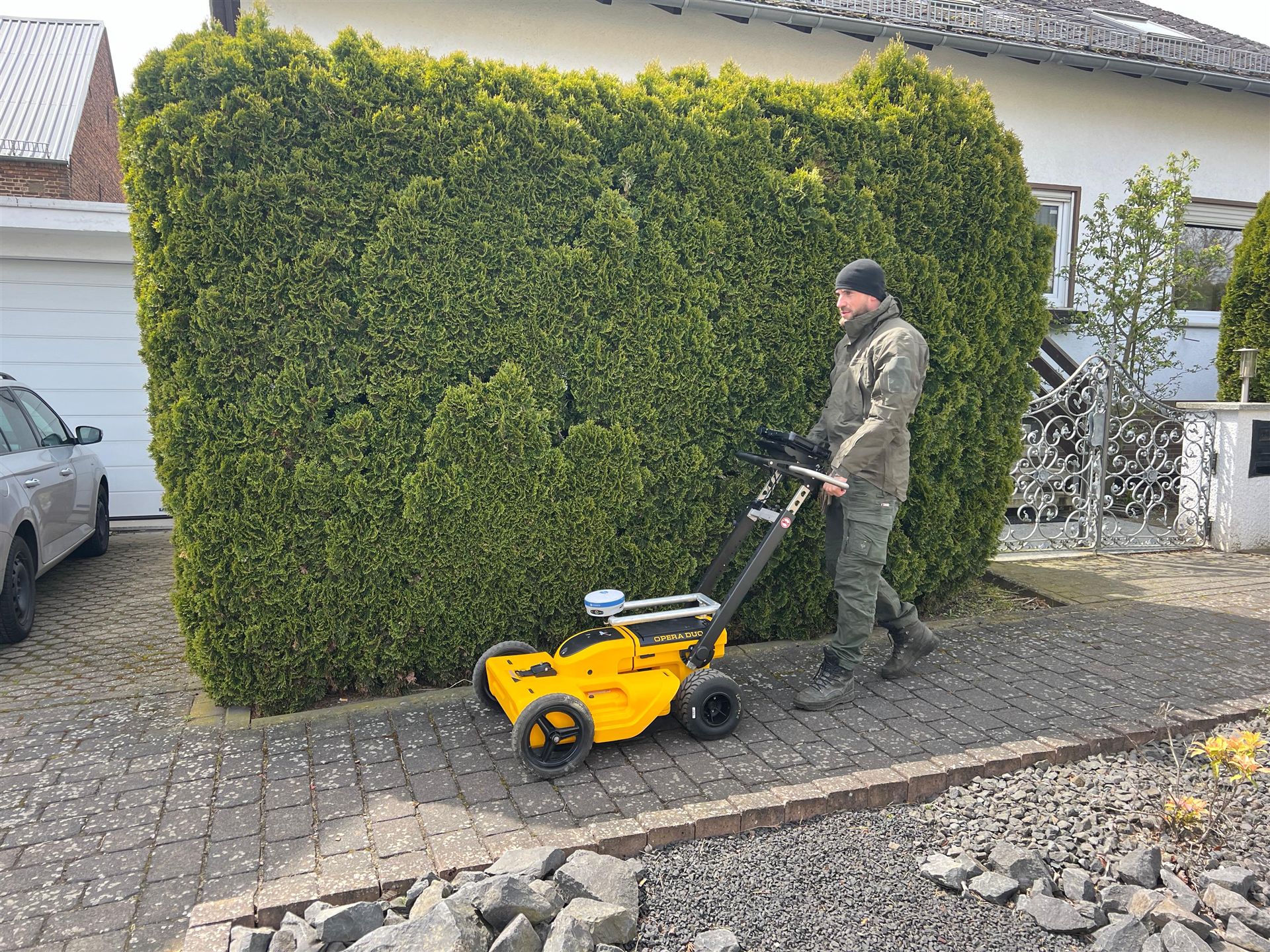
Historical assessment, technical investigation and subsequent work answer different questions. In your enquiry, identify the planned groundworks and the information needed to prepare them.
Compare servicesPreparation connects the commission, site work and handover of findings. Changes to the project can then be incorporated into technical coordination in good time.
Process and documentationThe preparation required depends on the task and proposed method. Clarify accessibility and interfering objects before the appointment. Work on the ground or fixed installations must not be brought forward without the specialist coordination required. Coordinate needs in good time before proposed interventions. The local regulatory authority involves the state service within its remit.
A general list of preparatory services does not provide permission to do so. The proposed removal is itself a ground intervention and must be incorporated into the explosive ordnance assessment and work sequence. Discuss prerequisites with the responsible parties before such work begins.
This follows from the specific quotation and service specification. Explicitly identify access, marking, obstructions and follow-up works required. General information about state explosive ordnance disposal does not establish the additional tasks included in a private commission. The enquiry brings together the current site plan, as-built plans and complete explosive ordnance reports with their maps.
Actual site conditions must be compared with the prerequisites for the proposed investigation. Depending on their influence, adjustments may be necessary or areas may remain outstanding. Such limitations must be identifiable in coordination and documentation; complete findings must not simply be assumed. Further needs for the subarea concerned and proposed intervention are coordinated with the responsible parties.
Stop the affected work, neither touch nor move the object, and move away. Keep other people away. From a safe distance, immediately notify the police on 110 and follow official instructions.
No. The condition may enable investigation. Specialist findings arise only from the respective work and its documentation. The specialist process connects document assessment and required historical analysis with method selection, investigation, assessment and documentation. Follow-on works are related to the knowledge actually obtained from this.
Method, area size, depth, interference and accessibility determine the effort required. Preparatory and follow-up works are described separately with their actual scope. The specialist service and result documents required are agreed for commissioning. Allocation of costs within the official procedure is clarified with the local office for the specific project.
No. Specialist documentation and possible reinstatement works serve different purposes. Their specific service scope is agreed separately.
Show access routes, obstructions and known differences from the site plan. Add the project address, cadastral parcel, intervention depths, utility plans, official letters and complete explosive ordnance reports with their maps. The sector overview explains typical interventions and the documents they require.
Distinguish agreed tasks, requested services and outstanding responsibilities. Add the earliest ground intervention, subareas not yet accessible and the people responsible for follow-up questions.
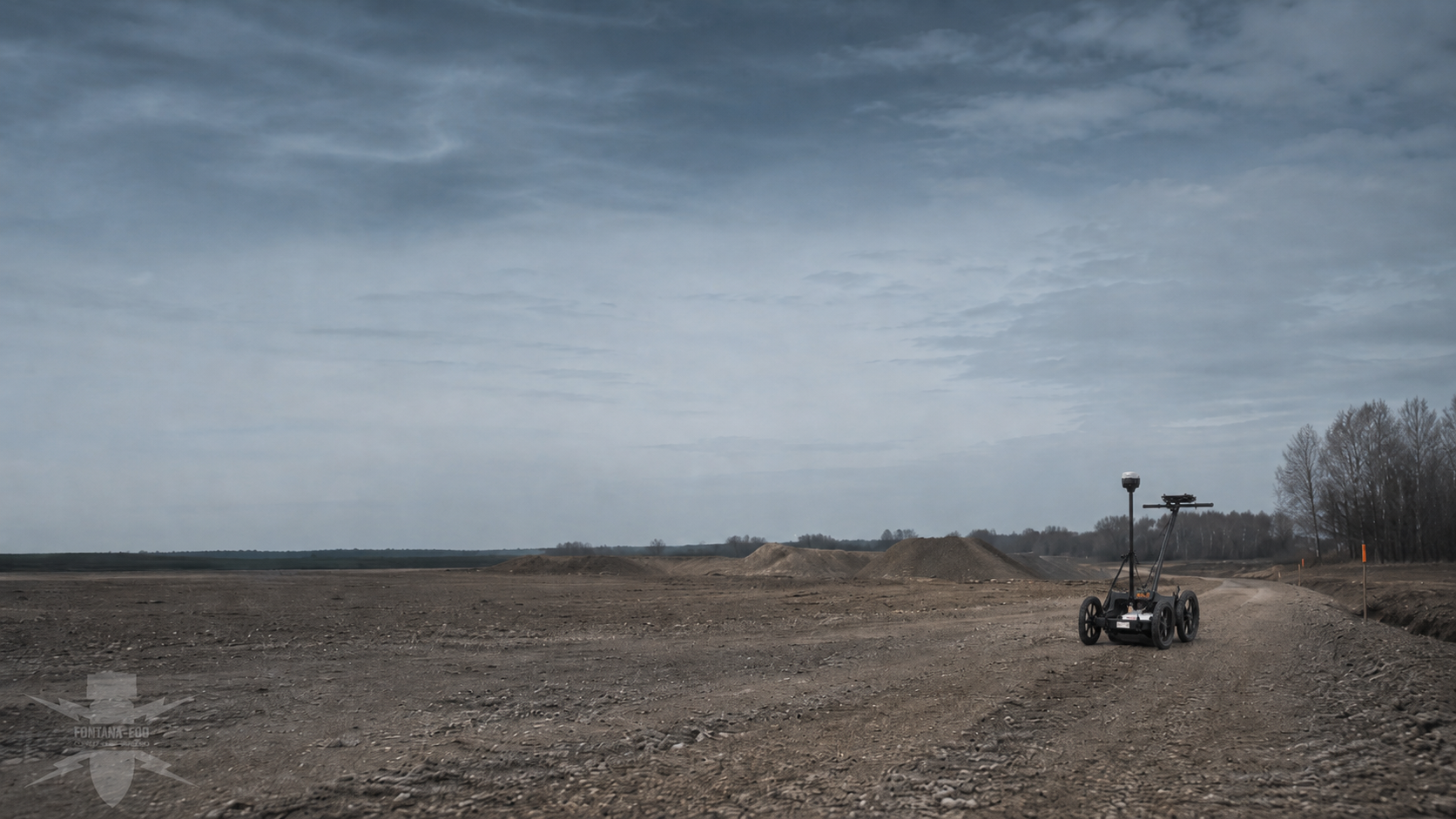
Whether historical aerial photograph analysis, explosive ordnance surveying, surface surveying using GPR, magnetometry or TDEM, deep-ground surveys, downhole surveys, excavation supervision, area clearance or ordnance recovery is needed depends on the location, ground disturbance, depth, ground and existing documents. An early ordnance assessment provides clarity for tendering, programming, occupational safety and construction.
FONTANA-EOD combines its Section 7 SprengG licence, specialists holding Section 20 SprengG certificates of competence, suitable survey and clearance methods, and traceable documentation. Send the site plan, depth of ground disturbance, construction phase and existing documents for an initial technical assessment.


